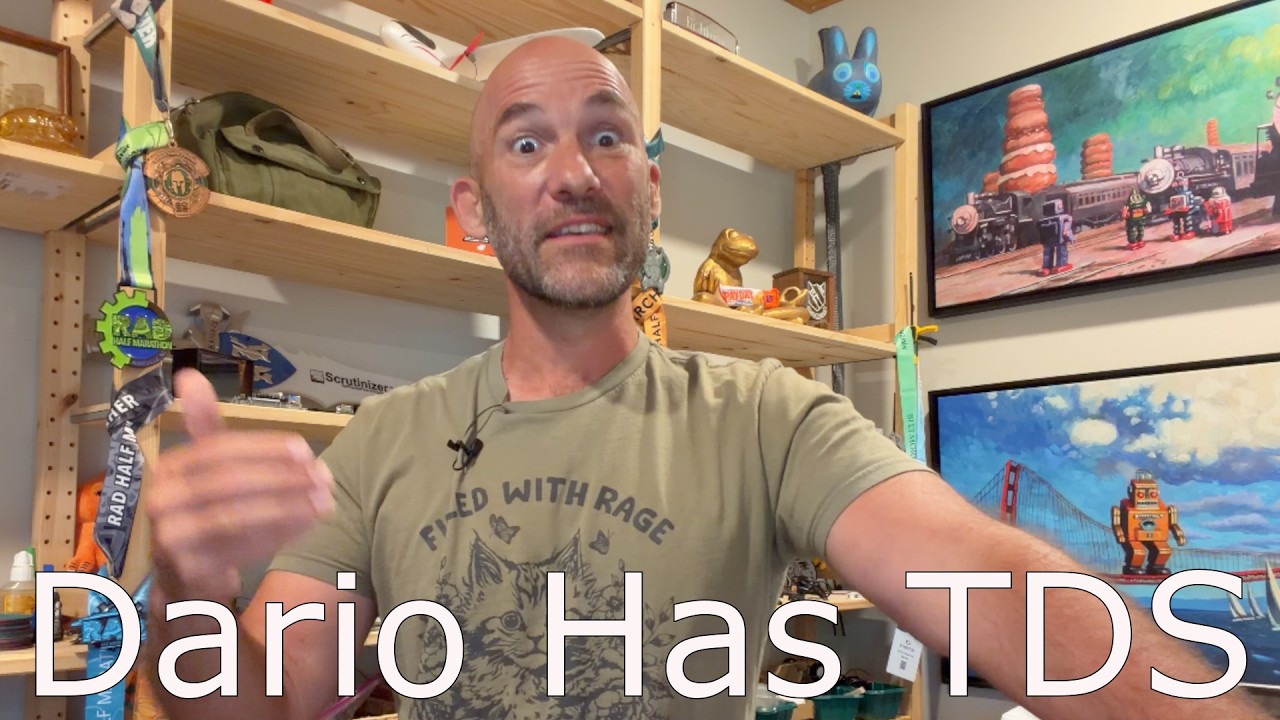
The video critiques the US government’s ban on foreign nationals’ access to Anthropic’s AI models, Fable 5 and Mythos 5, highlighting the policy’s disruptive impact on AI talent retention and innovation amid vague security concerns and possible political motivations. It calls for clearer, fairer AI regulations to protect US technological leadership and prevent driving skilled engineers and companies away.
The video discusses a recent directive from the US government that bans access to Anthropic’s AI models, Fable 5 and Mythos 5, for all foreign nationals, including non-American employees of Anthropic within the United States. Mythos 5 is described as a powerful and potentially dangerous model, while Fable 5 is a safer, guarded version of Mythos 5. The directive is criticized as overly broad and disruptive, as it prevents even highly skilled foreign AI engineers working in the US from accessing these tools, raising concerns about the US’s ability to retain top AI talent amid increasing global competition.
The speaker highlights the chaotic and scattershot nature of US AI policy, contrasting it with China’s more focused approach. The lack of clear, transparent regulations and processes around AI governance is emphasized, with the government issuing verbal claims about potential security risks without providing concrete evidence. Anthropic has cooperated extensively with government and third-party organizations to secure its models, but the government’s concerns revolve around a narrow, non-universal jailbreak vulnerability that is reportedly common to many AI models, including OpenAI’s GPT 5.5.
The video suggests that the Trump administration’s actions against Anthropic may be politically motivated retaliation. Anthropic had previously pushed back against the Department of Defense’s use of its models for surveillance and autonomous weapons without human oversight, which may have angered Trump. The administration is portrayed as using any available tool to punish Anthropic, regardless of court rulings or the broader impact on the AI industry. This punitive approach is seen as damaging to US technological leadership and innovation.
The speaker also raises concerns about the broader implications for AI engineers and companies in the US. The treatment of foreign AI talent as untrusted and second-class citizens could drive them to seek opportunities elsewhere, weakening the US AI ecosystem. The lack of clear rules and consistent policy signals creates uncertainty for businesses relying on AI technologies, as access to critical tools can be abruptly revoked based on vague or unproven security concerns. This environment undermines confidence in the American AI stack and its future viability.
In conclusion, the video criticizes the Trump administration’s handling of AI policy as shortsighted, politically motivated, and harmful to the US tech industry. It calls for transparent, fair, and technically grounded regulatory processes to manage AI risks without stifling innovation. The speaker invites viewers to reflect on the state of US AI policy in 2026 and its consequences for the country’s technological competitiveness and societal well-being.