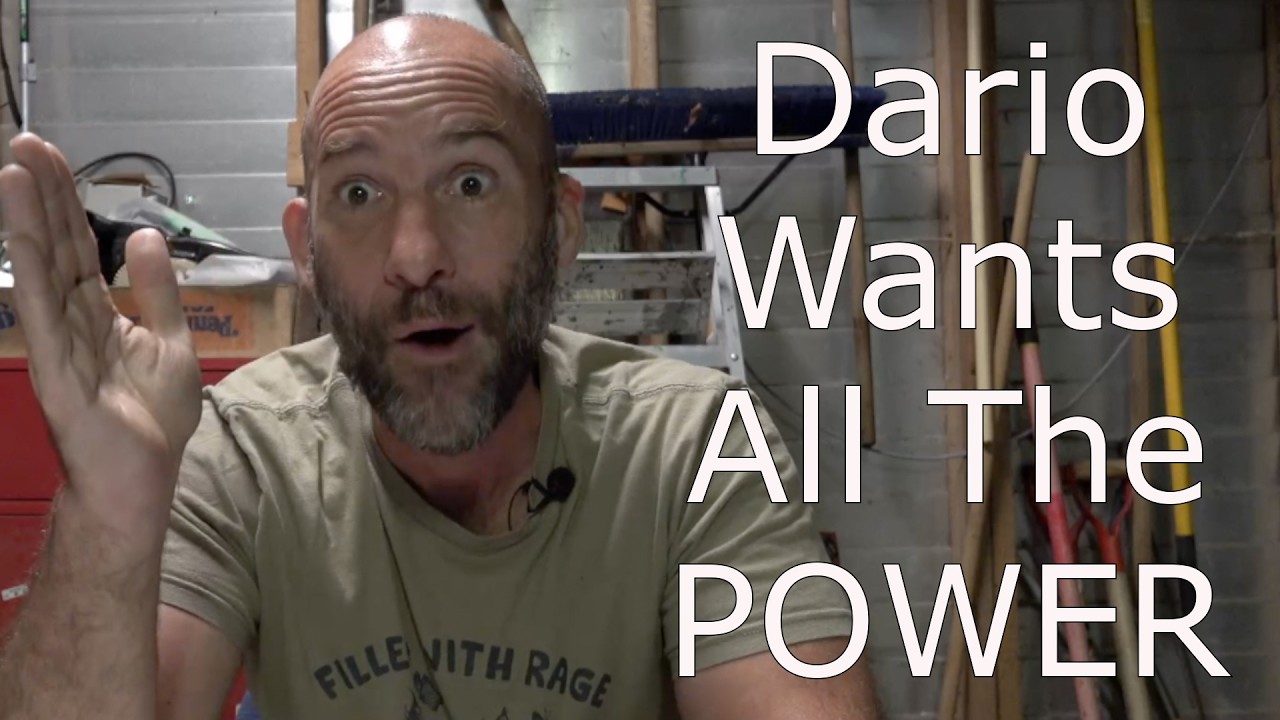
The video discusses the trend among major tech companies, including Anthropic, to establish governance structures that grant founders and key executives supermajority voting rights, allowing them to maintain control over their companies despite holding relatively small equity stakes. This practice, exemplified by figures like Mark Zuckerberg and Elon Musk, enables founders to outvote other shareholders and steer company decisions without external interference. The speaker criticizes this approach, arguing that it undermines traditional democratic principles within corporate governance, where shareholders typically elect the board of directors to oversee management.
Anthropic, an AI company preparing for a massive IPO potentially valued at $2 trillion, is highlighted as adopting an especially opaque and unconventional governance model. The company plans to issue a special class of stock with enhanced voting rights to its seven founders, including CEO Dario Amodei, who individually owns only about 2% of the company. Additionally, Anthropic has established a long-term benefits trust that controls the election of the majority of the board of directors, further insulating the company’s leadership from outside shareholder influence. This structure raises concerns about accountability, especially given the potentially dangerous nature of the AI technology Anthropic is developing.
The speaker expresses skepticism about Anthropic’s status as a public benefits corporation (B Corp), which is supposed to balance shareholder value with societal benefits. While the idea sounds appealing in theory, the speaker notes that in practice, B Corps often struggle to reconcile these dual goals, leading many founders to prefer traditional corporate structures combined with philanthropy. The complexity and lack of transparency in Anthropic’s governance, combined with the immense power concentrated in a few individuals, is portrayed as problematic, especially given the high stakes involved with AI technology.
A significant concern raised is the risk associated with founders maintaining control indefinitely, even as their capabilities or judgment may decline over time. Unlike democratic political systems where leadership changes regularly, these tech companies allow founders to cling to power for extended periods, potentially to the detriment of the company and society. The speaker contrasts this with the typical corporate practice where CEOs often serve short tenures focused on specific goals, after which new leadership takes over. The entrenched control by founders like Zuckerberg, Musk, and potentially Amodei is seen as a dangerous deviation from this norm.
In conclusion, the video calls for reflection on the implications of these governance models, especially in companies developing powerful and potentially hazardous technologies like AI. The speaker invites viewers to consider the consequences of granting disproportionate control to a small group of founders and questions the effectiveness of B Corps in balancing profit with societal good. The overall tone is one of caution and concern about the concentration of power and the lack of accountability in the evolving tech landscape.