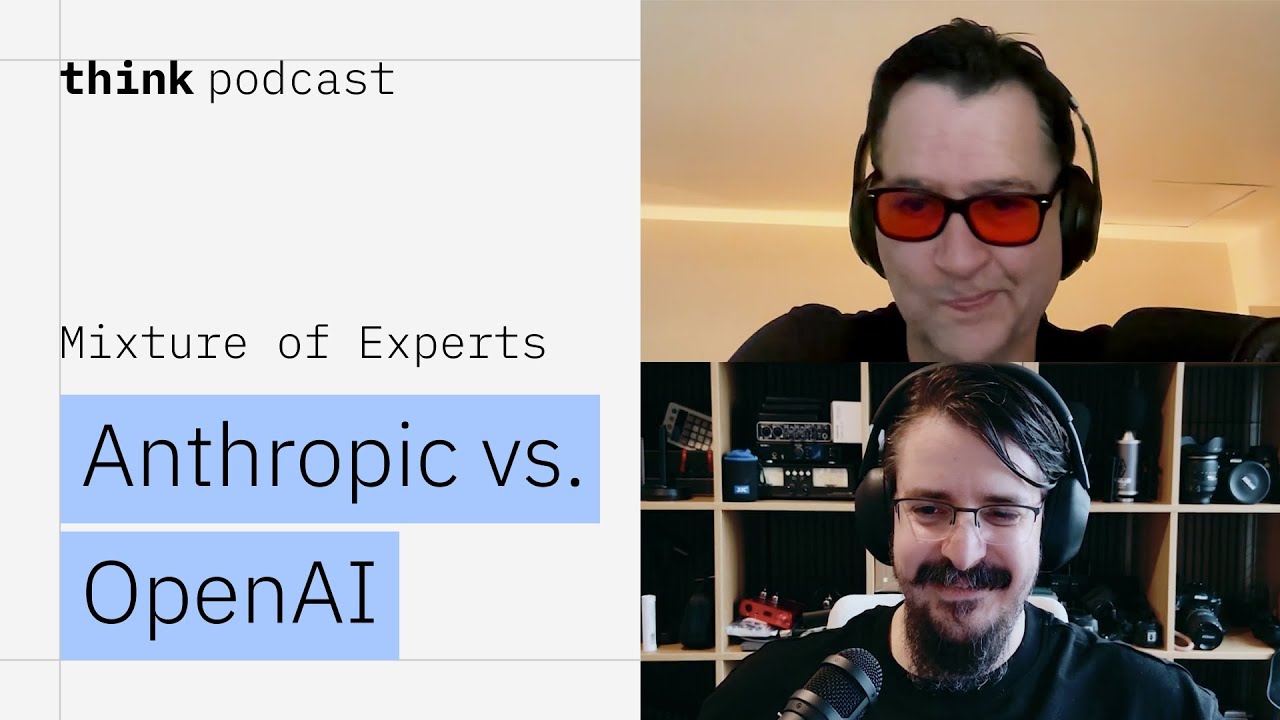
In this special episode of “Mixture of Experts,” host Eileen McConnell is joined by Chris Hay and Mihai Krivetti, both distinguished engineers at Gentek AI, to discuss the simultaneous release of Anthropic’s Claude Opus 4.6 and OpenAI’s GPT-5.3 Codex. The timing of these major AI model launches, just before the Super Bowl, is seen as a strategic move, possibly reflecting the competitive and marketing-driven nature of the AI industry. The panel notes that the near-simultaneous releases allow users to directly compare the models, but they also question whether this rivalry might lead to rushed testing or pre-planned announcements.
Both experts share their initial impressions of the new models. Mihai appreciates the opportunity to test both Opus 4.6 and GPT-5.3 Codex side by side, but suspects that the synchronized releases are as much about marketing as technological advancement. Chris, who favors Claude, acknowledges improvements in Codex, especially in the new Codex app, but still finds Claude Opus 4.6 superior for planning and reasoning tasks. He notes that while Codex excels in terminal-based benchmarks and technical edge cases, Claude offers a more user-friendly workflow and better feedback, especially for higher-level reasoning.
The discussion shifts to the broader implications for enterprise users. Mihai highlights the new Claude plugin for PowerPoint, which he finds more effective than his own previous solutions, as evidence that Anthropic is increasingly targeting enterprise customers. While OpenAI is also moving into this space with its agent KI stack and Codex app, Mihai feels Anthropic’s focus on safety, trust, and enterprise readiness gives it an edge. Chris agrees that OpenAI is making a significant push into enterprise, especially with the Codex app’s business automation features, but notes that their messaging is less clear compared to Anthropic’s consistent enterprise focus.
Both experts agree that the AI landscape is undergoing a significant shift, with multi-agent systems and automation becoming mainstream much faster than anticipated. Chris describes this as a “vibe shift,” where AI is starting to impact daily life and work in tangible ways, not just for developers but for general users as well. Mihai adds that the barrier to entry for leveraging AI has dropped significantly, with users now able to install plugins or use out-of-the-box solutions without deep technical expertise. He also notes the value of combining both Claude and Codex in workflows, using Claude for development and Codex for code review and security checks.
Looking ahead, the panel sees the battle for enterprise AI intensifying, with both Anthropic and OpenAI vying for dominance through improved tooling, integration, and trust. While Google’s Gemini is acknowledged as a strong research model, the experts feel its enterprise tooling lags behind. Ultimately, they believe that the long-term winners will be those who offer robust ecosystems with strong governance, observability, and end-to-end integration, rather than just the best standalone models. The episode concludes with a promise to continue tracking these rapid developments in future shows.