Certainly! Here’s a five-paragraph summary of the video transcript:
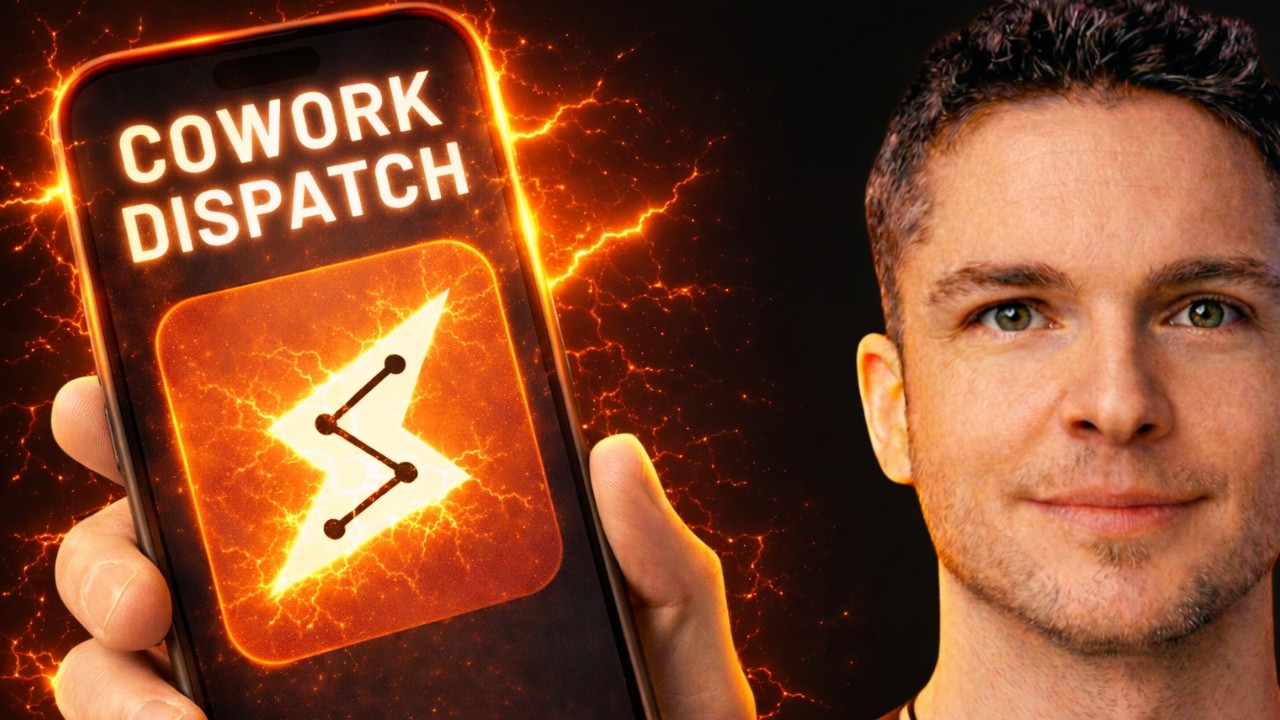
The video discusses the launch of “Dispatch” for Claude, Anthropic’s AI, highlighting it as a major advancement for users building their own AI operating systems (AIOS). Previously, users relied on third-party tools like OpenClaw or had to use command-line interfaces (CLI) and integrations with platforms like Telegram or Slack to control their AI systems remotely. Dispatch eliminates this friction by providing a user-friendly, integrated way to interact with Claude directly from both desktop and mobile devices, making advanced AI workflows accessible to non-technical users.
The presenter demonstrates the setup process for Dispatch, emphasizing its simplicity and security. Users can pair their phone with their desktop environment seamlessly, and the system allows granular control over what files and folders Claude can access. This approach encourages users to adopt best practices, such as restricting AI access to specific folders, to maintain security while leveraging the full power of Claude’s capabilities.
A key feature of Dispatch is its ability to run existing skills, workflows, and plugins from a mobile device. The presenter showcases how tasks like checking Versel deployments or running a research lead pipeline can be initiated from a phone, with results and interactions happening in real time. This removes the need for external APIs or messaging platforms, consolidating all operations within Claude’s secure ecosystem and streamlining the user experience.
Dispatch also enables users to access and manage files on their computer remotely, such as retrieving important documents from specific folders. The presenter notes that this closes the gap between having a simple chatbot and a fully functional AI operating system, making tools like OpenClaw redundant. The persistent thread model means users interact in a single continuous conversation, which is generally sufficient for most use cases, especially when combined with scheduled tasks and rule-based automation.
Finally, the video touches on advanced features like hooks and rules, which allow users to customize how Claude interacts with files and commands, further enhancing security and efficiency. The presenter concludes that while Dispatch is already powerful on its first day, it is likely to gain even more functionality over time. The main takeaway is that Dispatch makes AI operating systems more accessible, secure, and integrated, allowing users to do more with less effort, and the presenter encourages viewers to explore further content on their channel for deeper dives into building and customizing AIOS environments.