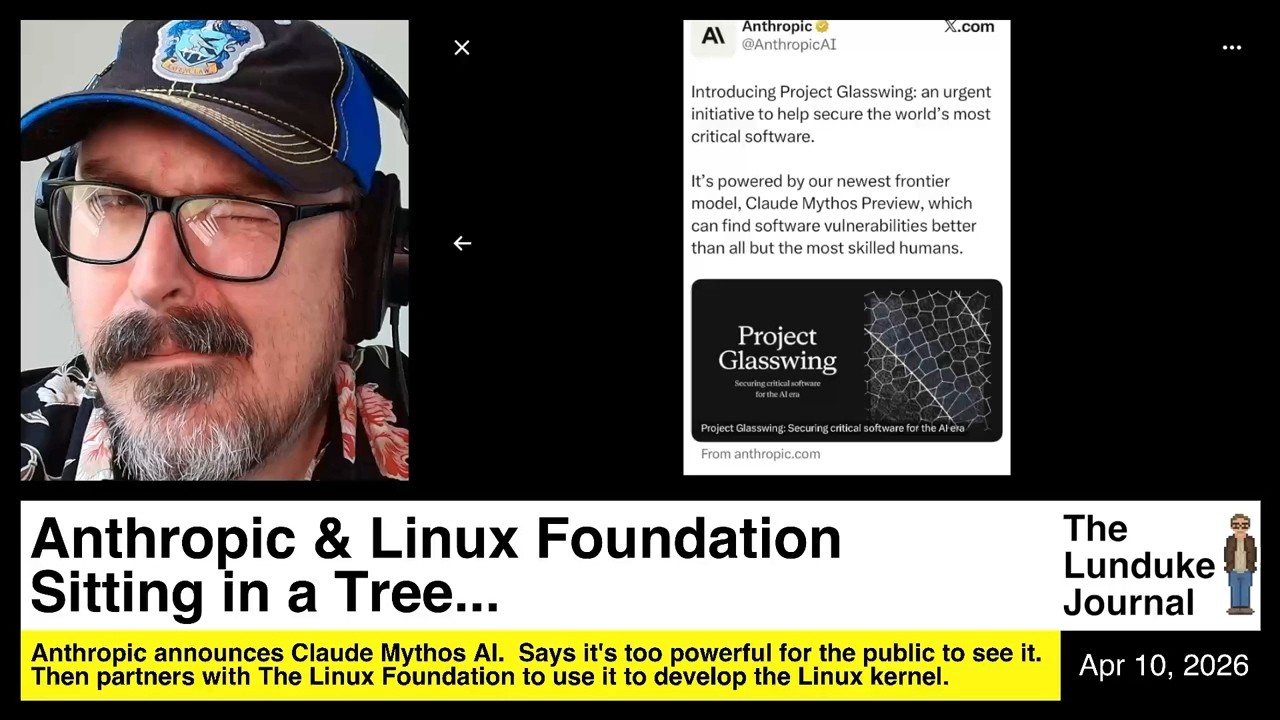
Earlier this week, Anthropic, the AI company behind Claude, announced their new Mythos AI system, claiming it to be the most powerful and revolutionary AI in the world. However, they also warned that it is extremely dangerous and must remain secret. Despite this secrecy, Anthropic revealed partnerships with major companies—including Amazon, Apple, Google, Microsoft, Nvidia, and notably the Linux Foundation—to use Mythos for securing critical software systems. This juxtaposition of secrecy and broad collaboration raised immediate concerns and skepticism about the implications of such a powerful AI being integrated into essential operating systems.
Anthropic’s initiative, called Project Glass Wing, aims to leverage the Claude Mythos Preview model to identify software vulnerabilities more effectively than most skilled humans. The Linux Foundation’s involvement is particularly significant, as evidenced by a promotional video featuring its executive director, Jim Zemlin, endorsing the AI’s bug-finding capabilities. This partnership suggests a strategic move by the Linux Foundation to embrace AI technologies for enhancing software security and development, aligning with their broader goals of integrating AI into the open-source ecosystem.
Interestingly, just a day before Anthropic’s announcement, Greg Kroah-Hartman, a prominent Linux kernel maintainer, revealed he had been using an AI bot named Clanker T1000 to find and fix bugs in the Linux kernel. While he did not specify which AI system he used, the timing and context imply a connection to Anthropic’s technology. The choice of the bot’s name sparked controversy due to the term “clanker” being considered offensive in some open-source communities, highlighting the complex social dynamics within the Linux development world.
The Linux Foundation has been increasingly focused on AI, as reflected in their recent annual report where AI was a dominant theme, even overshadowing Linux itself. This shift mirrors trends in other open-source companies like Red Hat, which have prioritized AI in their recent conferences and product strategies. The collaboration with Anthropic signals a deeper commitment to integrating AI into Linux development, but it also raises questions about the potential risks, such as the introduction of vulnerabilities, backdoors, or political influences, given Anthropic’s known political engagements.
In conclusion, the partnership between Anthropic and the Linux Foundation marks a significant moment in the intersection of AI and open-source software development. While the use of AI promises faster, more secure software development, the secrecy surrounding Mythos and the political nature of Anthropic introduce uncertainties about the future of Linux and its ecosystem. The community and industry will need to closely monitor how this collaboration evolves and impacts the security, stability, and openness of critical software infrastructure.