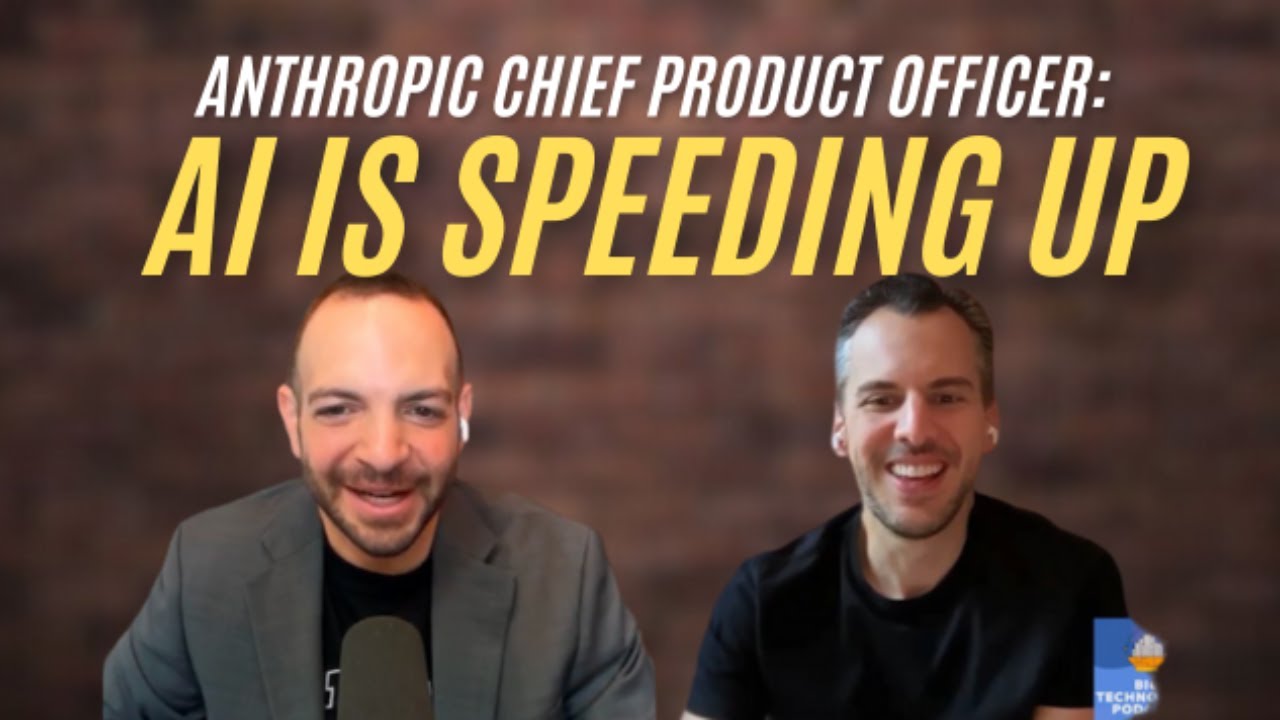
In this insightful conversation on the Big Technology Podcast, Mike Krieger, Head of Product at Anthropic and co-founder of Instagram, discusses the rapid acceleration in AI model development, particularly highlighting Anthropic’s latest model, Sonnet 4.5. Krieger explains that the faster iteration cycle is driven by a combination of close collaboration with end-users, streamlined operational processes, and significant engineering advancements that enable scaling of training runs. He emphasizes that improvements are not solely due to scaling data centers but also stem from algorithmic innovations and better integration between research and engineering teams.
Krieger elaborates on the evolving role of AI models like Claude, which have moved beyond simple coding assistants to becoming proactive collaborators or “agents” within organizations. These agents can autonomously plan, execute tasks over long time horizons, and interact with various tools, effectively acting as co-workers that enhance operational efficiency. He defines agents as AI systems capable of dynamic problem-solving with attributes such as autonomy, proactivity, tool usage, memory, and communication, and shares how Anthropic evaluates and prioritizes these capabilities in their products.
The discussion also touches on the practical applications of AI agents across different domains, including finance, personal assistance, customer support, and deep research. Krieger highlights the goal of making these agents accessible not only to experts but also to everyday users by simplifying setup and embedding AI capabilities into existing platforms like Microsoft Office. He stresses Anthropic’s product philosophy of building AI that augments human work rather than outright replacing it, aiming to extend users’ capabilities and foster a collaborative relationship between humans and AI.
Memory is identified as a crucial and often underappreciated aspect of AI development. Krieger describes how Anthropic has integrated memory deeply into their models, enabling Claude to manage and update its own memory during interactions. This allows the AI to remember user preferences, past interactions, and task-specific instructions, making it a more effective and personalized assistant over time. He reveals that enhancing memory and repeatable workflows is a high priority for Anthropic, with upcoming features designed to improve these capabilities significantly.
Finally, Krieger reflects on the parallels and differences between building AI products and social media platforms, drawing on his experience with Instagram. He notes that while AI products like Claude currently focus more on business users and utility rather than social engagement, the future may see more experimentation and integration of AI-generated content in social contexts. He also discusses the competitive landscape with OpenAI, the challenges enterprises face in adopting generative AI, and Anthropic’s commitment to working closely with companies to co-develop solutions that deliver real value. Throughout, Krieger emphasizes a thoughtful, user-centered approach to AI product development aimed at augmenting human potential.