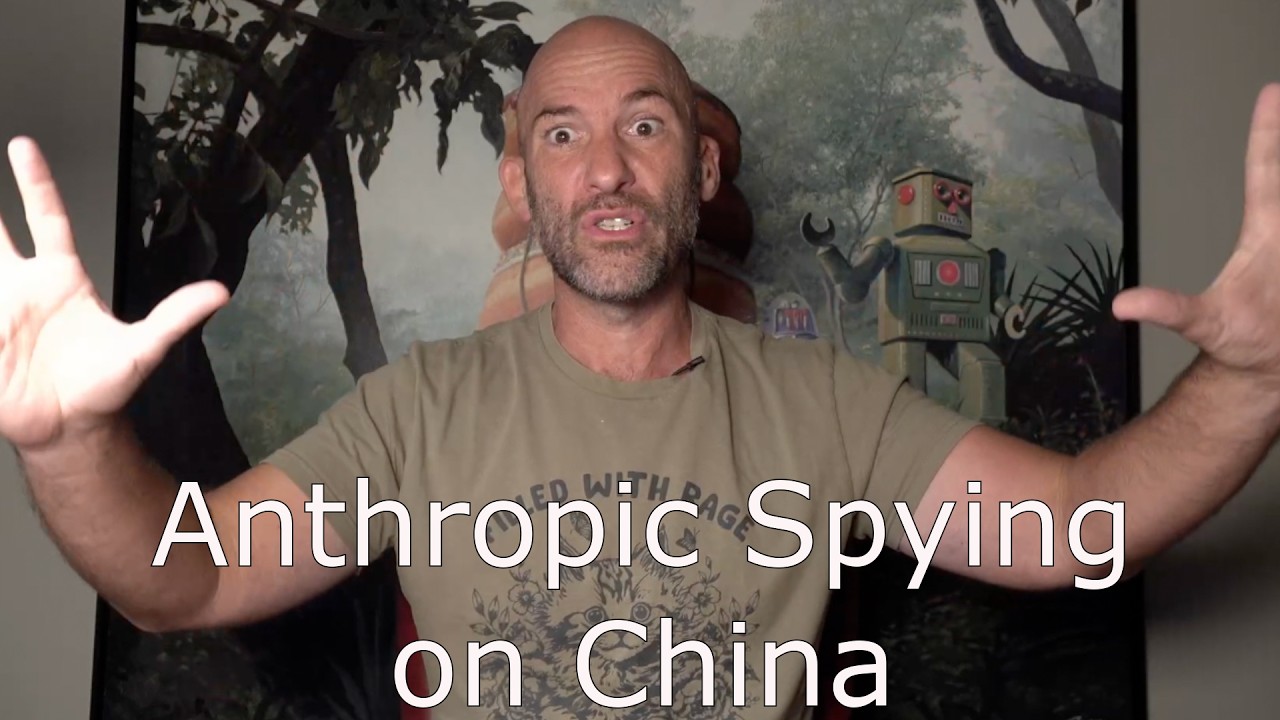
The video critiques Anthropic, a U.S. AI company, for covertly spying on Chinese users to block access amid geopolitical tensions, highlighting the irony of American firms condemning Chinese data practices while engaging in similar surveillance. It argues that such restrictive and invasive measures, driven by political motives rather than practical needs, risk undermining trust in American AI technologies and pushing global users toward more accessible Chinese alternatives.
The video discusses recent developments involving Anthropic, a leading American AI company, which has been accused of spying on its users to identify and block those from China. This move comes amid ongoing tensions in the AI industry, where Chinese companies have been accused of conducting “distillation attacks”—a process where one AI system queries another to improve its own capabilities. The speaker highlights the irony that while American AI firms aggressively scrape data from global websites, often causing disruptions, they view similar actions from Chinese entities as hostile attacks.
Anthropic reportedly embedded covert mechanisms in its software to flag users based on indicators like time zones and proxy usage, aiming to prevent unauthorized access and protect against distillation attacks. When complaints surfaced, the company admitted to this “experiment” but claimed it was being rolled back in newer software updates. However, the speaker points out that despite promises to remove this spyware, it remained active longer than intended, raising concerns about transparency and user privacy.
The broader context involves increasing U.S. government scrutiny and control over AI technologies, including proposals to embed geolocation tracking in hardware like Nvidia GPUs. This creates a challenging environment for international users who may face sudden loss of access or invasive monitoring when using American AI services. The speaker contrasts this with the simplicity of accessing Chinese AI platforms, which require only straightforward payment, suggesting that such restrictive policies could drive global users away from the American AI ecosystem.
The video also critiques the moral arguments often used to justify these measures, such as concerns over sensitive topics like Tiananmen Square or the Uyghurs. The speaker argues that for most practical AI applications—like customer service or image categorization—these political issues rarely arise. Thus, the heavy-handed restrictions and surveillance may be more about geopolitical posturing than actual user needs, potentially undermining trust in American AI technologies.
In conclusion, the speaker questions the wisdom of Anthropic’s spying tactics and the broader U.S. approach to AI governance, suggesting it damages the credibility and usability of American AI products. They invite viewers to reflect on whether such invasive measures are acceptable and how they might influence the global AI landscape, especially when contrasted with more accessible alternatives from China. The video ends by encouraging audience engagement and providing links to follow the speaker’s content on various platforms.