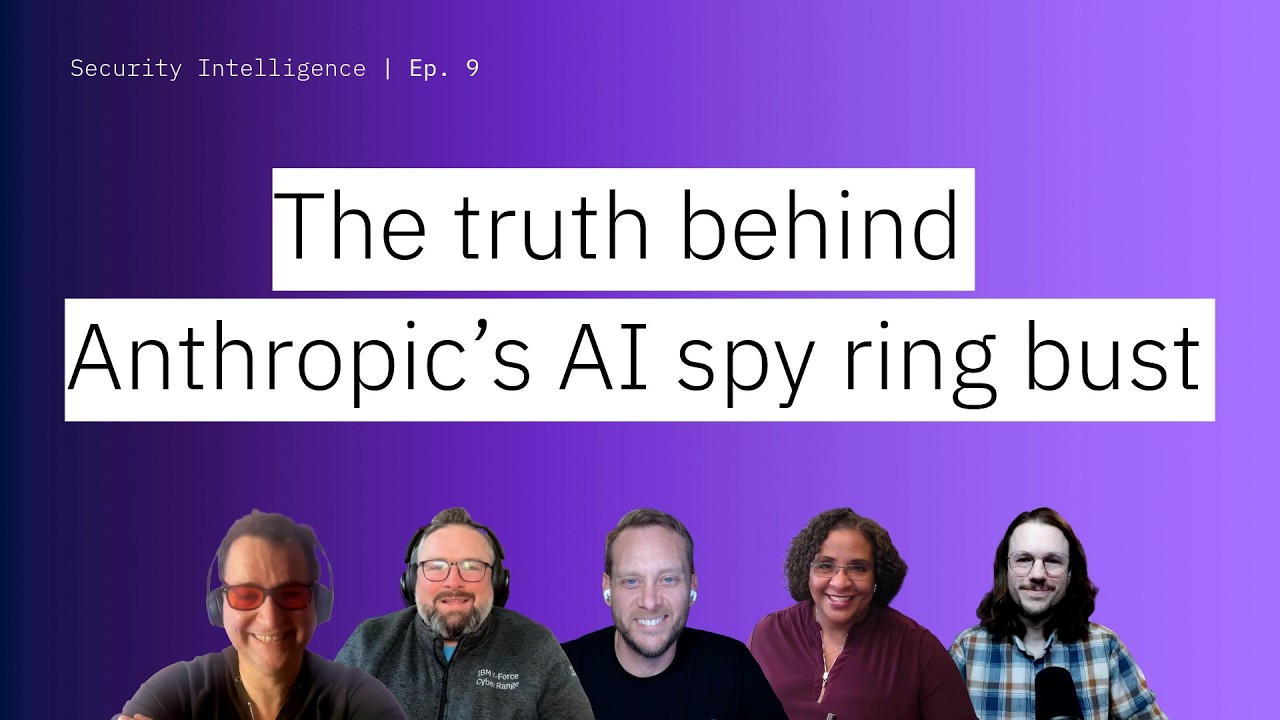
The podcast episode from IBM’s Security Intelligence discusses several pressing cybersecurity topics, beginning with Anthropic’s disruption of an AI-powered espionage campaign. Anthropic revealed that hackers used Claude Code, an AI tool, to automate 80 to 90% of their attack chain, including reconnaissance, exploit writing, and data exfiltration, targeting around 30 organizations. While some experts found this alarming, others viewed it as a predictable evolution where attackers leverage AI and open-source tools to enhance their capabilities. The panel emphasized that defenders should adopt similar AI-driven tools proactively to stay ahead, highlighting the importance of adaptive AI governance and autonomous security architectures.
Next, the conversation shifted to the newly released OWASP Top 10 for 2025, which outlines the most critical web application security risks. Broken access control remains the top threat, with security misconfigurations rising to second place. Two new categories were added: software supply chain failures and mishandling of exceptional conditions. The experts noted that while the list reflects ongoing challenges, such as insecure design and API exposure, it also signals the growing importance of supply chain security. They stressed that defenders should focus on fundamentals like securing the development pipeline, automating configuration management, and gaining deep visibility into APIs and identity flows.
The podcast then explored the evolving ransomware landscape, highlighting a report from Checkpoint Research that shows increased fragmentation among ransomware gangs. The dominance of large gangs is waning, with many smaller groups now responsible for a larger share of attacks. This decentralization complicates threat intelligence and response efforts, as smaller groups are harder to track and less predictable. The panelists discussed how this shift challenges law enforcement and incident response teams, making it a “whack-a-mole” scenario. They agreed that dealing with a few large, organized gangs is preferable to managing numerous smaller, chaotic groups.
Finally, the discussion turned to the surge in cyber insurance payouts in the UK, which more than tripled from 2023 to 2024. This increase reflects both the growing severity of cyberattacks and the lag in organizational resilience. The panel debated whether cyber insurance strengthens defenses or inadvertently encourages ransom demands. They concluded that insurers are increasingly acting as unofficial regulators by requiring proof of security controls and incident readiness, thereby pushing organizations to improve their cybersecurity posture. Cyber insurance serves as a critical safety net that helps organizations recover from attacks and maintain business continuity, despite ongoing debates about its broader impact.
Overall, the episode underscores the dynamic and complex nature of the cybersecurity landscape, where AI-driven attacks, evolving threat actor structures, persistent application vulnerabilities, and financial mechanisms like insurance all interplay. The experts advocate for embracing AI defensively, focusing on foundational security practices, adapting to decentralized threats, and leveraging insurance as part of a comprehensive risk management strategy. The conversation highlights the need for continuous innovation and collaboration to stay ahead in this rapidly changing environment.