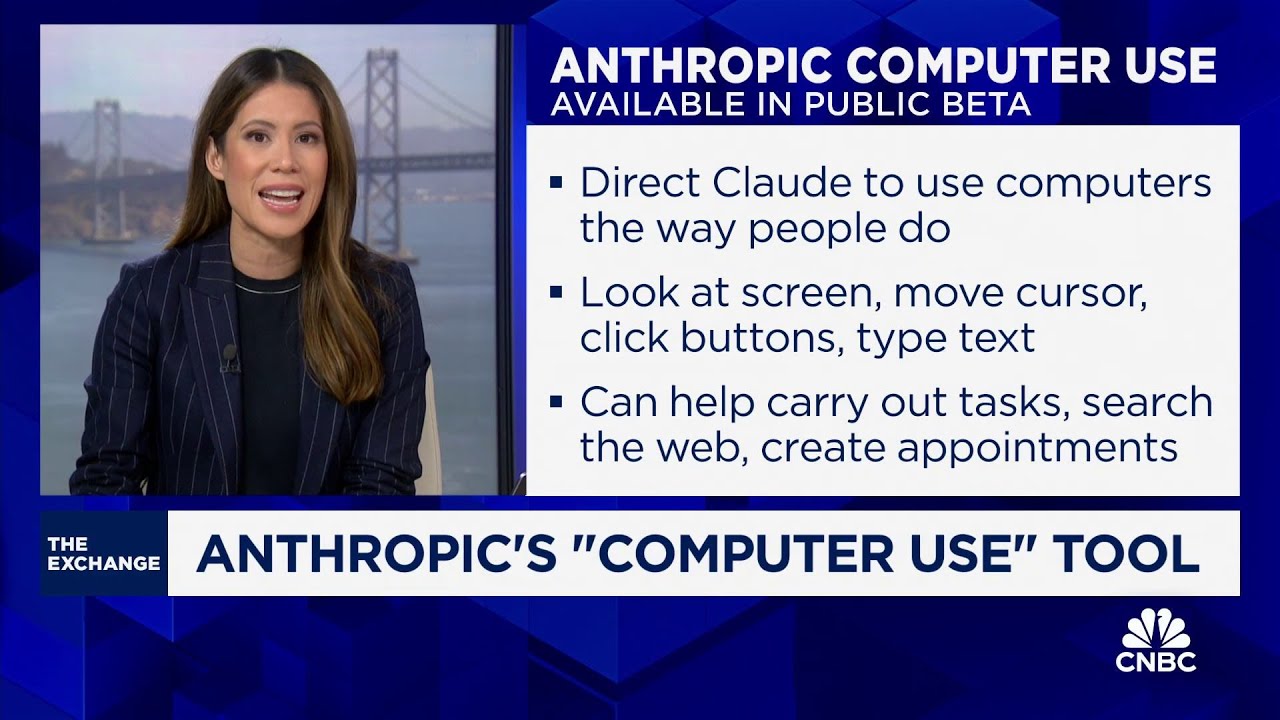
Anthropic has launched a new feature for its AI, Claude, that allows it to take control of a user’s computer to assist with tasks like browsing the internet and scheduling appointments, aiming to enhance collaboration between users and AI. This development reflects the growing trend of integrating AI into everyday tasks, with other companies like Microsoft and Apple also introducing their own AI tools, raising important discussions about trust and the implications of AI taking control of devices.
Anthropic has recently introduced a new feature that allows its AI, Claude, to take control of a user’s computer to assist with various tasks. This innovative tool enables the AI to move the cursor, type, and perform actions such as browsing the internet, scheduling calendar appointments, and filling out forms. The company aims to create a more collaborative experience between users and AI, positioning Claude as a human-like collaborator that can operate on behalf of the user.
The introduction of this feature highlights the rapid advancements in generative AI, with many companies racing to develop AI-powered agents. Anthropic’s tool is part of a broader trend where AI is increasingly integrated into everyday tasks, enhancing productivity and efficiency. The company emphasizes that while the technology is experimental and may occasionally make errors, it represents a significant step forward in the capabilities of AI.
In the competitive landscape of AI development, other major players like Microsoft and Apple are also launching their own AI tools. Microsoft has recently announced its own agent tool, while Apple is set to release its first wave of AI intelligence products soon. This surge in AI tools reflects a growing demand for more sophisticated and capable AI systems that can assist users in various capacities.
Anthropic’s new feature is particularly timely for Amazon, which is a significant investor and licensee of Anthropic’s models. As companies like Salesforce and Microsoft compete to provide advanced tools for enterprise customers, the success of Anthropic’s computer use feature could influence the direction of AI development in the industry. The rollout of this technology will be closely watched to see how effectively it performs in real-world scenarios.
Overall, the introduction of Claude’s computer use feature marks an exciting development in the field of AI, with the potential to reshape how users interact with technology. As the technology evolves and more AI tools become available, users will have to consider the implications of allowing AI to take control of their devices and the tasks they perform. The conversation around trust in AI and its capabilities will continue to grow as these tools become more integrated into daily life.