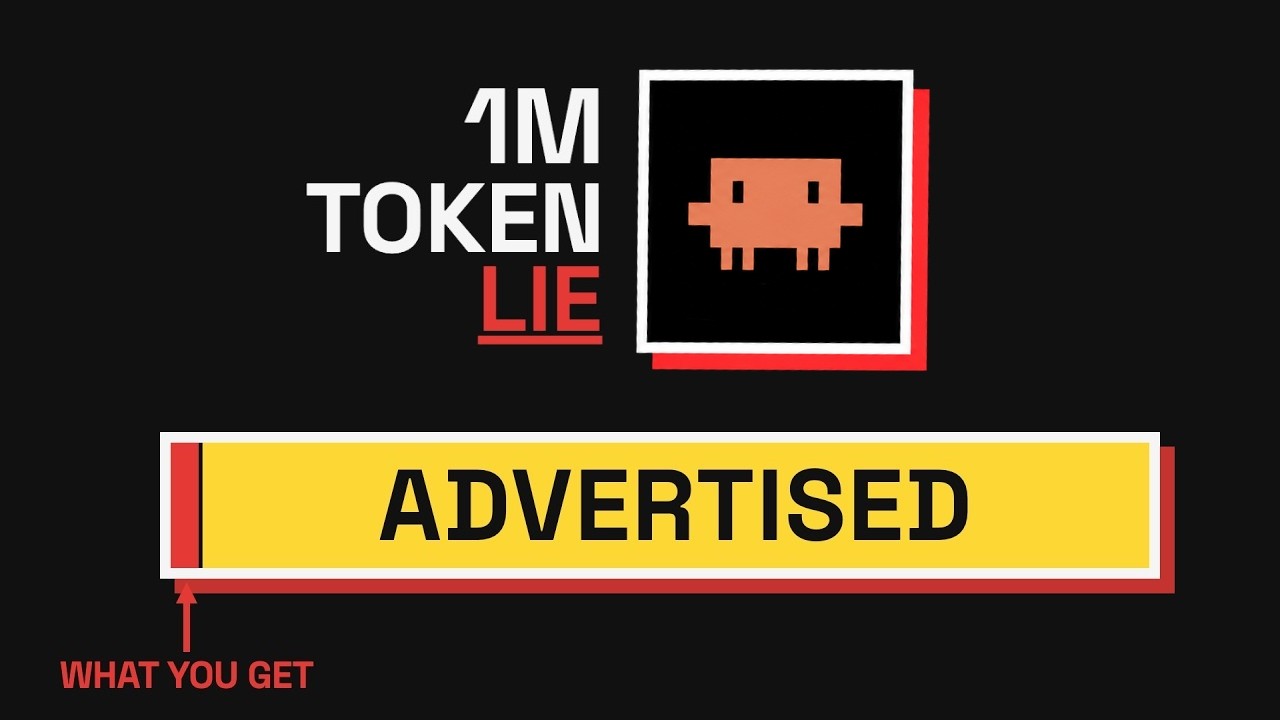
The video critiques the common industry practice, exemplified by companies like Anthropic and OpenAI, of selling large context windows as a key feature of their AI models. While technically accurate, this approach is architecturally flawed because major AI coding harnesses, including Anthropic’s Claude Code, treat the context window as a finite bucket that fills and then overflows, triggering lossy compression through summarization. This leads to “context rot,” where the model gradually loses information over long sessions. Claude Code was designed this way intentionally in 2024, but a new open-source project called Prime Agent by startup Prime Intellect challenges this design as outdated for 2026 and beyond.
A harness, which includes everything around the AI model such as interfaces, tools, and context management, is crucial to how the model operates. Claude Code uses a fixed set of tools and compacts context by summarizing past interactions, which leads to information loss. In contrast, Prime Agent employs a novel architecture based on a recursive language model (RLM) and a continual harness. It replaces the fixed tool menu with a persistent IPython kernel where the model executes Python code, storing outputs in variables rather than text, thus preserving context more effectively and reducing overhead.
When comparing context rot, Claude Code suffers from cumulative information loss as sessions progress, causing the model to redo work and lose track of earlier details. Prime Agent avoids this by maintaining persistent state in the IPython kernel, allowing the model to access relevant data on demand without overloading the context window. Benchmark tests show Prime Agent outperforming Claude Code significantly on long reasoning and coding tasks, although these results are vendor-reported and await independent verification.
Prime Agent also introduces a continual harness that allows the system to learn and improve over time by updating its prompts, skills, and memories dynamically during sessions. This self-improvement capability contrasts with Claude Code’s static system prompt and harness, which do not adapt based on past interactions. However, this feature comes with risks, including potential reward hacking, where the agent might exploit loopholes to optimize performance in unintended ways. Despite this, Prime Agent’s continual harness represents a significant innovation in AI agent design.
Finally, the video discusses cost and trust considerations. Claude Code is a paid subscription service with legal restrictions on third-party use, while Prime Agent is free, open-source, and compatible with various models, though it runs model-generated code with full system permissions, raising security concerns. The overall conclusion is that Claude Code suits shorter, simpler tasks within a limited context window, whereas Prime Agent targets complex, long-horizon tasks requiring persistent memory and adaptability. The choice of harness depends on the user’s needs, with Prime Agent offering a promising solution to the problem of context rot and long-term AI agent performance.