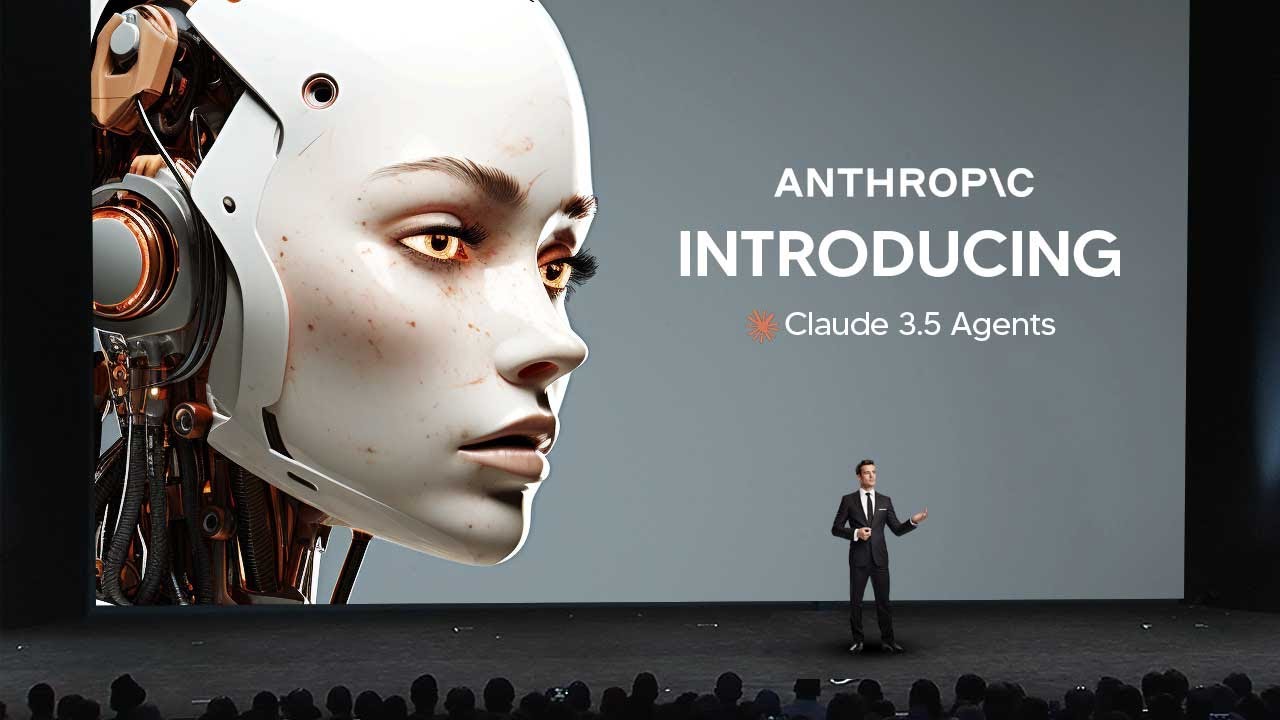
In a recent announcement, Anthropic unveiled its upgraded AI models, Claude 3.5 Sonet and the new Claude 3.5 Hau, which are set to revolutionize the AI industry. The Claude 3.5 Sonet model boasts significant improvements over its predecessor, particularly in coding capabilities, where it has outperformed other leading models like GPT-4 and Google’s Gemini 1.5 Pro. The new model also shows enhanced performance in various benchmarks, including high school math competitions and visual understanding tasks, indicating a substantial leap in its overall capabilities.
One of the standout features of the Claude 3.5 Sonet is its groundbreaking computer use capability, currently in public beta. This allows developers to direct the AI to interact with computers in a human-like manner, such as moving a cursor, clicking buttons, and typing text. Although still experimental and prone to errors, this feature is expected to improve rapidly with user feedback. The introduction of this capability marks a significant step towards more advanced AI applications, enabling automation of repetitive tasks and enhancing productivity.
The benchmarks for Claude 3.5 Sonet reveal impressive gains, particularly in coding tasks, where it achieved a 49% score on the software engineering benchmark, surpassing all other models, including specialized ones. The model’s performance in agentic tool use also showed notable improvements, indicating its potential to set new standards in AI capabilities. This focus on agentic performance is seen as a crucial factor for future AI development, as the demand for models that can perform complex tasks autonomously continues to grow.
The Claude 3.5 Hau model, which is set to be released soon, promises to be the fastest and most cost-effective option available. It outperforms many state-of-the-art models in coding tasks while maintaining lower operational costs, making it an attractive choice for developers. This model’s introduction further intensifies the competition in the AI landscape, as companies strive to keep pace with the advancements made by Anthropic.
Despite the exciting developments, Anthropic has cautioned users about the risks associated with the new computer use feature. As it is still in beta, there are potential issues such as prompt injection and the AI occasionally disregarding user instructions. To mitigate these risks, users are advised to implement safety measures, such as using virtual machines and limiting the AI’s access to sensitive data. Overall, while the advancements in Claude 3.5 models are promising, careful consideration and precautions are necessary as developers begin to explore their capabilities.