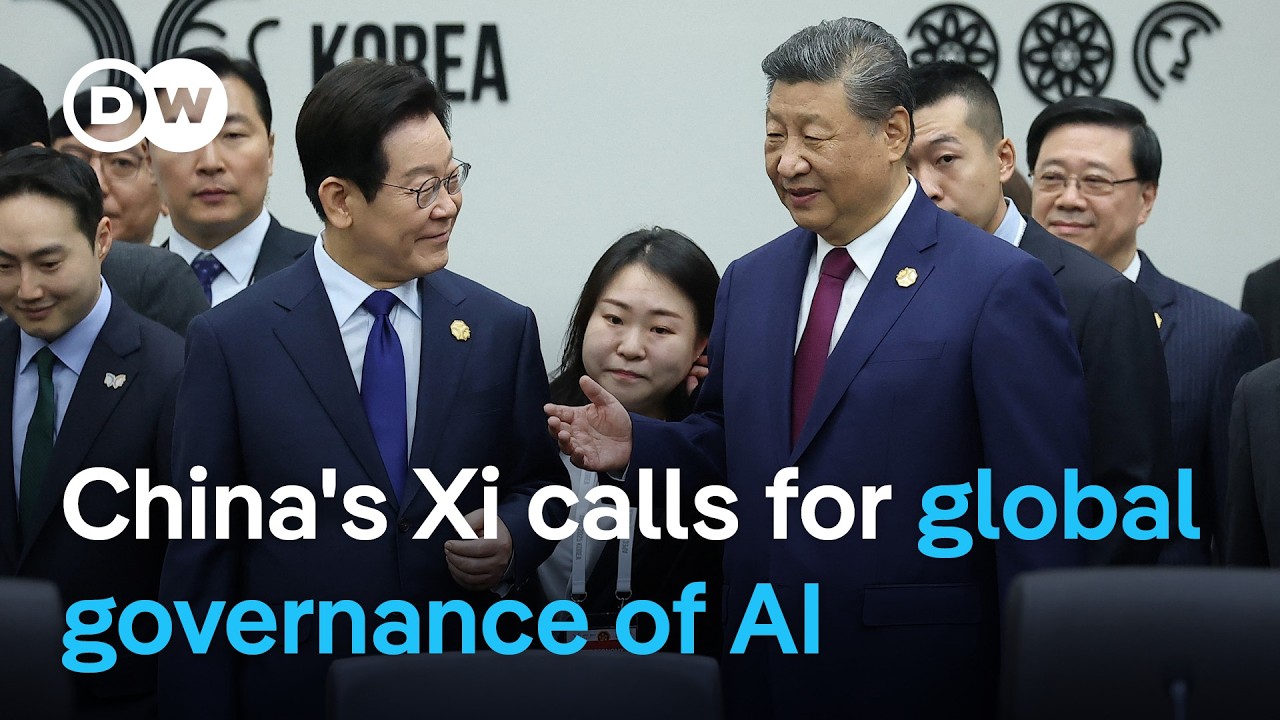
At the APEC Summit in South Korea, Chinese President Xi Jinping proposed creating a global AI governance organization, supported by several countries including South Korea, marking China’s bid to lead international AI regulation amid contrasting US preferences for national oversight. While the summit fostered dialogue on AI, trade, and regional security, particularly between China, South Korea, and the US, it resulted in broad, symbolic agreements without concrete resolutions to pressing economic and geopolitical challenges in the Asia-Pacific region.
At the Asia-Pacific Economic Cooperation (APEC) Summit held in South Korea, Chinese President Xi Jinping proposed the establishment of a global organization to govern artificial intelligence (AI). This idea was included in a joint statement adopted by the 21 Pacific Rim economies participating in APEC, which also called for a resilient global trade environment benefiting all. The proposed AI cooperation organization could be headquartered in Shanghai, reflecting China’s ambition to lead multilateral international organizations. This move aligns with China’s recent efforts to create international bodies, such as a mediation organization with 37 signatories.
China’s proposal for a global AI governance body contrasts with the approach favored by the United States, which emphasizes national regulation of AI. The Chinese initiative received support from several countries, including the host nation South Korea. South Korean President Lee expressed hope for a mutual solution that would harness AI’s potential as a shared benefit among multiple countries. Observers view China’s proposal not just as a technological initiative but as a geopolitical strategy to expand its influence in international governance.
The summit also featured a significant meeting on the sidelines between the presidents of China and South Korea. South Korea finds itself balancing close economic ties with China and a strategic alliance with the United States. Key topics in their discussions included supply chains, economic cooperation, regional security, and the denuclearization of North Korea. China remains a crucial economic and diplomatic partner for North Korea, and South Korea’s new government sees China’s involvement as essential for advancing more amicable talks with the North.
Regarding the overall outcomes of APEC 2025, the summit’s joint declaration was seen as broad and largely symbolic. While the gathering underscored the importance of multilateral dialogue amid challenging economic times, concrete progress on critical issues like supply chain diversification and trade tensions was limited. The summit provided a platform for leaders to meet and discuss, but substantive resolutions, particularly concerning the ongoing trade war affecting many economies in East and Southeast Asia, were not achieved.
In summary, the APEC summit highlighted China’s push for greater leadership in global AI governance and multilateral cooperation, while also reflecting the complex geopolitical dynamics in the Asia-Pacific region. Although the summit fostered dialogue and some agreement on broad principles, many of the pressing economic and security challenges remain unresolved. The interactions between China, South Korea, and the United States at the summit illustrate the delicate balancing act in regional diplomacy and the ongoing quest for stability and cooperation in the face of competing national interests.