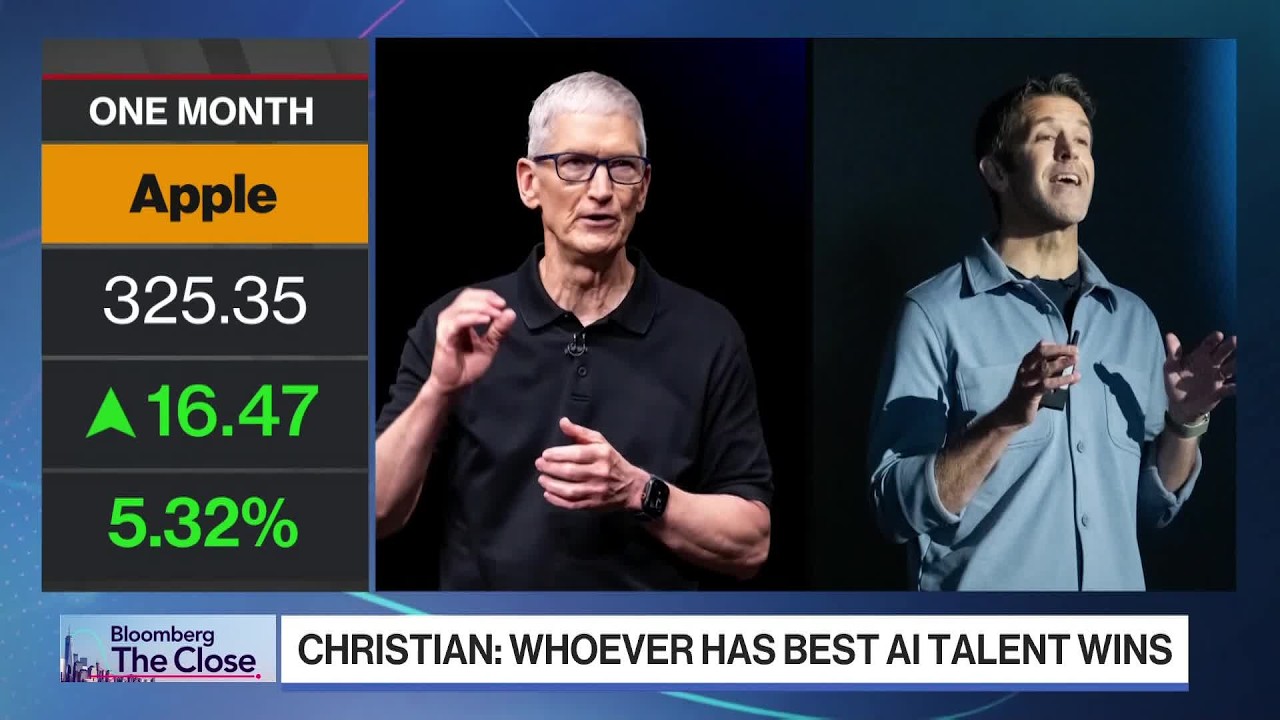
The discussion begins by addressing the appointment of John Ternus, a hardware engineer, as Apple’s new CEO, despite perceptions that Apple’s challenges lie more in software and AI than hardware. The key strength Ternus brings is his engineering background combined with the crucial ability to recruit top talent, especially in the fiercely competitive AI landscape. The expert emphasizes that Apple’s future success hinges on attracting and retaining the best AI talent, an area where Apple has recently been losing ground to competitors like Meta. Reinventing Apple with a strong AI focus is seen as essential, and Ternus must inspire belief in his vision to lead this transformation.
The conversation then shifts to the leadership qualities required in today’s tech CEOs, highlighting the importance of visionary gravitas that attracts both investors and employees. While Ternus is acknowledged to possess some of this appeal, the company currently struggles to retain AI talent and lacks a significant presence in robotics. To succeed, Ternus must be a visible and compelling figure in the AI market, articulating a clear vision that motivates top-tier engineers and researchers to join Apple. The ability to innovate and demonstrate tangible AI-driven business results will be critical in regaining competitive advantage.
Regarding the transition from Tim Cook to John Ternus, the presence of the former CEO in the company is seen as a temporary but potentially challenging dynamic. While Cook’s ongoing role may provide continuity, it is unlikely to be a long-term leadership model. The expert notes that such overlaps are common in CEO transitions but usually last only a short period. Ternus will eventually need to establish his own leadership style and team, distinct from Cook’s, to effectively steer Apple forward.
The discussion also touches on the expected changes in Apple’s executive team under Ternus. Some departures have already occurred, and more are anticipated as Ternus shapes his inner circle. Recruiting new talent, particularly from leading AI organizations like Anthropic, OpenAI, and DeepMind, will be a priority. Currently, Apple lacks a clear frontier AI model strategy and agentic AI approach, which Ternus must develop. The challenge of competing for top AI talent against industry heavyweights like Sam Altman, Elon Musk, and Mark Zuckerberg is highlighted as a significant hurdle.
Finally, the importance of succession planning within Apple’s leadership is underscored. While Ternus’s appointment was generally well-received as a natural fit, the board must ensure there are strong internal and external candidates ready to step up if needed. Sophisticated companies maintain multiple succession options to safeguard long-term stability. For Apple, building a robust leadership bench and securing early wins for Ternus are critical priorities to maintain investor confidence and drive the company’s future success.