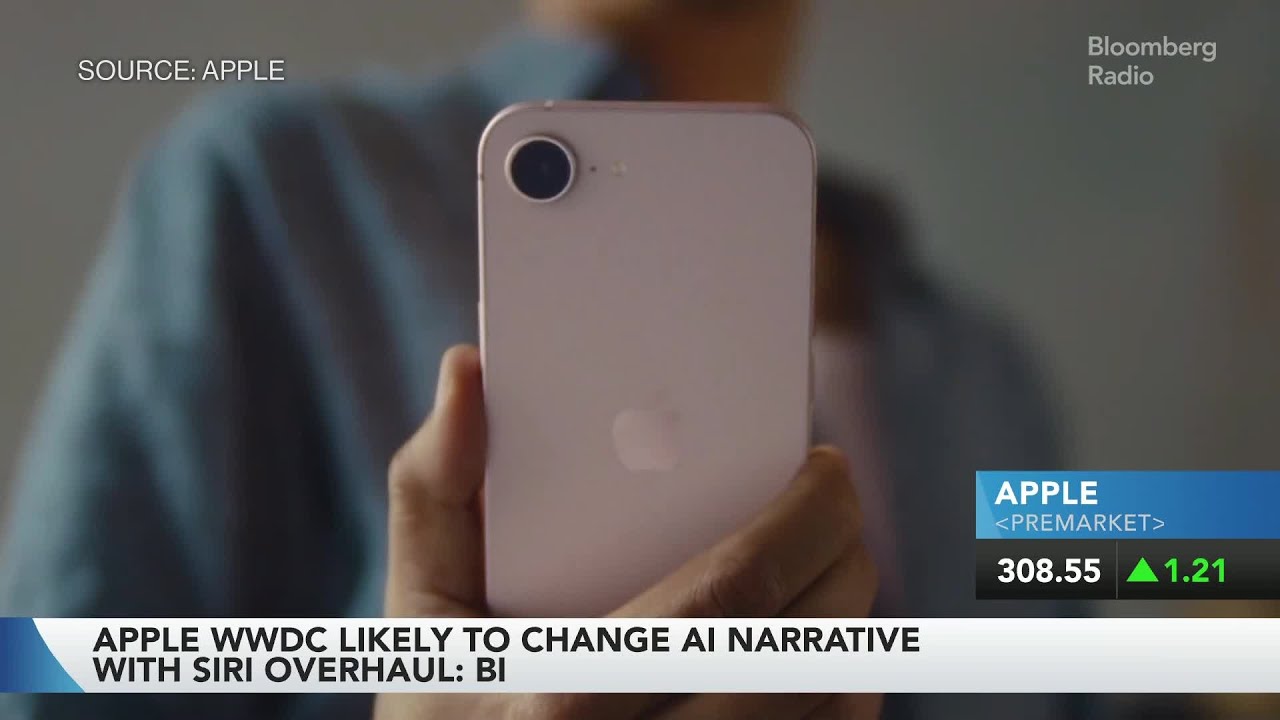
The discussion highlights Apple’s challenge in differentiating its AI capabilities, particularly Siri, within a competitive landscape, while also noting Intel’s potential role in chip manufacturing for Google and Nvidia, and the significance of Apple’s upcoming WWDC amid leadership transition. Additionally, it covers SpaceX’s Starlink IPO strategy and its dual business model combining aerospace launches with emerging AI cloud computing services, exemplified by a substantial contract with Google.
The discussion begins with the challenge Apple faces in educating consumers about the unique capabilities of its devices, particularly in the realm of AI and Siri. While Apple is developing a standalone Siri app that functions similarly to ChatGPT—allowing multi-step conversations and cross-device continuity—many users remain unclear about why they should use Siri when other AI tools like Gemini, Claude, and Perplexity exist as standalone apps. The key advantage Apple aims to leverage is its vast ecosystem of 2.5 billion devices, enabling seamless transitions of AI interactions across iPhones, Macs, and iPads.
The conversation then shifts to recent developments in the semiconductor industry, particularly Intel’s potential role as a contract manufacturer for Google and Nvidia. Reports suggest that Intel may produce chips for Google’s TPUs, which are currently designed with Broadcom and fabricated by TSMC. This move would be significant for Intel, which has struggled to secure major customers for its foundry business. The news of Intel’s involvement is seen as a strategic lifeline and aligns with broader industry trends of diversifying chip manufacturing partnerships.
Attention turns to Apple’s upcoming Worldwide Developers Conference (WWDC), which is expected to be the last under CEO Tim Cook before John Tanis takes over. While no major surprises are anticipated, the event is seen as a critical moment for Apple to showcase its software and hardware updates ahead of the fall product refresh cycle. Despite the lack of a strong AI narrative, Apple’s stock has performed well this year, partly due to investor confidence in the company’s smooth leadership transition and ongoing innovation.
The discussion also covers the highly anticipated IPO of SpaceX’s Starlink, which was initially priced at $135 per share, valuing the company at $1.77 trillion. This pricing strategy is viewed as a deliberate move to leave room for upward adjustment during the roadshow, with expectations that the final price could reach $150 or more. The IPO is generating significant buzz in Silicon Valley, with market watchers preparing for potentially volatile trading once the shares begin to trade publicly.
Finally, the conversation highlights SpaceX’s evolving business model, which currently focuses on launching rockets carrying payloads for various customers while planning to sell AI computing services to enterprises in the distant future. Recent regulatory filings reveal that Google will pay SpaceX $925 million per month for compute services, underscoring the company’s strategy to hedge its bets by becoming a hyperscaler in cloud computing. This dual approach positions SpaceX uniquely in both aerospace and AI markets, adding complexity and intrigue to its upcoming public offering.