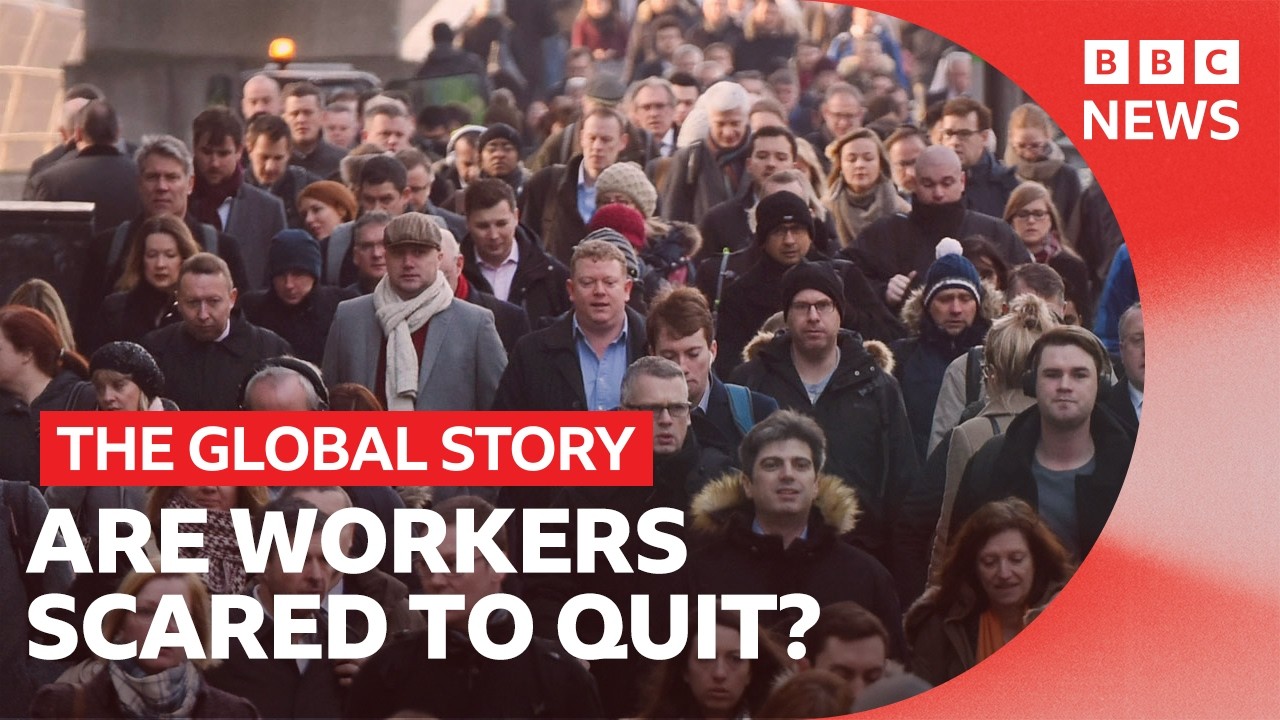
The video explores the shift in workplace dynamics from the period known as the “Great Resignation” during the pandemic to the current phase termed the “Great Hunkering Down.” During the Great Resignation, which began in early 2021, many people quit their jobs driven by pandemic-induced stress, a reevaluation of life priorities, and the rise of remote work. This period saw employees holding significant bargaining power, with employers offering perks like free coffee and pet-friendly offices to retain staff. However, this trend has reversed, and now people are more hesitant to leave their jobs due to economic uncertainty and emerging technologies like AI.
The discussion highlights the experiences of workers like Dominic Harris, a truck driver who faced extreme stress and exhaustion during the pandemic due to increased demand and relaxed working regulations. His story illustrates the intense pressures some workers endured, contrasting with those who voluntarily left jobs seeking better work-life balance. Research shows that while most people want to work, they desire meaningful and fulfilling work rather than staying in unsatisfactory roles. Quitting often results from either a gradual build-up of dissatisfaction or a sudden triggering event.
The impact of AI on the labor market is a significant focus, with current low quitting rates partly attributed to fears about job security amid rapid technological change. AI is transforming workplaces, such as Amazon warehouses where robots now bring shelves to stationary workers, changing the nature of jobs to be less physically demanding but more repetitive and isolating. Young workers, particularly Gen Z, have mixed feelings about AI; while some are optimistic about its potential to improve work, others feel alienated by AI-driven hiring processes and worry about job displacement.
Students and younger generations show cautious optimism about AI, hoping it can relieve them of mundane tasks and allow for more engaging work. However, there is also frustration with AI’s role in recruitment, which can feel dehumanizing. Employers face challenges managing large volumes of applications and are caught in an “AI arms race” with candidates using AI tools themselves. The conversation emphasizes the need to rethink job design, especially for entry-level roles, to make work more meaningful and better suited to human skills in an AI-augmented future.
Finally, practical advice is offered for those considering quitting their jobs: clearly identify the problem, communicate with employers to seek solutions, and ensure the next opportunity is an improvement to avoid regret. The story of Dominic, who transitioned from truck driving to becoming a grave tender, exemplifies finding personal fulfillment by pursuing a passion outside traditional employment. The video concludes by acknowledging the complex and evolving nature of work in the face of economic, technological, and social changes.