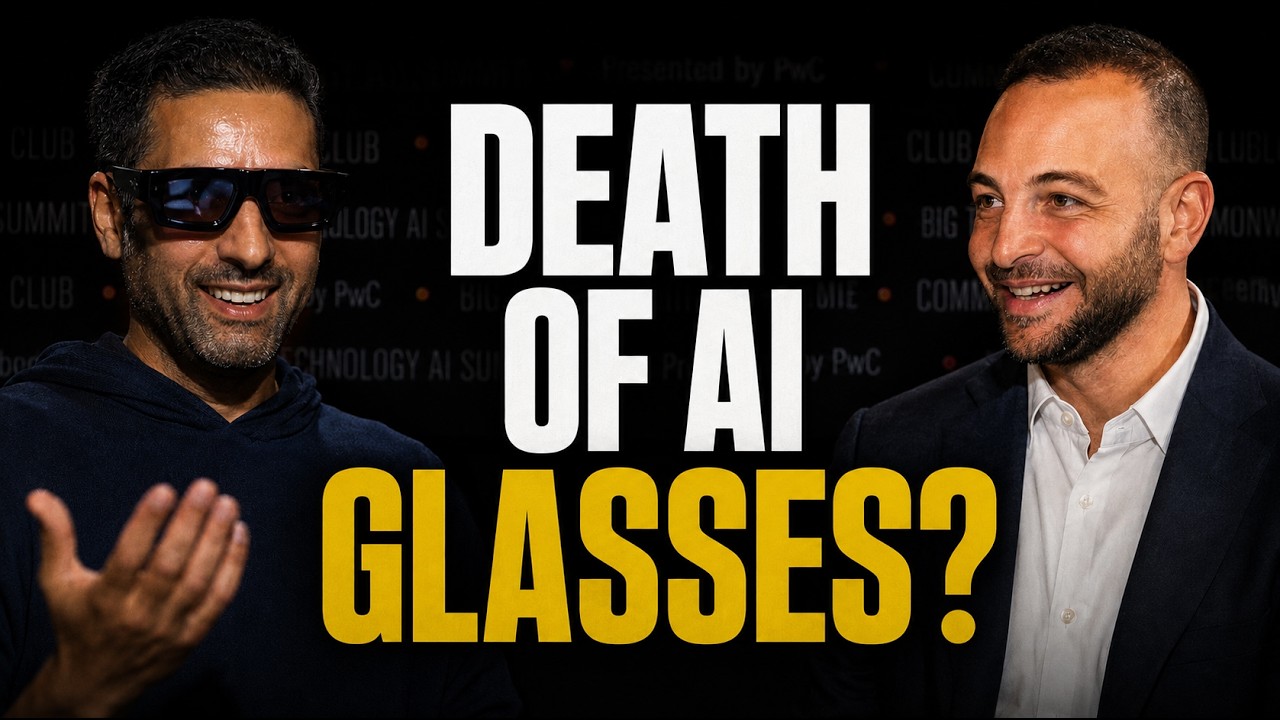
The Big Technology Podcast Friday edition opens with a discussion about Snapchat’s newly launched AR Spectacles, which have been met with mixed reactions. Despite Snapchat CEO Evan Spiegel’s enthusiasm about rethinking computing nearly two decades after the iPhone’s debut, the market and social media responses have been largely critical, focusing on the glasses’ bulky design and impracticality. The hosts debate whether AR glasses as a form factor are still viable, with one expressing skepticism based on current devices like Snap Spectacles and Meta’s Ray-Ban Stories, while the other remains optimistic that AR glasses will eventually succeed, possibly led by Apple.
Audience members contribute to the conversation by sharing their experiences and questions about AR glasses and AI technology. One attendee highlights the challenges companies face when their innovations are years ahead of consumer readiness, drawing parallels to IBM’s Watson and Meta’s struggles. Another raises the issue of the physical design of AR glasses, debating whether future devices will be bulky or slim, with the consensus leaning towards leveraging smartphones for computing power to keep glasses lightweight. The discussion also touches on practical use cases for AR glasses, such as shared virtual experiences and enhanced productivity through multiple virtual monitors.
The conversation shifts to AI agents and their evolving capabilities, particularly their ability to work autonomously for extended periods. The hosts and audience discuss the progress in AI’s autonomous functioning, noting that while some tasks are already being handled effectively by AI agents, there remains a significant gap between benchmark performance and real-world application. They emphasize the importance of clear goal-setting for AI tasks and the ongoing challenges in making AI agents more reliable and context-aware. The topic also includes reflections on the limitations of current AI examples, such as travel-related tasks, which are often cited but may not fully showcase AI’s potential.
Concerns about privacy and the use of AI-generated personal data for advertising are raised by audience members. The panel acknowledges that AI companies will likely leverage detailed user profiles for targeted advertising, raising ethical and trust issues. They discuss the unprecedented amount of personal information AI models can gather and analyze, which could lead to highly personalized but potentially intrusive advertising experiences. The conversation also touches on the varying approaches of different AI companies regarding advertising and data use, highlighting the tension between innovation, monetization, and user privacy.
Finally, the discussion broadens to consider the societal responsibilities of big tech companies as AI technology advances. Audience members and hosts debate whether these companies will prioritize using AI to address major global challenges beyond product engagement and profit. While some express hope for greater cooperation and positive impact, skepticism remains about whether fierce competition will allow for meaningful contributions to societal good. The podcast concludes with plans to continue exploring these themes in future episodes, including deeper dives into AI governance, health applications, and the balance between innovation and ethical considerations.