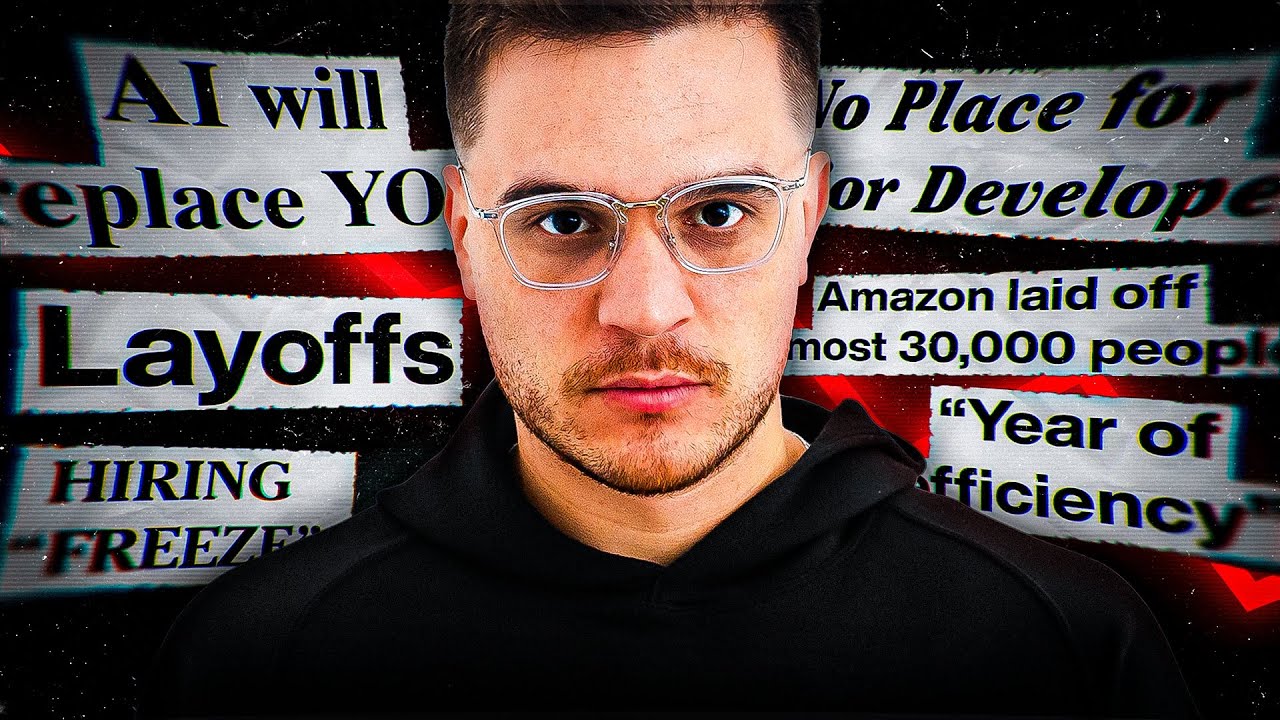
Despite a perceived decline in software developer job postings since 2022, actual hiring has remained steady, and a strong rebound is expected by 2025 due to factors like the AI investment bubble bursting, favorable economic policies, and shifts in immigration rules favoring domestic hiring. However, challenges such as a shrinking talent pipeline, cultural job dissatisfaction, and changes in education persist, though the overall outlook for US and some European developer jobs remains cautiously optimistic.
The video addresses concerns about the current state and future of software developer jobs, particularly in the US market. While many videos highlight a sharp decline in job postings since the 2022 peak, the speaker argues that these portrayals are misleading. Companies often post more jobs than they actually intend to fill, using postings to attract applicants and impress investors. Historically, the number of actual hires has remained relatively steady despite fluctuations in job postings, indicating a market stagnation rather than a collapse.
Looking ahead to 2025, the speaker is optimistic about a strong rebound in developer hiring. One key reason is the bursting of the AI investment bubble, acknowledged even by industry leaders like Sam Altman. Contrary to fears that AI will replace developers, experts including AWS CEO Matt Garman emphasize that AI is unlikely to substitute junior developers entirely. Instead, AI is expected to create more jobs than it eliminates, supporting renewed demand for skilled developers.
Economic factors also play a significant role in the anticipated recovery. The Federal Reserve is considering lowering interest rates, which would encourage companies to borrow and invest more, leading to increased hiring. Additionally, a recent reversal of a tax law change (Section 174) that had made software development investments taxable is expected to incentivize companies to ramp up their software engineering efforts again. This rollback makes domestic software development more financially attractive, encouraging firms to invest in their US-based teams.
Immigration policies, particularly around H1B visas, are also influencing the market. The number of new H1B visas issued to software developers has been significant, but the process has become more expensive and bureaucratically challenging. This is pushing companies to prefer hiring US-based developers or offshoring entire teams rather than relying on foreign workers through visas. These legislative and economic shifts collectively favor domestic developers, potentially reducing competition from international candidates.
Finally, the video touches on broader industry trends affecting the developer workforce. Many developers are quitting their jobs, partly due to a cultural trend and dissatisfaction despite high salaries. Coding boot camps are closing due to low profitability, and fewer students are pursuing computer science degrees, leading to a shrinking talent pipeline. Despite these challenges, the speaker expects a gradual recovery in software engineering hiring over the next 6 to 12 months, with remote US software jobs becoming more competitive and some positive effects extending to European markets.