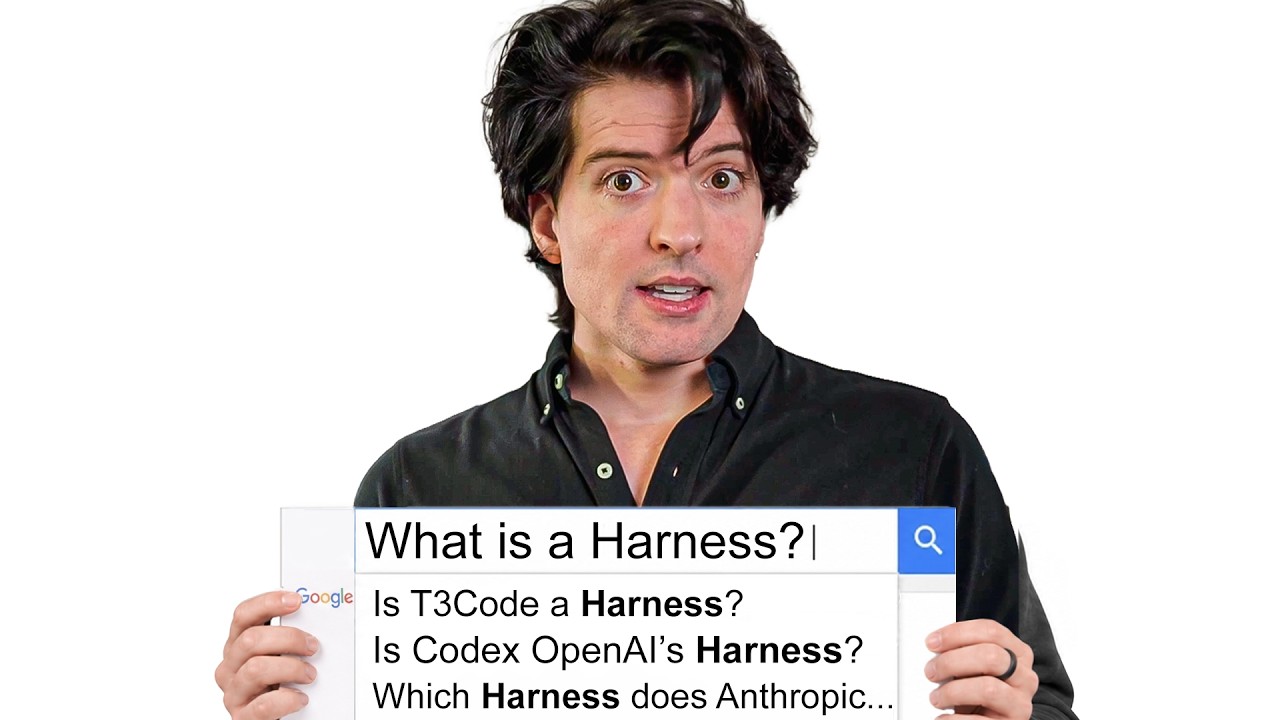
The video begins with the creator addressing a Twitter debate about the relevance of harnesses in AI development, comparing it to the trivial tabs versus spaces argument among developers. He expresses fatigue over the topic but aims to clarify what harnesses are and why they are becoming less critical. Harnesses serve as the essential interface that allows language models (LLMs), which only generate text, to perform actions by interpreting special syntax to interact with tools and systems. Without a harness, an LLM is like a chef in an empty kitchen—capable of planning but unable to execute tasks.
The creator explains the hierarchy of developer concerns, from trivial formatting issues like tabs and spaces to more significant architectural and product-level decisions. Over time, as abstractions and tools improve, developers shift their focus upward, caring less about low-level details. This trend is accelerating with AI advancements, where models can generate code and understand architecture, reducing the need for deep manual involvement in foundational tasks. Harnesses, once a hot topic, are now becoming just one layer among many, often invisible to end users.
He distinguishes between interfaces and harnesses using examples: Twitch and YouTube are interfaces for humans, while tools like Claude Code Agent SDK are harnesses that provide LLMs with capabilities to read, edit, and execute code. T3 Code, his own project, is not a harness but an interface that connects humans to harnesses and manages multiple harnesses through a middleware layer called MCP. This design allows T3 Code to offer flexibility and interoperability across different harnesses without forcing users to commit to one, making harness choice less significant.
The video also touches on the cultural aspect of developer preferences, comparing it to skateboarding stances and programming language loyalties. Developers often get attached to the layer they first mastered, resisting change even as the industry evolves. The creator embraces change and abstraction, having transitioned from backend to frontend to AI development, and encourages others to adapt similarly. He argues that obsessing over which harness to use is becoming obsolete, as models and harnesses increasingly integrate and improve together.
In conclusion, the creator asserts that harnesses are becoming less important as AI systems mature and abstract away complexity. He positions T3 Code as an “Aentic Development Environment” (ADE), a new category of tool that facilitates AI-driven development without being a harness itself. While harnesses still exist, their role is diminishing, and users should focus on productivity rather than debating minor differences. He hopes this video will be his last on the topic, encouraging viewers to understand harnesses properly and move on to more meaningful work.