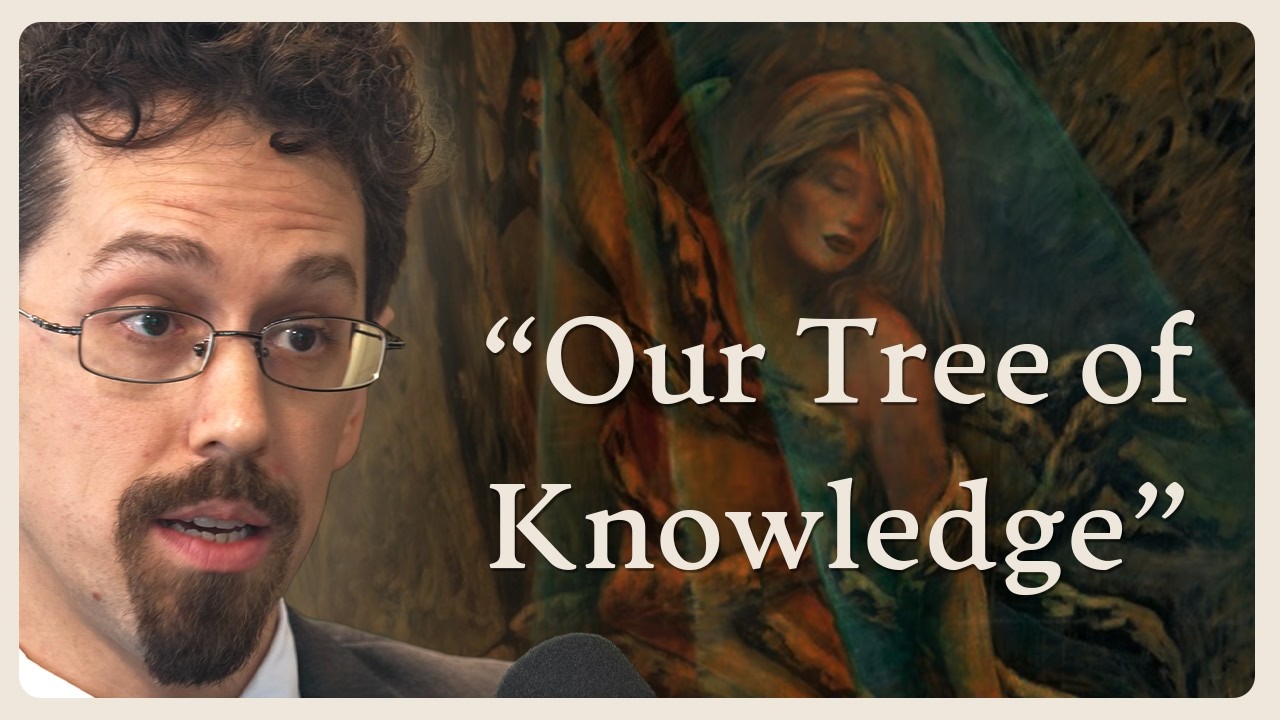
The speaker explores historical and mythological fears surrounding technological knowledge but ultimately frames artificial intelligence as a profound discovery about the universe’s fundamental patterns, rather than something inherently evil. They advocate for viewing AI as a responsible human pursuit aligned with a divine purpose to understand and engage thoughtfully with the deep structures of reality.
The speaker begins by reflecting on historical and mythological narratives surrounding technological knowledge, such as the Garden of Eden, Prometheus, and the Book of Enoch. In these stories, the acquisition of knowledge and technological mastery is often linked to fallen or demonic figures, which raises moral concerns about the implications of advancing technology today. This connection causes the speaker to feel uneasy, as modern technological developments seem to echo these ancient themes of forbidden or dangerous knowledge.
The discussion then shifts to defining artificial intelligence (AI) in a formal sense. AI is described not as a traditional invention or technology but rather as a discovery about nature and reality. Specifically, AI involves deep learning and the use of deep neural networks to process large datasets. This approach reveals that matter can be configured to exhibit properties associated with intelligence, highlighting a fundamental aspect of the universe’s structure.
The speaker emphasizes the complexity of the universe, noting that while it is difficult to predict events, there exists a deep underlying structure. This structure is viewed through a theological lens as the domain where God resides. Intelligence, in this context, is the ability to recognize and compress patterns—essentially finding shortcuts that simplify understanding and prediction. This pattern recognition is central to both biological intelligence and the functioning of AI systems.
Importantly, the speaker rejects the notion that AI or technological mastery is inherently demonic or evil. Instead, they frame the development and understanding of AI as part of a human responsibility or privilege. This perspective sees the pursuit of knowledge and the uncovering of the universe’s deep structure as aligned with a divine purpose, rather than a transgression or moral failing.
In conclusion, the speaker presents AI as a profound discovery that bridges natural intelligence and artificial systems, rooted in the fundamental patterns of reality. While acknowledging the moral anxieties tied to historical narratives about knowledge, they advocate for viewing AI as a tool for understanding the universe and fulfilling a god-given role to explore and comprehend the world’s hidden structures. This approach encourages a balanced and thoughtful engagement with AI, free from fear of it being inherently evil.