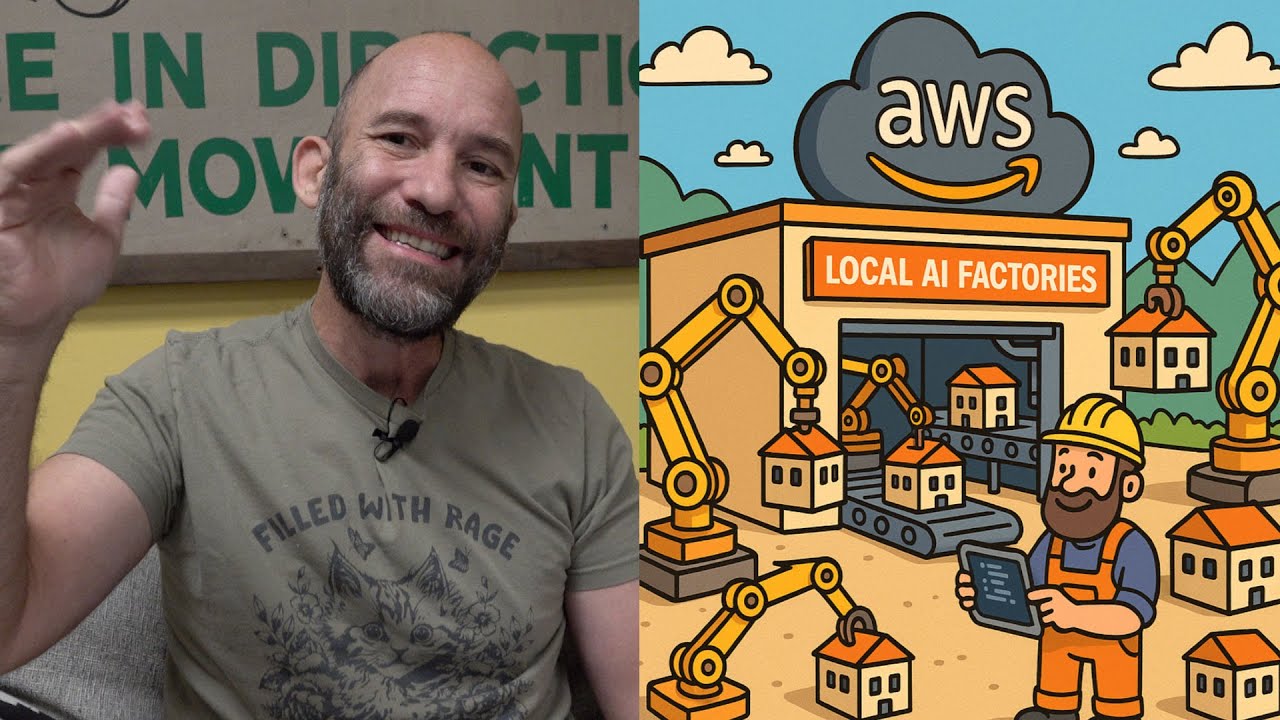
Eli discusses the resurgence of on-premises AI infrastructure, driven by concerns over data sovereignty, regulatory compliance, and security, while questioning whether these “AI factories” truly enhance security or mainly serve as security theater. He emphasizes the cyclical nature of technology architecture, urging professionals to adopt flexible strategies that consider evolving bottlenecks and geopolitical factors rather than rigidly favoring cloud or local solutions.
In this video, Eli, the computer guy, discusses the recent trend of major cloud providers like Amazon and Microsoft offering on-premises AI infrastructure solutions, which he refers to as “AI factories,” though he criticizes the use of the term “factories” as misleading. He explains that this trend reflects a cyclical nature in technology architecture, where older models like on-premises data centers are becoming relevant again after years of cloud dominance. Eli emphasizes that technology evolves with changing bottlenecks and risks, and professionals should avoid rigidly adhering to one architectural style or technology as the only correct approach.
Eli highlights the reasons behind this shift back to local infrastructure, including concerns about data sovereignty, regulatory compliance, and security. Governments and corporations want to keep sensitive data within specific geographic boundaries to prevent foreign adversaries or competitors from accessing it. Amazon’s new product allows customers to host AI systems physically on their premises while Amazon manages the infrastructure remotely. Eli raises important questions about the actual security benefits of this model, pointing out that if Amazon still manages the systems, the perceived control might be more about security theater than real risk mitigation.
The video also touches on the ongoing debate about cloud security versus local infrastructure security. Eli argues that many people misunderstand cloud computing and mistakenly believe that physically seeing hardware makes it more secure. He points out that cloud providers like Amazon and Microsoft often have better security and reliability than many local setups, especially considering the expertise and resources they invest in their infrastructure. He also notes the convenience of cloud services in handling downtime and maintenance, contrasting it with the burden on local IT teams when systems fail.
Eli discusses the technical aspects of Amazon’s AI factories, which combine AWS and NVIDIA technologies, offering customers options to use NVIDIA GPUs or Amazon’s own Tranium 3 chips. This competition between chip providers reflects the broader industry trend of cloud providers developing proprietary hardware to reduce reliance on third parties like NVIDIA. He also mentions Microsoft’s similar efforts with Azure Local, showing that this move toward hybrid and localized cloud solutions is becoming a broader industry standard driven by geopolitical and regulatory pressures.
Finally, Eli advises viewers to think strategically about technology deployment, considering not just current needs but also how infrastructure and bottlenecks might evolve over the next five to ten years. He stresses the importance of geographic location and regulatory compliance as key competitive advantages for companies offering localized data centers. Eli invites viewers to share their thoughts on whether on-premises AI infrastructure truly mitigates risk or if it is more about perception, and he promotes his hands-on technology education classes in Durham, North Carolina, encouraging support for his educational initiatives.