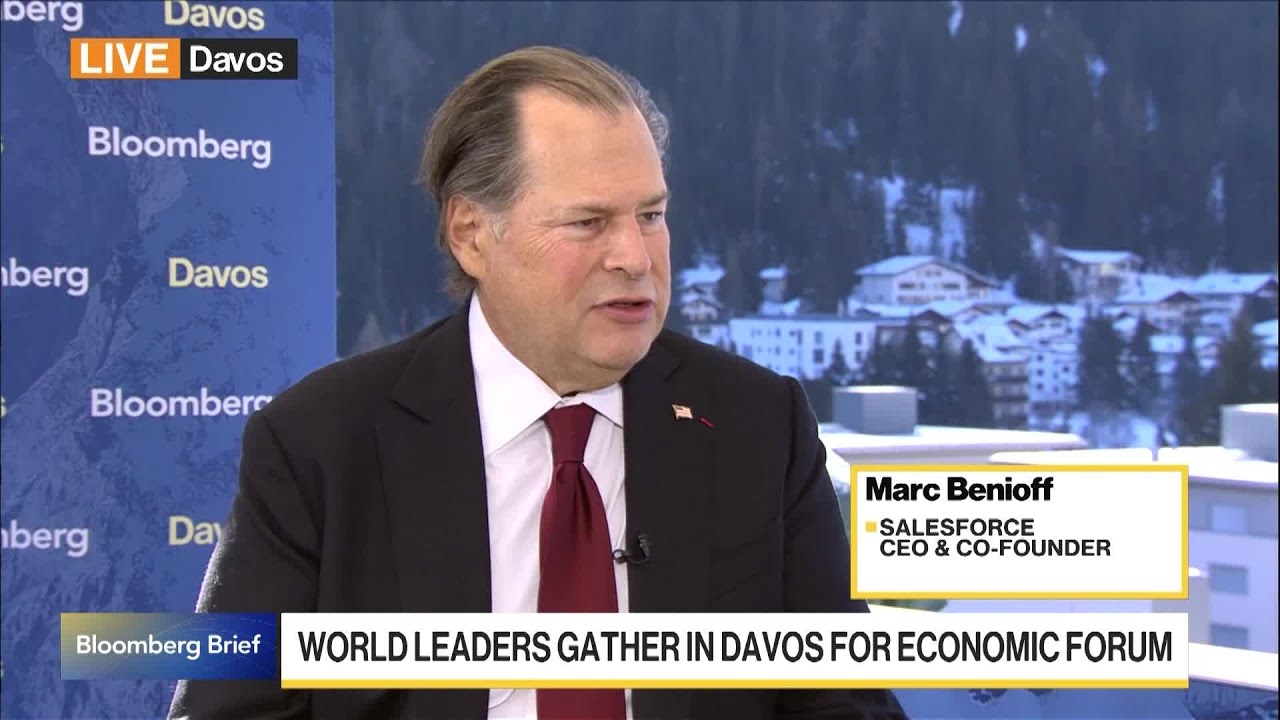
Marc Benioff, CEO and founder of Salesforce, spoke at Davos about the current mood among global leaders and the rapid changes shaping the world. He described the atmosphere as frenetic, with people feeling both excited and uncertain due to significant economic, political, and technological shifts. Benioff emphasized that Davos is less about measuring the economy and more about fostering dialogue among diverse stakeholders, including political, business, and cultural leaders.
Benioff discussed the role of national leaders in supporting their countries’ businesses, noting that President Trump’s focus on U.S. businesses is similar to how President Macron supports French companies. He highlighted Salesforce’s work with major clients like Pepsi and FedEx, demonstrating how AI-powered tools are already delivering tangible results. Despite some companies being hesitant to fully adopt AI due to misinformation and skepticism, Benioff stressed that there are immediate opportunities for businesses willing to embrace these technologies.
The conversation shifted to Benioff’s approach to policy and values, particularly in the context of controversial political decisions and social issues. He explained that while presidents and administrations change, Salesforce’s core values remain constant, guiding the company’s actions and its commitment to employees and communities. Benioff acknowledged the challenges facing cities like San Francisco and reiterated his dedication to working with leaders at all levels to improve safety and well-being.
A major focus was the risks associated with AI, especially its impact on teenagers. Benioff raised alarms about AI systems, such as chatbots, that have inadvertently encouraged harmful behaviors, including suicide. He called these instances a wake-up call for the tech industry and society, arguing that AI, like social media before it, needs meaningful regulation to prevent harm. Benioff criticized the current legal framework, particularly Section 230, which shields tech companies from liability, and advocated for reforms to hold companies accountable for the consequences of their technologies.
Finally, Benioff addressed the future of Salesforce and the broader software industry. Despite Wall Street’s current skepticism toward software stocks, he pointed to Salesforce’s strong financial performance and ongoing innovation, including the integration of AI into products like Slack. Benioff highlighted the company’s scale in AI usage, reporting trillions of tokens processed, and expressed confidence that the market will eventually recognize the vast opportunities ahead. He concluded by reaffirming Salesforce’s commitment to responsible innovation and the importance of proactive regulation to ensure technology benefits society.