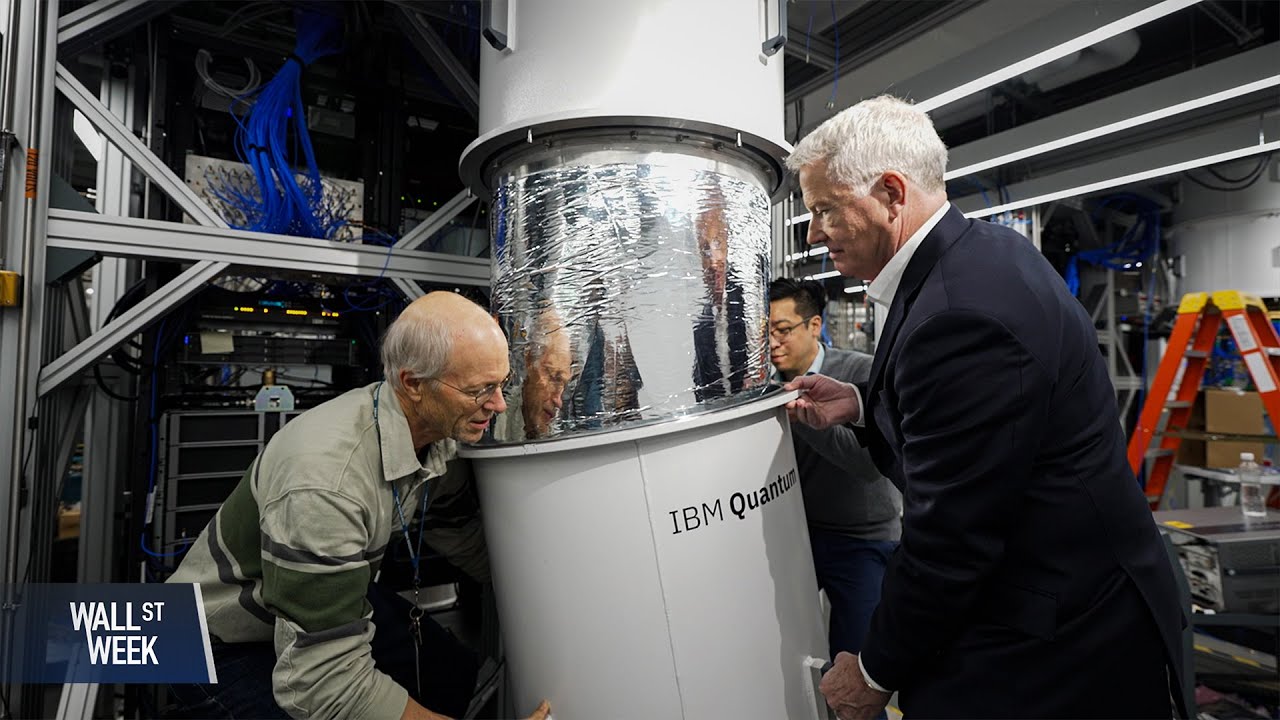
The video explores the rapidly advancing field of quantum computing, a technology rooted in the principles of quantum mechanics that Albert Einstein famously doubted. Despite Einstein’s skepticism, billions of dollars are now being invested globally to turn quantum theory into practical computing power, promising a revolution potentially even greater than that of generative AI. Companies like IBM have been pioneers in this space, developing foundational quantum information science since the 1970s and making quantum computers accessible via the cloud since 2016, which has significantly accelerated research and experimentation worldwide.
Quantum computing differs fundamentally from classical computing by using qubits instead of bits. Unlike classical bits that represent either a zero or one, qubits can exist in multiple states simultaneously, enabling vastly more complex calculations. IBM’s experts highlight that quantum computers offer not just speed but also greater accuracy and the ability to solve problems unattainable by classical computers. Error mitigation remains a challenge, but advancements are expected soon, with IBM predicting quantum advantage—where quantum computers outperform classical ones—in the near future.
Beyond IBM, other major tech companies like Google, Microsoft, and Intel, along with startups such as IonQ, are heavily invested in quantum technology. IonQ’s CEO claims their machines are already far more powerful than competitors’, emphasizing algorithmic qubits and fault-tolerant systems. These companies are not only focused on computing power but also on quantum cybersecurity, including quantum key distribution, which promises unprecedented data security. This technology is being integrated into real-world applications, from federal and commercial sectors to space-based systems.
Quantum computing’s potential applications are vast and diverse. In healthcare, researchers at the Cleveland Clinic are collaborating with IBM to use quantum algorithms for drug discovery and understanding complex biological structures like protein folding. Financial institutions are exploring quantum computing for portfolio optimization, risk management, and improving prediction accuracy. Even agriculture and climate science stand to benefit, with quantum technology helping to optimize processes like nitrogen fixation and carbon management, as well as advancing materials discovery for better batteries.
Looking ahead, the timeline for quantum computing’s widespread impact varies among experts. IBM aims for significant breakthroughs by 2029, focusing on building scalable, reliable quantum systems that support extensive software ecosystems. Meanwhile, IonQ asserts that they have already achieved practical quantum advantage. The industry lacks a unified metric for measuring quantum progress, with different companies emphasizing qubit count, algorithmic qubits, or quantum volume. Despite these differences, there is consensus that quantum computing is either imminent or already here, poised to transform multiple sectors profoundly in the near future.