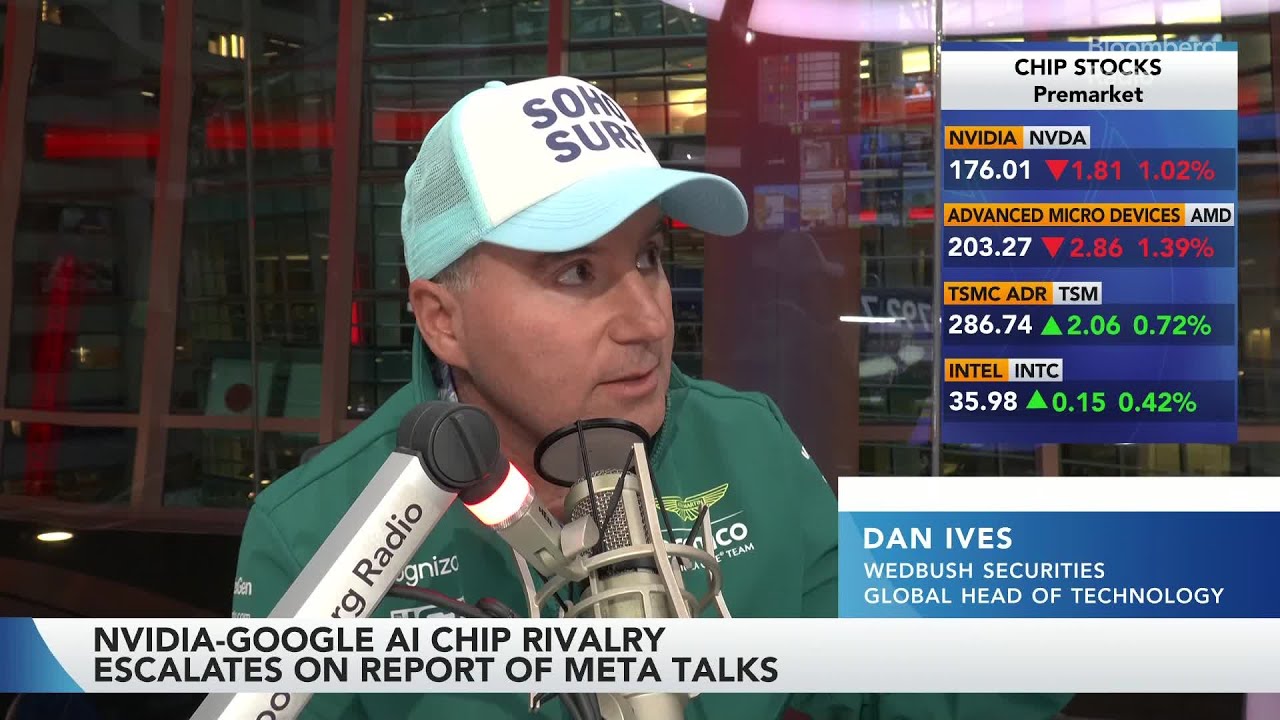
The video discusses the ongoing AI arms race fueled by significant investments from major tech companies like Apple, Google, Meta, and Tesla. Apple is preparing to enter the AI field more aggressively, leveraging its vast consumer base of 2.4 billion iOS devices and 1.5 billion iPhones. The company is expected to integrate AI into its services and products, including the upcoming iPhone 17 and its Gemini AI project, especially after Google’s recent legal victory that cleared the way for deeper collaboration. Apple’s approach focuses on quality content and consumer monetization, signaling a shift from merely observing AI developments to actively participating in and shaping the AI revolution.
Meta’s recent large chip order from Google highlights the competitive dynamics in AI hardware supply, particularly challenging Nvidia’s dominance. While Nvidia remains the leading chipmaker powering AI advancements, Meta’s move to diversify its chip sources reflects the intense demand that outstrips supply. The video notes that Google’s TPU chips, though somewhat behind Nvidia’s technology, could still meet certain needs. Other tech giants like AMD, Apple, and Microsoft are also developing their own chips to support AI workloads, underscoring the critical role of semiconductor innovation in this technological race.
The discussion also touches on the broader market reactions to geopolitical and economic factors, such as tariffs on imported tech products, which have caused volatility in tech stocks including Apple. Despite short-term sell-offs and market panic, the long-term outlook remains optimistic due to the massive consumer base and the transformative potential of AI. The video emphasizes that only a small percentage of enterprises globally have fully embraced AI, indicating significant growth potential ahead. This ongoing adoption, combined with sovereign investments and technological advancements, supports the view that the AI-driven tech bull market has several more years to run.
Enterprise adoption of AI is currently the primary driver of growth, with consumer applications still in early stages. The video highlights that while consumer-facing AI like ChatGPT has gained attention, most AI spending—estimated at nearly $3 trillion—is focused on enterprise solutions. Future consumer AI innovations are expected to include autonomous robotics and humanoid robots, which could revolutionize everyday tasks. The speaker predicts that robotaxis and autonomous vehicles will become more common in the near future, with regulatory frameworks evolving to support these technologies in multiple cities.
Finally, Tesla’s role in the AI and robotics space is discussed, emphasizing its transition from traditional car manufacturing to becoming a leader in autonomous driving and robotics. Despite Tesla’s stock lagging behind the broader market, institutional investors remain optimistic about its future growth driven by autonomous vehicle technology and robotaxis. Elon Musk’s leadership as a “wartime CEO” is seen as pivotal in navigating this transformative phase. The video concludes that Tesla’s advancements in autonomous robotics could represent the most significant chapter in the company’s growth story, potentially positioning it as a trillion-dollar enterprise in the coming years.