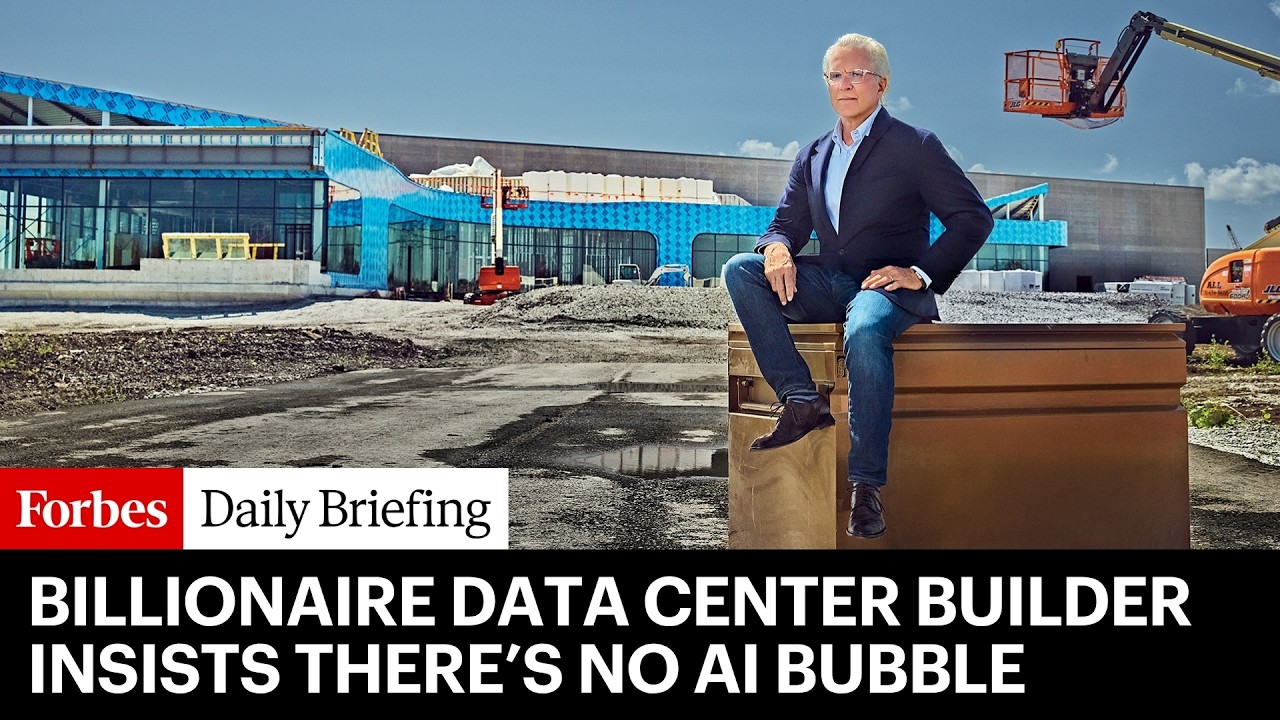
Billionaire Bob Clark, founder of construction giant Clayco, is at the forefront of building critical infrastructure to support the AI and quantum computing revolutions. Recently visiting the $850 million Obama Presidential Center in Chicago, Clark is now focused on an even more ambitious project: Quantum Shore, a 440-acre quantum computing campus on a former US Steel site by Lake Michigan. Set to open in 2027, Quantum Shore will house tenants like IBM and PsiQuantum, which aims to build a million-qubit quantum computer capable of revolutionizing encryption and accelerating AI learning. The project is complex and costly, with a $12 billion price tag and specialized facilities to maintain the extreme environmental conditions quantum computers require.
Clark’s expertise in data center construction spans four decades, having built 16 data centers last year alone and currently managing 77 projects across 13 states. Clayco’s data center business is booming, expected to generate 75% of the company’s nearly $12 billion revenue in 2026, a 43% increase over 2025. What began as simple computer rooms in banks has evolved into massive, self-contained data cities housing hundreds of thousands of advanced GPUs for tech giants like Amazon, Microsoft, and Oracle. Clayco’s vertically integrated approach, owning architecture, concrete, procurement, and logistics subsidiaries, allows it to efficiently meet the enormous demands of AI infrastructure.
The surge in data center construction reflects the rapid growth of AI, with U.S. spending tripling since 2023 to an estimated $75 billion this year. There are currently about 1,300 data centers operating nationwide, consuming vast amounts of water and electricity—62 gigawatts of power daily, far exceeding the average power draw of cities like New York. Another 2,142 data centers are planned or underway, underscoring the scale of the AI infrastructure boom. This expansion has significantly increased Clark’s wealth, quadrupling his net worth to $7 billion and earning him a spot on the Forbes 400 list.
However, the rapid growth of data centers has sparked rising opposition from local communities. A recent survey showed that 61% of Americans now oppose building data centers near them, up from 49% just months earlier. This resistance has led to $18 billion in blocked projects and $46 billion in delays, posing challenges for the industry. Despite this, Clark remains unfazed by the backlash, focusing instead on delivering results and meeting the growing demand for AI infrastructure.
Clark firmly rejects the notion that the AI boom is a bubble akin to the dot-com crash of 2000. He emphasizes that today’s hyperscale tech companies are well-capitalized and financially stable, assuring that they can cover the costs of these massive construction projects. With no warning signs of a bubble in sight, Clark’s confidence reflects his deep experience and the tangible, ongoing demand for data centers and quantum computing facilities that underpin the future of AI and technology.
Useful Links