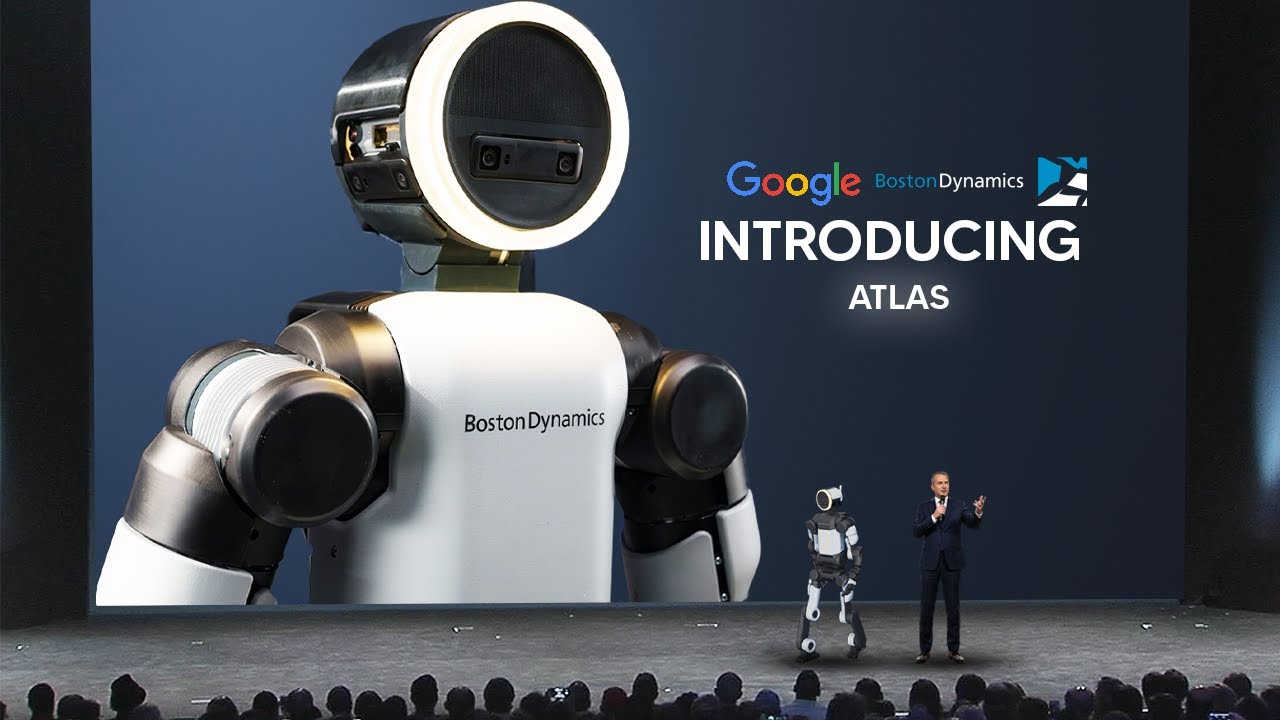
The video argues that Boston Dynamics’ new Atlas robot is the first humanoid robot that truly matters, setting itself apart from other robots that have only demonstrated impressive but limited abilities like walking, running, or dancing. Unlike these concept robots, Atlas is designed for real, practical work in factories, with Hyundai planning to deploy up to 30,000 units per year. The robot is already capable of autonomously performing complex tasks such as picking up and organizing car parts, adapting to unexpected situations, and learning new tasks within 48 hours—far beyond the staged demos seen from competitors.
A key distinction highlighted is that while many companies focus on making robots look impressive for social media, Boston Dynamics has spent decades solving the hard problems of robotics: balance, manipulation, spatial awareness, and decision-making. Atlas can navigate real factory environments with obstacles and uneven surfaces, and its advanced hands can grip and manipulate irregular objects with precision. The robot’s autonomy is further enhanced by a partnership with Google DeepMind, allowing it to learn and execute tasks without constant human oversight.
The video compares Atlas to other humanoid robots like Tesla’s Optimus and Figure’s robots, noting that while these competitors have made progress, they are still years behind in terms of reliability and real-world deployment. Tesla’s Optimus, for example, can only perform basic tasks in controlled environments, and Figure’s robots, though promising, are not yet at the level of Atlas in terms of consistent industrial performance. Chinese companies, meanwhile, are mostly focused on creating robots for viral videos rather than practical deployment.
One of Atlas’s biggest advantages is its modular design, which allows for easy maintenance and upgrades. Unlike most robots that are built as integrated, proprietary systems, Atlas’s components can be swapped out or upgraded on-site, minimizing downtime and maintenance costs. This modularity is a significant competitive edge for industrial use, as it allows companies like Hyundai to keep robots operational without sending them back to the manufacturer for repairs—a feature that most competitors have not yet achieved due to the complexity of engineering such systems.
Finally, the video addresses the societal implications of widespread humanoid robot deployment, particularly the potential for massive job displacement. While robots like Atlas will create some new jobs in maintenance and programming, the number of jobs lost could far exceed those gained, especially as these robots become capable of performing complex, adaptive tasks across multiple industries. The speaker warns that society is unprepared for the scale and speed of this transition, as the technology is advancing much faster than our ability to adapt economically and socially.