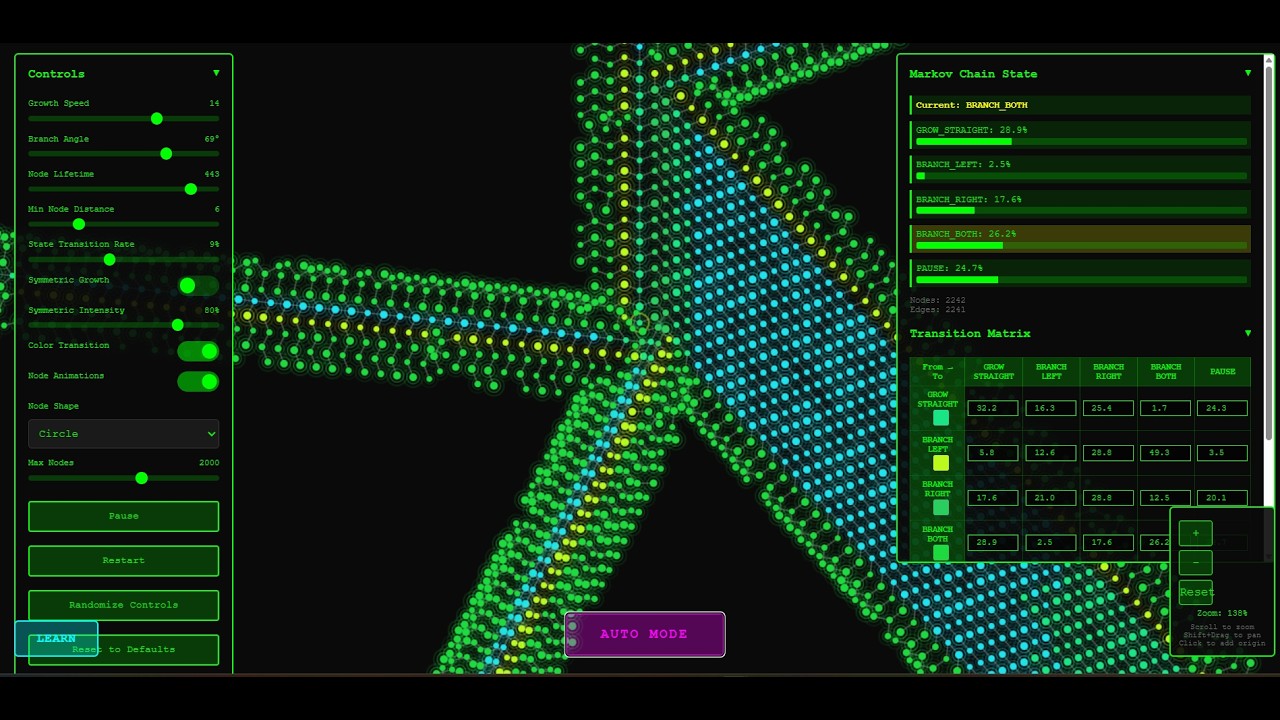
In this video, the creator introduces a Markov chain-based pattern creator or graph network maker that utilizes a transition matrix to generate branching patterns. The transition matrix is a probabilistic tool where each row represents the current state, and the columns indicate the probability of transitioning to various next states. For example, at each branching point in the network, the system uses these probabilities to decide whether to branch left, branch right, branch both ways, or continue growing straight. This process runs in an auto mode, allowing users to watch the network evolve dynamically, with the ability to zoom in and out to appreciate the complexity of the generated patterns.
Users have the option to turn off the auto mode and manually adjust settings such as symmetric growth, color transitions, and node animations. The system respects these customizations, allowing for a personalized experience in creating unique network shapes. Additionally, users can assign custom probabilities to the transition matrix, influencing how the network grows and branches. Restarting the process after adjustments generates new shapes, providing endless possibilities for pattern creation.
The video also includes an educational segment explaining the fundamentals of Markov chains. A Markov chain is described as a mathematical model that represents a sequence of events where the probability of moving to the next state depends solely on the current state, not on the sequence of events that came before. This property is known as the Markov property or memorylessness. The transition matrix rows correspond to the current state, and the probabilities in each row determine the likelihood of transitioning to various next states, such as branching right, left, or pausing.
The creator demonstrates how these probabilities work in practice, giving an example where a branch that is currently growing right might have a 35% chance to continue straight, 20% chance to branch left, 25% chance to branch right again, and a 5% chance to pause. This probabilistic approach allows the network to grow in a natural and varied manner, producing fascinating and complex shapes that can be customized and explored interactively.
Finally, the creator mentions that the project files for this Markov chain-based network maker will be available on their Patreon, along with access to hundreds of other applications, exclusive videos, and weekly meetings. They encourage viewers to explore Markov chains further, highlighting their versatility and potential for creating interesting and dynamic systems. The video concludes with an invitation to enjoy the tool and a thank you to the audience.