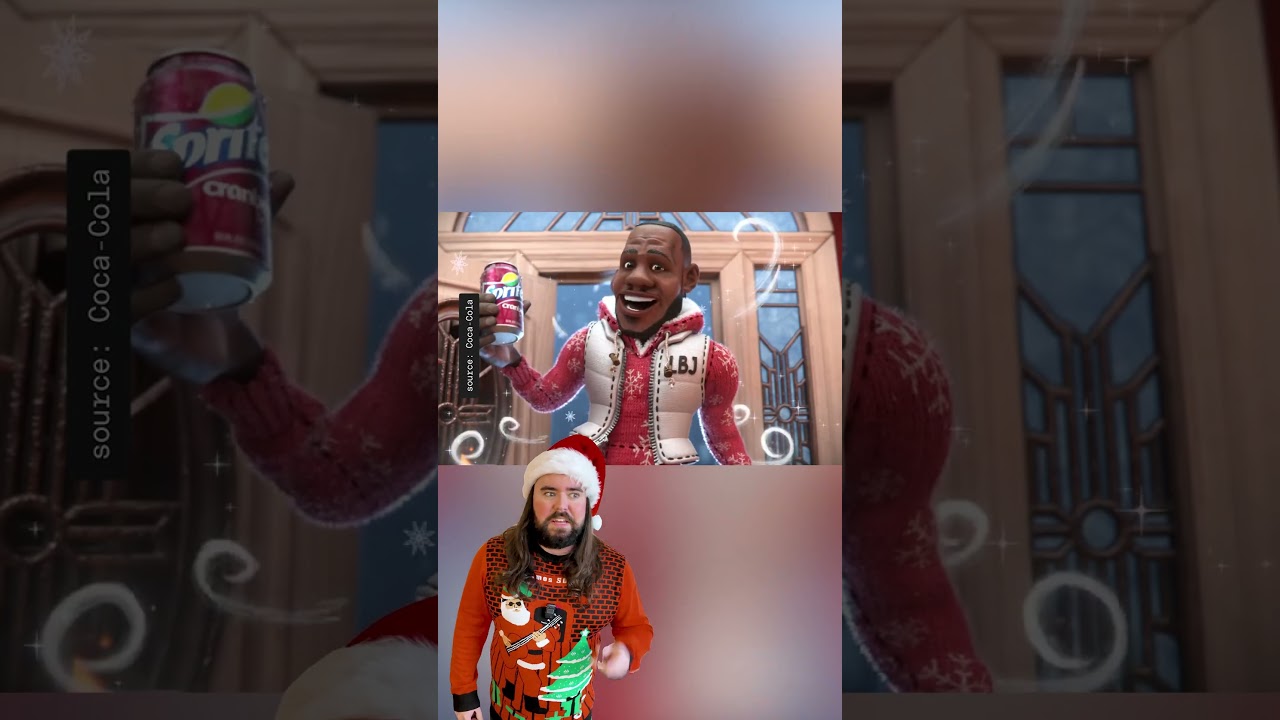
Certainly! Here’s a five-paragraph summary of the video, with spelling and grammar corrected:
The video discusses the recent trend of major brands, like McDonald’s and Coca-Cola, using artificial intelligence to create their Christmas commercials. This shift has sparked significant backlash from viewers, who feel that the use of AI in these ads signals a lack of effort and creativity from the brands. The narrator expresses a strong opinion that AI should not be used in commercials, especially during the holiday season, which has traditionally inspired some of the most memorable and high-effort advertising campaigns.
The narrator highlights how past Christmas commercials were notable for their creativity, craftsmanship, and the hard work that went into making them. Examples include the hand-animated Hershey’s Kisses ad from 1989, which used stop-motion animation, and the 1996 M&M’s commercial that pushed the boundaries of animation technology at the time. The narrator also shares a personal anecdote about appearing in a Myers Christmas commercial as a child, emphasizing the dedication and effort that went into even small-scale productions.
In contrast, the recent McDonald’s Christmas ad is criticized for its reliance on AI-generated imagery, which the narrator describes as awkward and tonedeaf. Despite the small team behind the ad claiming they worked hard to manually fix AI errors and barely slept for seven weeks, the final product is seen as a rapid sequence of quick cuts designed to mask the unnatural movements typical of AI-generated content. The narrator points out bizarre moments, like a character screeching inexplicably, as evidence of the ad’s shortcomings.
Coca-Cola’s approach is also scrutinized. The company has repeatedly remade its classic “Holidays Are Coming” ad, but now uses AI to generate new versions each year. The narrator finds this repetitive and uninspired, suggesting that the ads are becoming more about showcasing AI technology than celebrating the holiday spirit. Coca-Cola even released a behind-the-scenes video featuring AI-generated podcast hosts, further highlighting the brand’s embrace of artificial intelligence in its marketing.
Ultimately, the narrator argues that the use of AI in Christmas commercials breaks an unspoken social contract between advertisers and viewers. Brands are seeking consumers’ attention but are no longer willing to put in the effort to earn it. The video concludes with a plea for advertisers to try harder, especially during the holidays, because if brands don’t care about the quality and creativity of their commercials, viewers will have little reason to care about them in return.