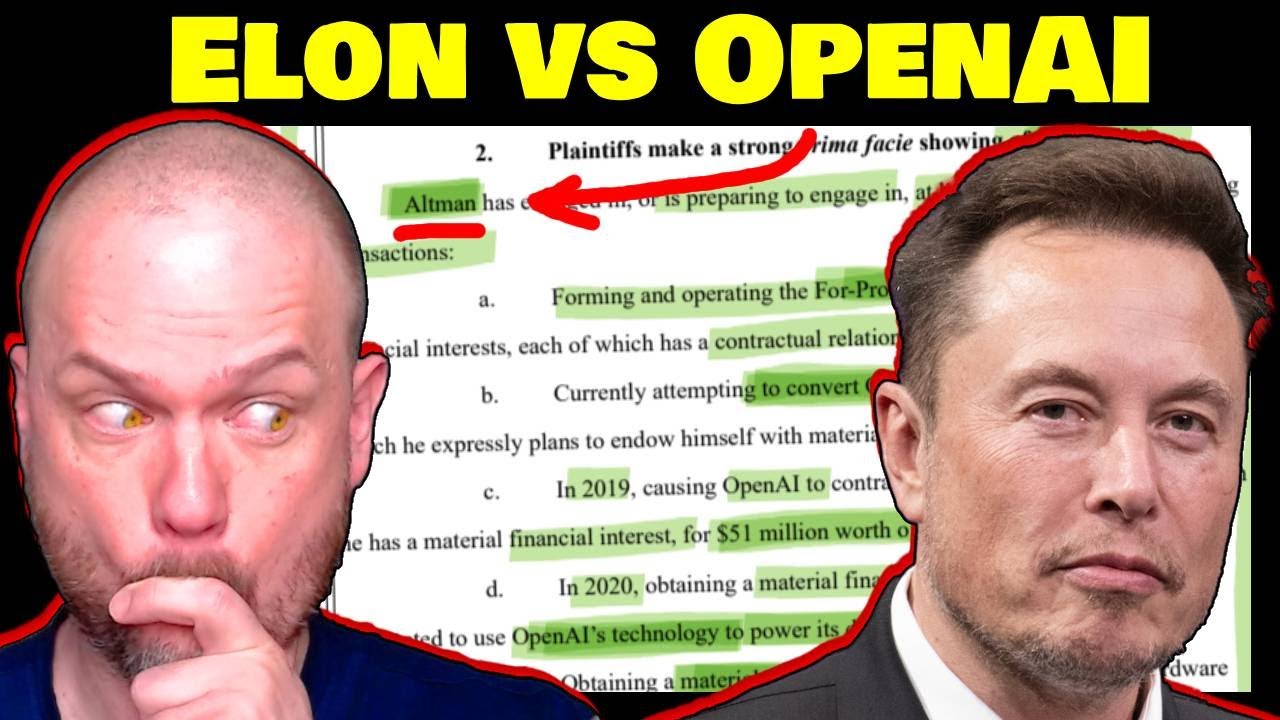
Elon Musk has filed for an injunction to stop OpenAI’s transition to a for-profit model, alleging that current leadership is engaging in anti-competitive practices and violating the organization’s original nonprofit mission. Legal experts emphasize the importance of OpenAI’s nonprofit structure for ensuring accountability to humanity, raising concerns about the ethical implications of its shift towards profit-driven motives.
In a recent development, Elon Musk has filed for an injunction to halt OpenAI’s transition to a for-profit model, marking a significant moment as the organization celebrates its second anniversary. Musk, one of the original founders and financial backers of OpenAI, accuses current leadership, including CEO Sam Altman and Greg Brockman, of engaging in various illicit activities. His allegations include discouraging investments in rival AI companies, such as his own venture, xAI, and wrongfully obtaining sensitive competitive information through OpenAI’s partnership with Microsoft. Musk argues that the shift to a for-profit structure violates the foundational principles of OpenAI, which was initially established as a nonprofit dedicated to benefiting humanity.
Musk’s legal team asserts that the transition to a for-profit model is rife with anti-competitive practices and self-dealing, undermining the organization’s original charitable mission. They highlight that Microsoft, which has invested heavily in OpenAI, has effectively seized control of the generative AI market, raising concerns about monopolistic behavior. Musk’s injunction seeks to preserve OpenAI’s nonprofit character and prevent the alleged exploitation of its resources for private gain. The legal documents emphasize that OpenAI must adhere to the same rules as other organizations and cannot operate solely based on financial interests.
The video also features insights from Rose Chan Lewis, a legal expert focused on nonprofits, who explains the importance of OpenAI’s original structure. She notes that the nonprofit model was designed to ensure accountability to humanity rather than shareholders, with specific legal commitments to benefit the public. The transition to a for-profit entity raises questions about the integrity of these commitments and whether the organization can still fulfill its mission of developing AI for the greater good. The discussion highlights the potential implications of this shift for the future of AI development and safety.
Musk’s concerns are further underscored by the history of OpenAI’s funding and governance. Initially founded as a nonprofit in 2015, OpenAI’s structure was carefully crafted to attract funding while maintaining its commitment to public benefit. However, as the organization sought additional capital, it began to explore for-profit avenues, leading to tensions among its founders. Musk’s legal arguments suggest that the promises made during the organization’s inception have been disregarded, and he believes that the current leadership is prioritizing profit over safety and ethical considerations in AI development.
In conclusion, the video raises critical questions about the ethical implications of OpenAI’s transition to a for-profit model and the potential consequences for the AI landscape. Musk’s legal actions reflect broader concerns about monopolistic practices in the tech industry and the need for transparency and accountability in AI development. As the debate unfolds, it remains to be seen how the courts will respond to Musk’s injunction and what this means for the future of OpenAI and its mission to create safe and beneficial AI for humanity.