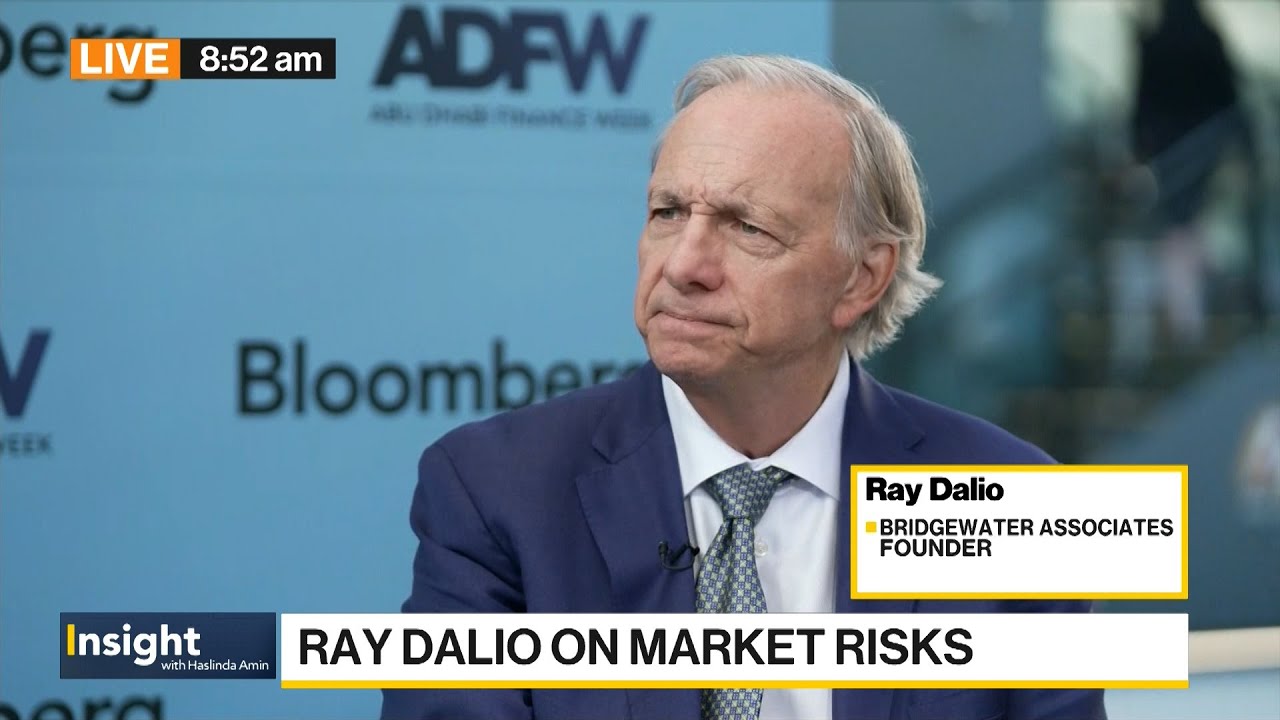
Ray Dalio, reflecting on his 32 years of experience visiting Abu Dhabi, praises the UAE as a near-paradise in a troubled world, highlighting its evolution under the leadership of Sheikh Zayed and his successors. He emphasizes the UAE’s growing expertise in asset management, driven by substantial sovereign wealth, which attracts other investment managers and fosters a vibrant investment community akin to a “Silicon Valley of investing.” Dalio notes that Abu Dhabi’s ambition to become a “capital of capital” is more than a slogan, especially as the emirate combines its traditional oil wealth with a strong commitment to asset management and artificial intelligence (AI), creating an exciting environment for investors.
Dalio explains that for Abu Dhabi to truly establish itself as a global asset management hub, it needs knowledgeable investors and access to quality investment opportunities. The presence of successful local investors and the ability to co-invest in promising ventures will naturally attract more capital and talent. This ecosystem, supported by a collaborative community, will help Abu Dhabi transition from a place where money is invested elsewhere to a destination where investors actively invest locally and globally from within the emirate.
On a broader scale, Dalio discusses the historic shifts underway globally, driven by AI disruption, mounting debt levels, political polarization, and geopolitical tensions. He identifies five major forces shaping the current landscape: the debt cycle, political cycles marked by left-right populism, geopolitical power struggles, natural events like pandemics and climate disasters, and technological innovation, particularly AI. Dalio warns that excessive debt, combined with political and economic challenges, is creating bubbles and increasing systemic risks, while geopolitical conflicts are disrupting traditional capital and trade flows, making global stability more precarious.
Dalio highlights the growing political and economic risks, especially as governments face constraints on increasing debt and spending amid rising military and social demands. He points to political instability in countries like the UK and France as symptoms of these pressures. The interplay of debt dynamics, political conflict, and technological change, including a potential technology bubble, creates a risky environment for investors, particularly looking ahead to the 2026 elections in the United States, which could intensify political divisions and economic uncertainty.
Regarding investment strategy, Dalio advocates for a significant allocation to gold and Bitcoin, viewing gold not as a speculative asset but as a form of money and a hedge against fiat currency devaluation caused by government debt and money printing. He suggests that a typical portfolio might hold 5-15% in gold for diversification and risk reduction, but given current conditions, a higher allocation could be justified. Dalio underscores gold’s role as a diversifier that tends to perform well when other assets falter, helping to stabilize and enhance portfolio returns in turbulent times.