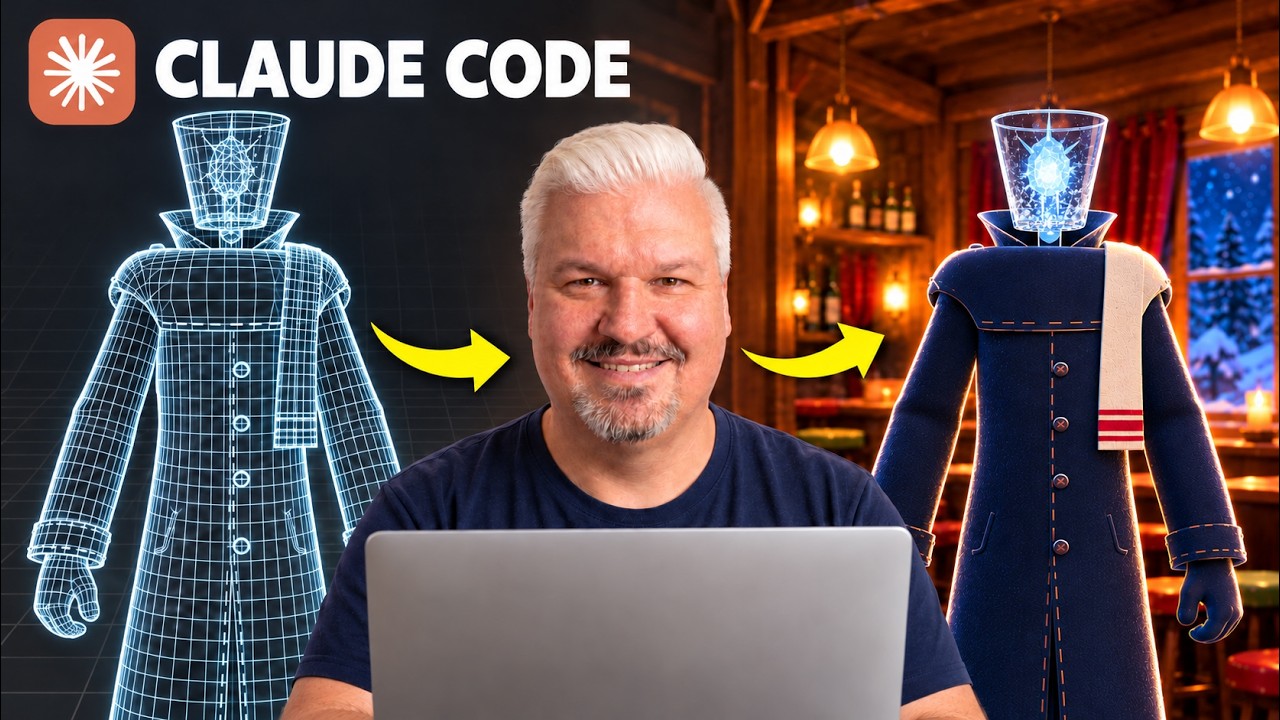
The video demonstrates how to build a complete game using Claude Code, emphasizing that this is not a simple Minecraft clone but a game with a real story, characters with backstories, voice acting, music, sound effects, and a proper ending with credits. The example game is a cozy horror game suitable for the spooky season, but the workflow shared can be applied to any game genre. The presenter outlines a 10-step process to create the game, including putting it online for others to play, and offers a free agent skill to automate much of the work.
The first steps involve fleshing out the story, characters, and locations by prompting Claude to brainstorm and develop a high-level game concept. Claude generates a script with character backstories, gameplay mechanics, scares, and an ending, which can be customized by the user. This foundational information is saved in the project folder for reference. Next, Claude sets up the game environment and debugging tools to efficiently test and analyze scenes without playing through the entire game, ensuring objects and characters are properly aligned and visually coherent.
The third step focuses on defining the game’s art style, where Claude proposes multiple unique visual mock-ups and interactive previews to help decide the look and feel of the game. The user can select or modify these styles, which Claude then uses as a rulebook for all future assets, ensuring consistency in colors, lighting, animations, and menus. The fourth step addresses audio, including voice acting, music, and sound effects. The presenter uses ElevenLabs for generating audio assets but notes alternatives exist. Claude can also create sound effects if external services are not used, and it can sync lip movements and facial expressions with voice lines for immersive character interactions.
After establishing story, visuals, and audio, the workflow recommends creating a vertical slice—a short, playable segment of the game—to test and refine gameplay, scares, and narrative elements. Claude employs multiple critic agents to review different aspects such as scares, gameplay, and story alignment. Once the vertical slice is polished and approved, Claude proceeds to build the full game autonomously, making decisions to avoid delays. The presenter showcases gameplay footage from the vertical slice, highlighting character control, environmental interaction, and synchronized voice acting with emotive facial animations.
The final steps involve thorough playtesting and polishing, fixing issues like lighting and audio inconsistencies, and optimizing the game for various devices. The game is then deployed online using a hosting service, with Hostinger recommended for its affordability and ease of use. Claude Code integrates with Hostinger via a connector to automate deployment, providing a live URL for public access. The video concludes by inviting viewers to try the game themselves and provides links to download the free agent skill that streamlines the entire game-building process.
Useful Links