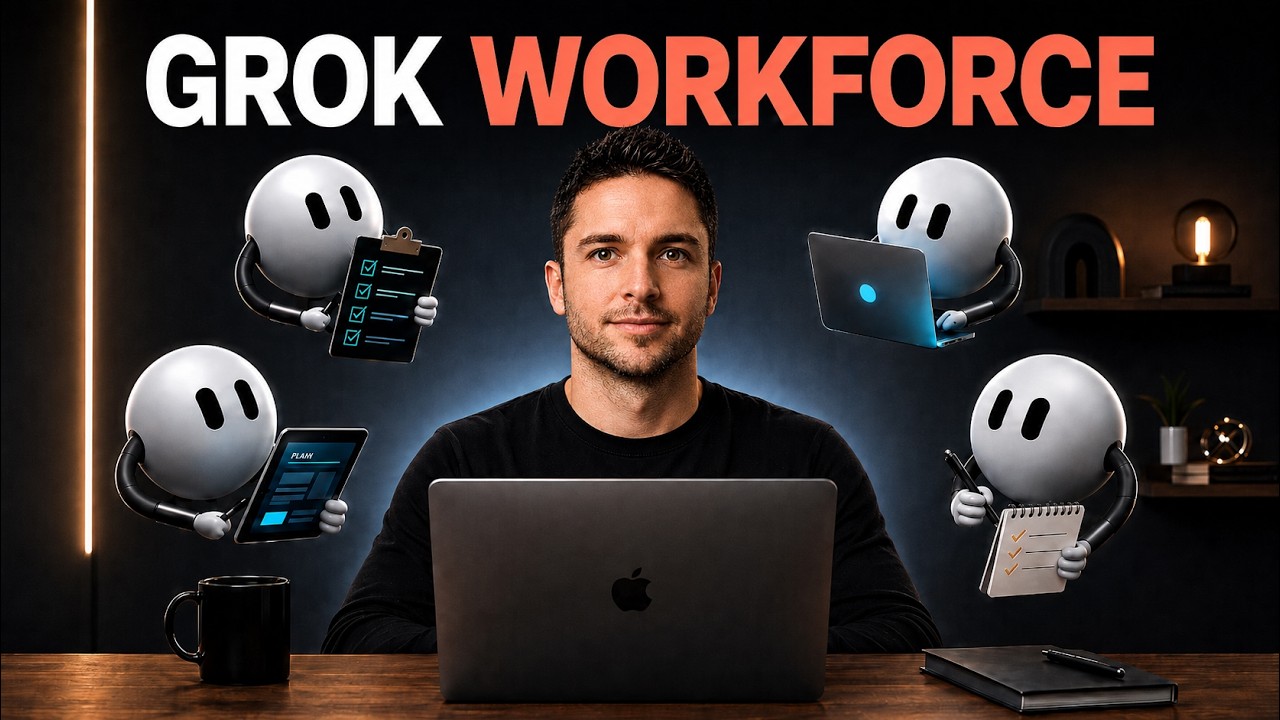
The video emphasizes a structured approach to building an AI workforce using Grok Bot, rather than hastily creating generic bots like research or email bots based on popular advice. The creator advocates starting from the business itself, understanding how work is actually done, and building AI agents around those real processes. The foundation of this system is layered, with the bottom layer focusing on data and context, which are crucial for meaningful AI functionality. Connecting existing business tools like email, Notion, or Monday through plugins allows Grok Bot to harvest data and build relevant context, which includes knowledge, state, and memory, enabling the AI to perform tasks effectively.
Once the data and context are established, the next step involves creating intelligence through skills and agents. Skills are essentially standard operating procedures written in plain English combined with programming to ensure deterministic and reliable outcomes. Agents are the virtual employees executing these skills repeatedly until goals are met. The video highlights the importance of having clear, repeatable processes encoded as skills to maintain consistency and reliability in AI operations. References and examples within skills help guide the AI to produce desired results, such as creating YouTube thumbnails based on winning templates.
The video introduces a strategic framework called the “four pods” — acquisition, delivery, support, and operations — to organize the AI workforce logically. Each pod represents a department with agents acting as employees owning specific lanes within those departments. This approach prevents unnecessary proliferation of agents and focuses on building a minimal, purposeful roster that aligns with actual business needs. The creator demonstrates using Grok Bot’s pod mapping skill to interview users about workflows, generating detailed briefs that inform which agents and skills are necessary, ensuring the AI workforce is tailored and efficient.
Further, the video discusses managing and interacting with agents within Grok Bot’s interface, including setting permissions, profiles, and communication channels like group chats. A chief of staff agent can be introduced to oversee other agents, handling approvals and reducing the need for constant human intervention. The system supports autonomous operation with agents performing routine checks and tasks proactively. The video also covers methods for creating new skills, such as manual creation, interviews, recording workflows, and distilling repeated conversations into skills, aiming for a self-improving AI system.
Finally, the video touches on operational considerations like testing skills before scheduling routines, setting triggers for automated workflows, and the importance of observability to monitor system health. While Grok Bot is praised for its cloud-native design and integration capabilities, the creator notes current limitations such as security concerns, occasional plugin disconnections, and the need for custom dashboards to track performance. The video concludes with encouragement to experiment with Grok Bot on lower plans, stay informed about updates, and engage with the community for support, highlighting that this structured methodology can be applied to any AI operating system build.