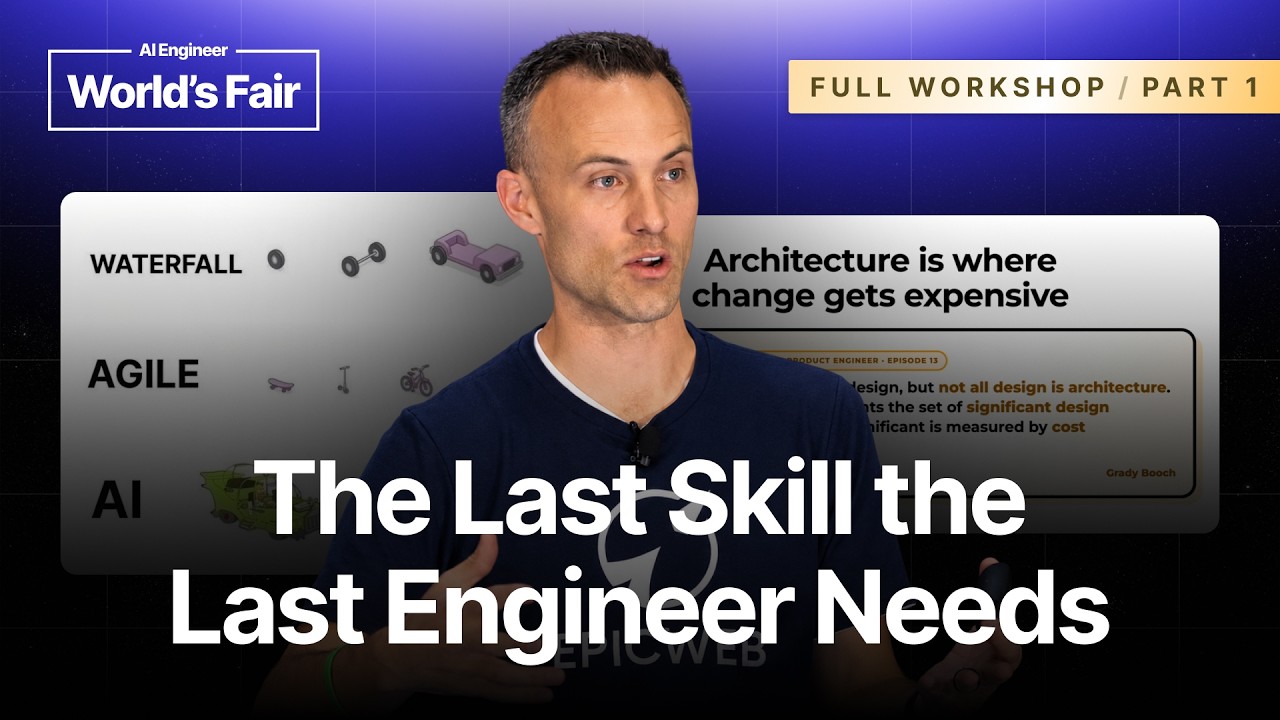
Kent C. Dodds opens his talk by acknowledging the diverse audience of engineers, managers, product owners, and CEOs, emphasizing the importance of building the right thing in product engineering. He shares his background as a software developer and educator, highlighting the rapid advancements in AI agents that are transforming the software development landscape. Kent expresses an existential concern about the diminishing need to master implementation details, as AI increasingly handles coding tasks, shifting the critical skill to deciding what to build rather than how to build it.
Kent introduces the metaphor of an archer with arrows to illustrate the evolving role of engineers. While AI agents have made hitting technical targets easier and more efficient, the real challenge lies in choosing the right targets to aim for—meaning prioritizing valuable and impactful features. He stresses that as AI levels the playing field in implementation, the differentiator for engineers becomes product sense: the ability to identify and build the right solutions that deliver genuine customer value, rather than merely executing specifications.
Throughout the talk, Kent references insights from industry experts and podcast guests who reinforce the importance of product engineering. They highlight common pitfalls such as building the wrong features quickly, the risk of product bloat, and the necessity of ownership beyond coding—understanding user needs, technical constraints, and long-term consequences. Kent underscores that product engineers bridge the gap between customer problems and technical solutions, making critical decisions about data models, workflows, and system architecture to ensure scalable, maintainable, and valuable products.
Kent then delves into practical frameworks for early idea validation, focusing on the “Mom Test” approach to customer conversations. He advises engineers to avoid asking leading or hypothetical questions about solutions and instead gather concrete evidence about users’ real problems, behaviors, and workarounds. Using an example app designed to help conference attendees get into sessions faster, he demonstrates how to ask effective questions that reveal genuine pain points and validate whether a problem is worth solving. This user-centric approach helps engineers make informed decisions about what to build and how to prioritize features.
Finally, Kent addresses common questions from the audience about the evolving roles of product engineers and managers, team organization, and career progression in the AI era. He emphasizes that while AI changes the nature of implementation, the need for product sense and technical expertise remains critical. Product engineers must understand both the technical system and the human context to build the right thing. Kent encourages continuous user engagement, iterative feedback, and collaboration across roles to create successful products, concluding that mastering product engineering is the durable skill that will sustain engineers in a rapidly changing technological landscape.
Useful Links