Armin Ronacher emphasizes the importance of establishing a robust development environment before scaling AI-driven software factories, highlighting that improvements in AI models enhance agent capabilities without constant infrastructure changes, while human oversight remains crucial for sustained quality. He advocates for thoughtful collaboration, standardization, and durable AI agents to enable scalable, high-quality software development that balances automation with human expertise.
Armin Ronacher discusses the evolving landscape of software development with AI agents, emphasizing the importance of building a well-equipped workshop or atelier before scaling up to a full software factory. He highlights that while the core tools of their PyCoding agent have remained unchanged for a year, the improvements in AI models alone have significantly enhanced its capabilities. This demonstrates that advancements in underlying models can drive progress without constant changes to the software infrastructure, allowing developers to focus on more ambitious and higher-quality software projects.
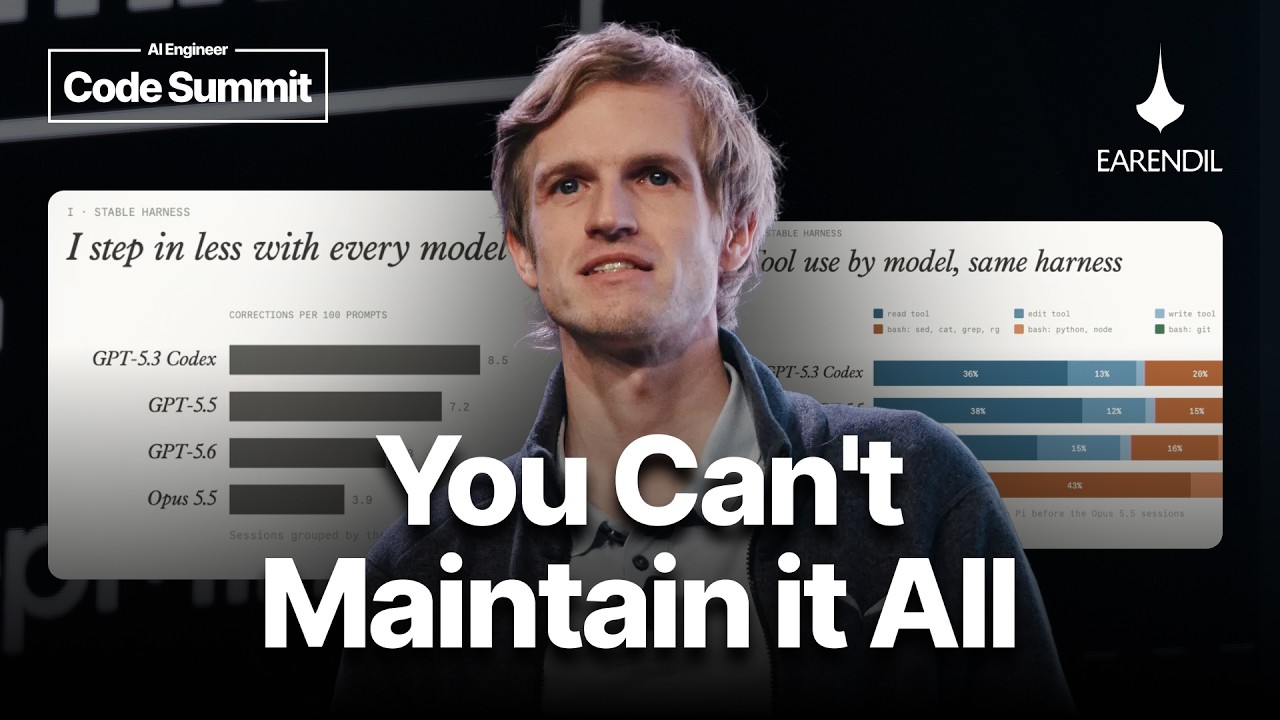
Ronacher shares data from his own usage, showing a decrease in the need for manual corrections and onboarding as models improve, alongside an increase in the duration agents run on tasks. This shift indicates that modern agents are more autonomous and capable, often preferring to use Bash for tasks. However, despite these technological gains, human attention remains the bottleneck in software development. He notes that while starting new projects with agents has become easier, maintaining them consistently over time remains challenging, as human involvement and care are crucial for sustained success.
A key point Ronacher makes is the distinction between “true skill” and “agent skill.” Experienced software engineers working with agents produce higher-quality outcomes than less experienced users, underscoring the need for deep understanding and active management of AI-driven development. He advocates for moderation in the pace of development to maintain comprehension and control, suggesting techniques like having agents generate executive summaries to aid human oversight. Additionally, he stresses the importance of minimizing dependencies and avoiding uncontrolled software growth to maintain coherence and quality.
Ronacher also addresses the challenges of collaboration and standardization in an era of AI-driven software creation. He warns against fragmentation caused by divergent implementations and stresses the need for open protocols and common file formats to ensure interoperability. Collaboration remains difficult, and the proliferation of forks in open source projects exemplifies this. He encourages a focus on software excellence, including verified and memory-efficient software, and highlights the growing interest in languages like Rust for building safer, more reliable systems.
Finally, Ronacher discusses future directions for AI agent infrastructure, advocating for durable agents capable of suspending and resuming tasks to optimize resource use. He highlights the emerging trend of orchestrating sub-agents and integrating decision models alongside large language models to handle complex workflows efficiently. This approach allows for scalable automation of tasks like customer support triage, reducing human workload. Ultimately, he urges the community to prioritize building enjoyable, ambitious, and high-quality software rather than simply maximizing output, emphasizing thoughtful collaboration between humans and AI.
Useful Links