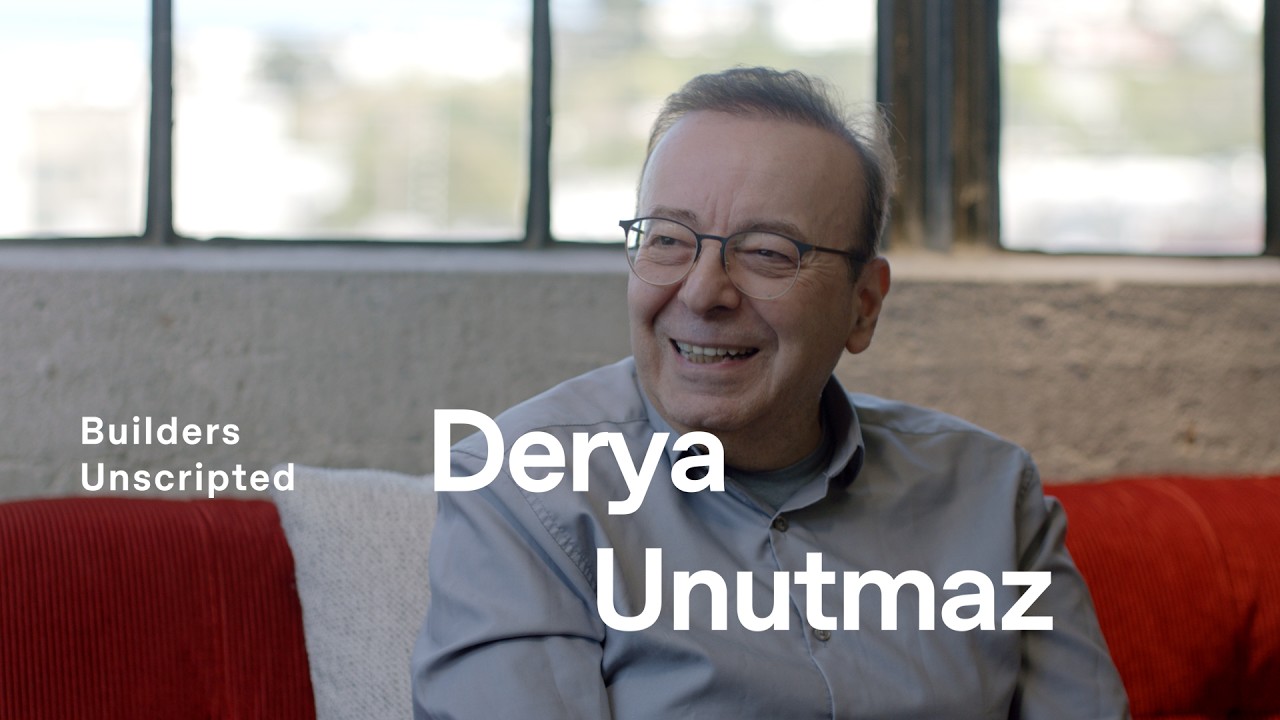
In this episode of Builders Unscripted, Derya Unutmaz, a medical doctor and biomedical researcher, shares his unique perspective on the intersection of biology and artificial intelligence (AI). He recounts how, after graduating from medical school, he recognized the immense complexity of biological systems and the potential for AI to help unravel these complexities. Early on, he experimented with AI coding and was particularly excited by the deep learning revolution, which enabled processing vast amounts of biological data. His enthusiasm grew with the advent of advanced AI models like AlphaFold and ChatGPT, which he began integrating into his research and daily workflow.
Derya discusses his hands-on experience with OpenAI’s early reasoning models, highlighting a memorable moment when an AI model provided a deeply insightful response to a complex immunology question framed through the analogy of a battle royale game. This breakthrough convinced him of AI’s inevitability and transformative potential in science. Since then, he has become a dedicated user of Codex, OpenAI’s AI coding assistant, which he uses to rapidly prototype and build sophisticated biomedical applications that would have otherwise taken months to develop. These include tools for analyzing immune cells via flow cytometry data and simulating complex biological processes like T cell receptor signaling.
One of Derya’s key ambitions is to create digital twins—comprehensive AI-driven simulations of individual human biological systems that integrate genetics, immune responses, metabolism, and microbiomes. He envisions these digital twins enabling personalized medicine at an unprecedented scale, allowing doctors to simulate treatments and predict outcomes before applying them to patients. This approach could revolutionize fields like oncology by tailoring therapies to the unique genetic and immunological profiles of each patient, drastically improving efficacy and reducing side effects. He foresees AI accelerating clinical trials and drug discovery, ultimately transforming medicine and extending human lifespan.
Derya also reflects on the cultural shift AI is prompting within the scientific community. While some colleagues remain skeptical or hesitant, he encourages embracing AI’s rapid advancements and integrating it into research workflows. He emphasizes the importance of curiosity, resilience, and experimentation, noting that the low cost of AI-driven experimentation lowers barriers to innovation. He predicts a future where AI agents autonomously generate hypotheses, design experiments, analyze data, and iteratively refine scientific understanding, fundamentally changing how science is conducted and accelerating discovery across disciplines.
Concluding on an optimistic note, Derya envisions AI ushering in a golden age of human enhancement and scientific progress. He urges people across all fields to adopt a positive mindset toward AI, viewing it as a tool to amplify creativity and problem-solving rather than a threat. His work exemplifies how deep domain expertise combined with AI can lead to groundbreaking applications, and he looks forward to continuing to push the boundaries of what AI can achieve in biology and medicine. The conversation closes with anticipation for his future innovations and the ongoing evolution of AI-powered science.