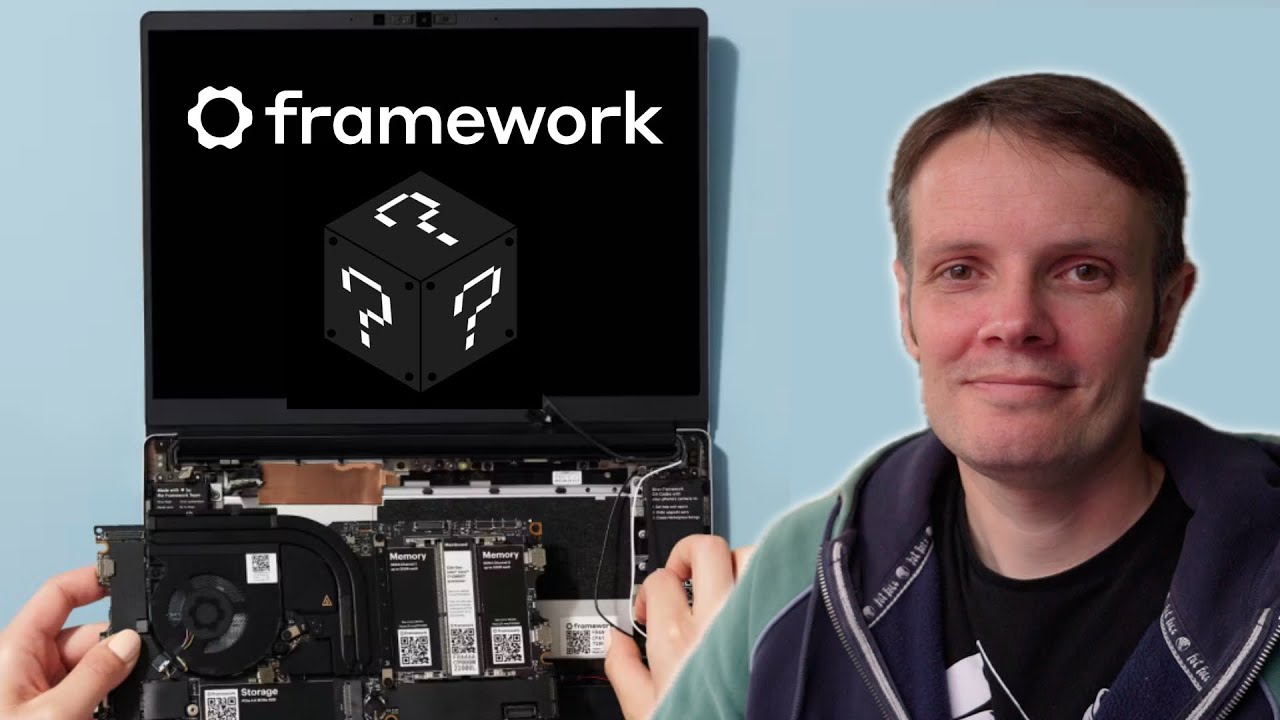
In this video, the creator revisits their experience with Framework Laptop mystery boxes, which are collections of returned or refurbished laptop parts sold to the community. Earlier in the year, they purchased several small mystery boxes containing displays and keyboards but missed out on the larger boxes that include mainboards. This time, they managed to acquire two mainboard mystery boxes and one small box, hoping to assemble a working laptop from the various components collected over time.
Upon unboxing, the creator found two display units, including a clear keyboard without markings, and two mainboards featuring 12th generation Intel 1240p processors. One mainboard appeared to be a Chromebook variant, while the other was a standard Framework board. Unfortunately, neither mainboard was fully functional: the Chromebook board was completely dead on arrival, and the standard board showed power issues and failed to boot. Despite this setback, one of the display units worked, and the keyboard and mouse were responsive, indicating some components were salvageable.
The creator then proceeded to assemble the laptop using parts from previous mystery boxes and new components like a battery, hinges, webcam, and wireless module sourced from eBay. They carefully installed the hinges, routed cables through the laptop chassis, and attached the screen and bezel. Although some parts, like the webcam mounting and cable routing, were a bit tricky and felt somewhat improvised, the assembly was successful, resulting in a mostly functional laptop.
Testing revealed that the laptop powered on with a working display, keyboard, and mouse, though the touchpad still needed some attention, and the wireless card required driver installation. The creator expressed satisfaction with the outcome, highlighting the modularity and longevity of the Framework Laptop design, which allows parts from different years and sources to be combined into a working machine. Despite the disappointment with the mainboards, the project demonstrated the potential to build a usable laptop from disparate components.
In conclusion, the video showcases the challenges and rewards of building a Framework Laptop from mystery box parts. While some components were defective or missing, the creator successfully assembled a functional laptop using a mix of mystery box parts and additional purchases. They plan to use the laptop for Linux or as a device for their children, appreciating the flexibility and repairability that Framework offers. The video ends on a positive note, with the creator looking forward to future projects and updates.