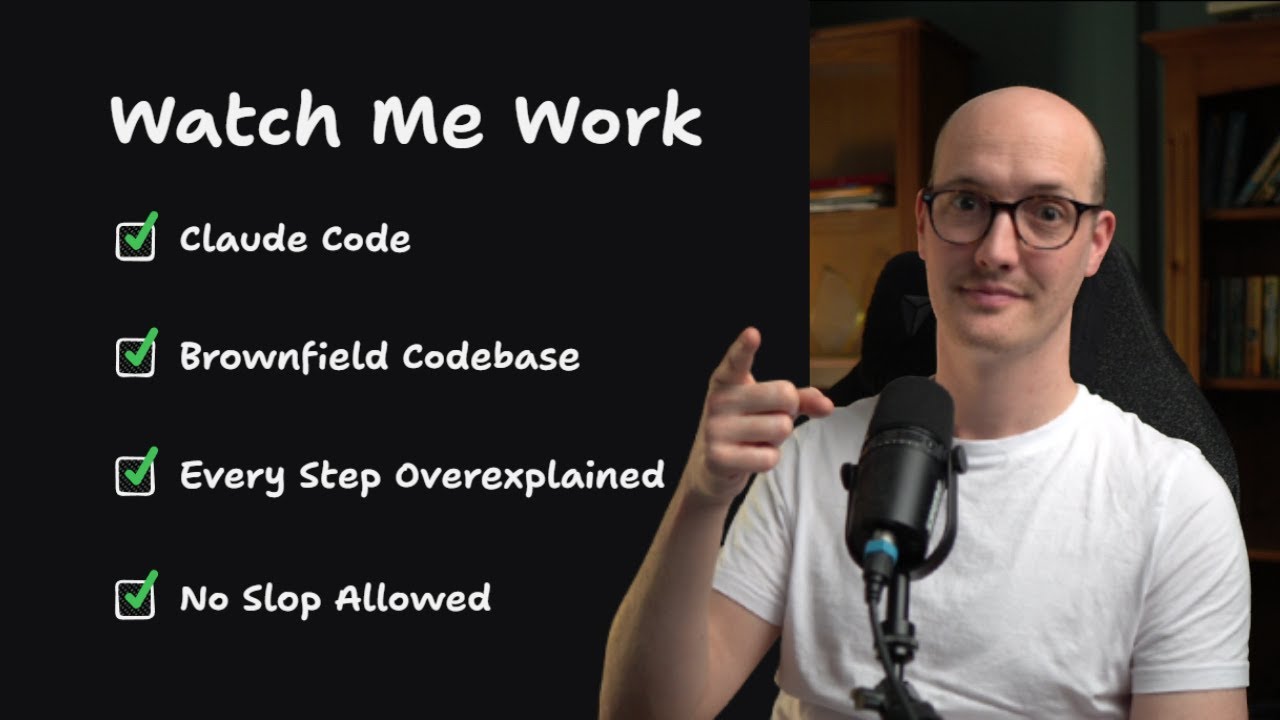
In this video, the creator demonstrates a practical, end-to-end workflow for building a real feature using Claude Code, moving beyond philosophical discussions to hands-on implementation. The project in focus is a course video manager app, built with React, TypeScript, Node, Drizzle ORM, and Postgres, which the creator uses to organize and manage course content. The main feature enhancements involve improving the handling of “ghost” and “real” lessons and courses—allowing direct creation and deletion of real lessons, and introducing “ghost courses” for planning without committing to a file system structure upfront.
The process begins with a brainstorming and requirements-gathering session using the “grill me” skill, where the creator dictates rough ideas and iteratively clarifies requirements with the help of Claude. This session emphasizes the importance of explaining not just what needs to be built, but also why, so the AI can suggest alternatives and understand the broader context. The conversation covers edge cases, UI flows, and the need for a shared “ubiquitous language”—a glossary of domain terms—to ensure precise communication between the human and the AI.
Once the requirements are clarified, the AI helps draft a Product Requirements Document (PRD), breaking down the feature into modules and actionable issues. The PRD is then converted into GitHub issues, each representing a manageable task for the implementation agent (referred to as “Ralph”). The creator highlights the importance of well-defined modules and interfaces, as well as the value of co-locating questions and answers for clarity and efficient attention from the AI.
Implementation is handled by running an AFK (away-from-keyboard) agent in a Dockerized environment, which sequentially works through the issues, commits code, and runs tests. While the agent works, the creator is free to focus on other tasks or further brainstorming, illustrating the “day shift/night shift” model where humans plan and QA while AI executes. After the agent completes its work, the creator reviews the implementation using a QA plan generated by Claude, providing feedback and filing additional issues for bugs or UX improvements, which are then addressed in further agent iterations.
Throughout the process, the creator stresses the iterative, feedback-driven nature of modern AI-assisted development. Rather than aiming for perfect specs upfront, the workflow embraces rapid prototyping, tight feedback loops, and continuous refinement. The video concludes with reflections on the shift in engineering practice enabled by AI tools like Claude Code, emphasizing the importance of focusing on architecture, feedback, and communication, while letting the AI handle much of the implementation detail. The creator invites viewers to join a cohort course for deeper learning and encourages questions and engagement.