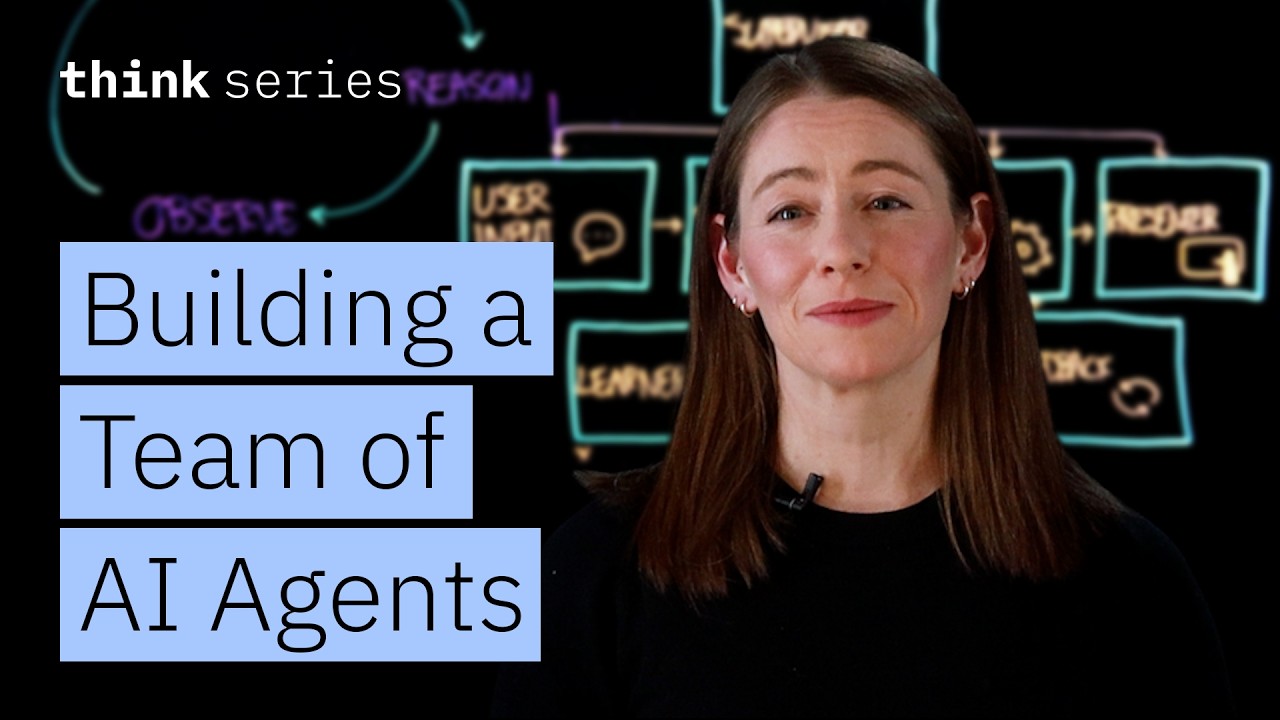
The video explains that AI agents are designed to tackle complex tasks that a single large language model (LLM) cannot handle alone, much like how human intelligence relies on teamwork for complicated projects. Building a team of AI agents involves assigning distinct roles to different subagents, each contributing unique skills and knowledge to achieve a common goal. This approach mirrors human teams, where roles such as doers, thinkers, supervisors, and communicators collaborate to produce a final output. Understanding these roles and how they interact is crucial for designing an effective AI agent team.
Using the example of an AI agent developing a mobile app, the video outlines several key roles. The “doer” handles specific tasks like coding but relies on others for the bigger picture. The “planner” breaks down the user’s input into manageable steps and creates a documented plan, such as defining user requirements and app architecture. The “tool operator” interacts with external tools and APIs to execute specific functions, while the “learner” gathers relevant external information to inform the project. These roles work together to ensure the task is completed efficiently and accurately.
Additional roles include the “feedback” or “critic” agent, which reviews outputs for errors, tests code, and may even score multiple solutions to select the best one. The “supervisor” oversees progress at both task and project levels, ensuring no part of the process stalls. Finally, the “presenter” compiles and communicates the team’s work back to the user, summarizing key elements like requirements and code functionality. Some roles, such as tool operators and learners, can themselves be complex agents integrating multiple AI calls and external data retrieval steps.
The video also discusses how to optimize each role within the AI team. Effective prompting provides clear instructions, similar to guiding human team members. Model selection is important to match the right AI model to each role based on specialization, size, and capabilities. Model tuning, though resource-intensive, involves training the model with examples of success and failure to improve performance. Providing the right context—such as access to relevant data and tools without overwhelming the agent—is also essential for enabling each subagent to perform well.
In conclusion, just as startups begin with a small, focused team and expand as needs grow, AI agent teams can start with a few key roles and scale up to improve quality and handle more complex tasks. By thoughtfully designing roles and continuously refining their capabilities, AI teams can deliver stronger, more reliable solutions. This collaborative, role-based approach is fundamental to advancing AI agents beyond the limitations of standalone models.