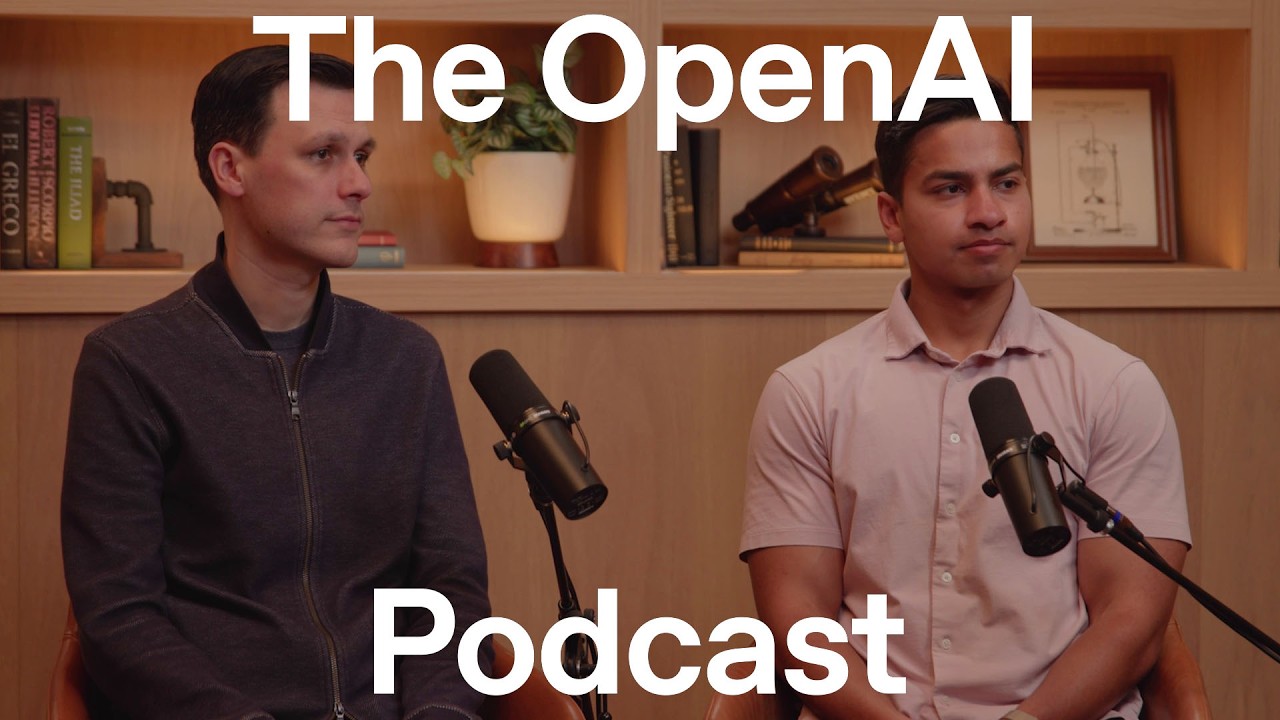
Certainly! Here’s a five-paragraph summary of the OpenAI Podcast episode “Building AI for better healthcare” featuring Dr. Nate Gross and Karan Singhal:
The episode explores how OpenAI is developing artificial intelligence to improve healthcare for both patients and clinicians. Dr. Nate Gross and Karan Singhal discuss their personal motivations for working in health AI, emphasizing the potential for technology to make healthcare more accessible, proactive, and personalized. They highlight the fragmented nature of current healthcare systems and the opportunity for AI to bridge gaps in care, empower patients, and support clinicians in delivering better outcomes.
A major focus of OpenAI’s health efforts is ensuring safety, privacy, and alignment in AI models. The team worked closely with a cohort of 250 physicians to develop HealthBench, a comprehensive evaluation framework that measures AI performance across nearly 49,000 dimensions in realistic, multi-turn conversations. This collaborative approach ensures that the models are not only accurate but also context-aware, able to tailor responses to different users—whether patients or healthcare professionals—and to recognize when more information is needed or when uncertainty exists.
OpenAI’s strategy goes beyond simply answering health questions; it aims to integrate AI into clinical workflows and patient experiences. For example, ChatGPT Health is designed with strong privacy safeguards and the ability to incorporate personal health data, such as electronic health records and wearable device information, with user consent. This enables more personalized and actionable health guidance, helping users manage daily decisions and long-term care plans in partnership with their healthcare providers.
The podcast also addresses the challenges ahead, such as ensuring trust in AI-generated answers, integrating with siloed healthcare systems, and maintaining up-to-date knowledge from the latest medical literature and regional guidelines. OpenAI is working on solutions like HIPAA-aligned environments and partnerships with healthcare organizations to facilitate secure data sharing and workflow integration. The team is also focused on post-deployment monitoring and real-world studies, such as their clinical co-pilot project in Nairobi, which demonstrated a reduction in diagnostic and treatment errors when clinicians used AI support.
Finally, the guests reflect on the rapid adoption of AI in health and the positive feedback from both clinicians and patients. They share stories of AI making a tangible difference, from easing administrative burdens for doctors to helping solve complex medical cases for patients. The episode concludes with optimism about AI’s role as an amplifier in healthcare—raising the floor for access, sweeping away inefficiencies, and raising the ceiling for what’s possible in medical care, all while keeping human expertise at the center.