The video is a comprehensive, hands-on class about building AI-powered telephone agents using Python, Twilio, and ElevenLabs. The instructor, Eli, begins by introducing himself and his background in technology and tech education, emphasizing his philosophy of accessible, hands-on learning through his Silicon Dojo initiative. He explains the importance of practical, business-focused technology skills and how his classes are designed to empower learners to build real-world solutions, regardless of their financial background. The session is also supported by crowdfunding, ensuring that resources remain available to everyone.
Eli then introduces the core topic: creating AI telephone agents that can automate and enhance business communications. He discusses the business value of such systems, highlighting how they can replace or supplement human receptionists, provide 24/7 customer service, and offer new capabilities to small businesses that might not otherwise afford dedicated staff. He shares anecdotes from his own career to illustrate how technology professionals must focus on delivering tangible value—either by increasing revenue or reducing costs—and how AI agents fit into this paradigm.
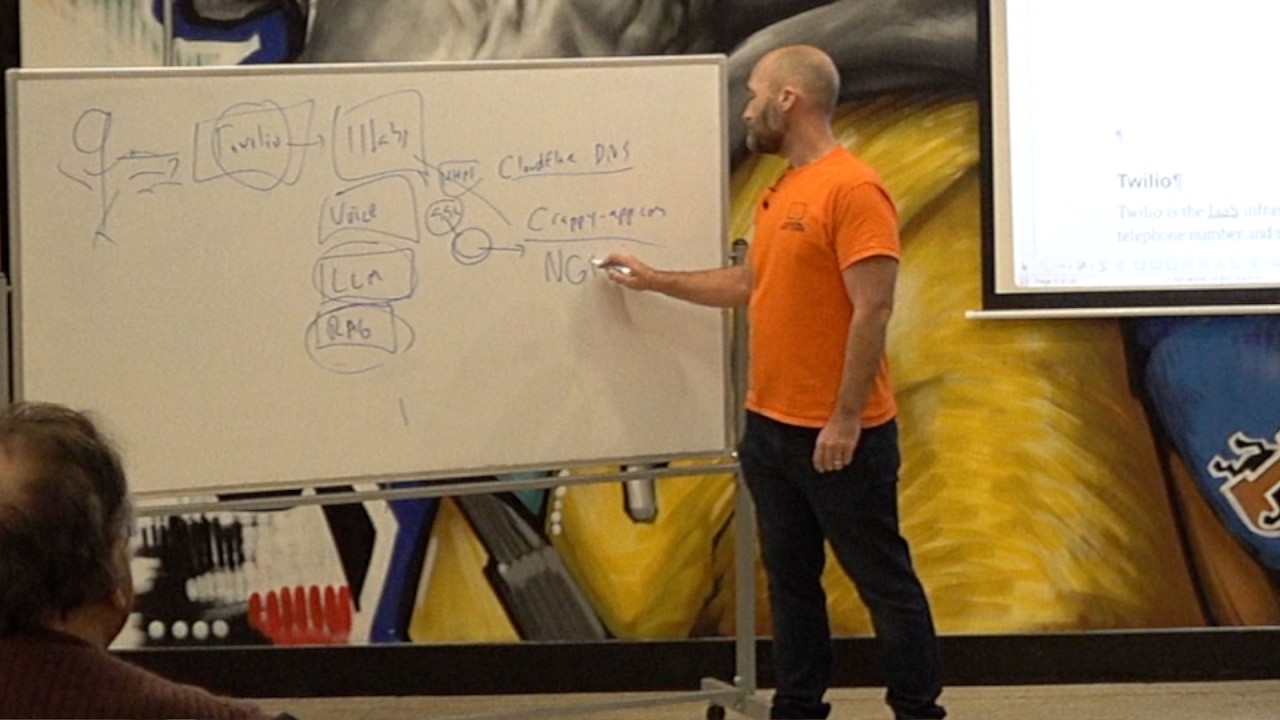
The technical portion begins with an architectural overview. Eli explains that AI is just one layer in a larger technology stack, which also includes infrastructure (like Twilio for telephony), web servers, APIs, and databases. He details how Twilio provides affordable, programmable phone numbers and call routing, while ElevenLabs offers advanced voice synthesis and AI agent capabilities. The architecture is modular, allowing components to be swapped as needed, and emphasizes the importance of understanding system limitations, such as concurrency and pricing, when designing scalable solutions.
The class then moves into practical demonstrations. Eli shows how to set up Twilio for both inbound and outbound calls, using Python scripts and Twilio’s markup language (TwiML) to automate responses. He demonstrates how to integrate ElevenLabs to create AI agents that can answer calls, converse naturally, and access a knowledge base via retrieval-augmented generation (RAG). The session covers configuring agents with different personalities, voices, and workflows, as well as integrating webhooks to connect the AI agent with external databases or business systems for dynamic, personalized responses.
Throughout the session, Eli emphasizes the importance of testing, error handling, and understanding the quirks of different AI models. He discusses practical considerations like cost management, system reliability, and user experience, including the need for clear guardrails and fallback options. The class concludes with a discussion of alternative providers, pricing models, and the broader implications of AI in customer service, stressing the need for thoughtful deployment to balance efficiency with customer satisfaction. The next class will focus on building more advanced web applications using Python’s Bottle framework and SQLite.