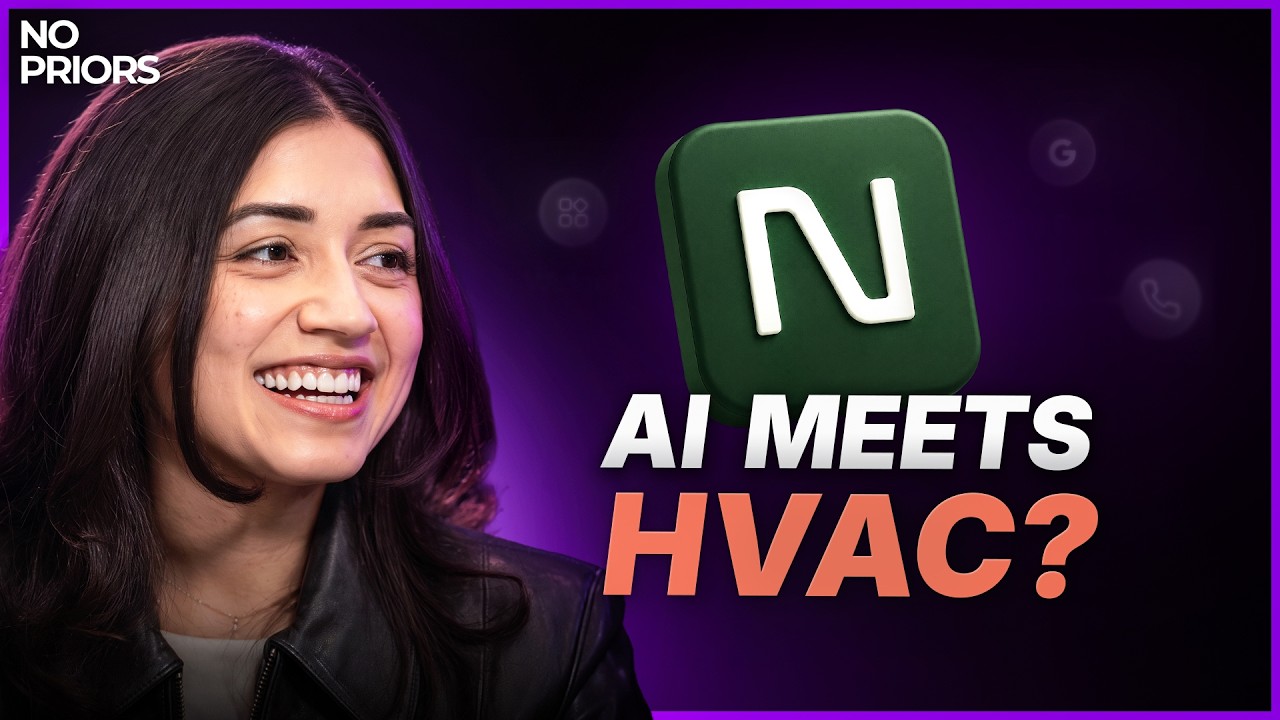
In this interview, Melisa Tokmak, founder and CEO of Netic, discusses her company’s mission to build AI solutions that autonomously manage operations for large real-world service businesses such as HVAC, plumbing, pet care, and roofing. Netic acts as an intelligent intermediary between these companies and their customers, handling complex operational workflows like customer interaction, service dispatch, and labor optimization. The goal is to enhance customer satisfaction and increase revenue by automating the intricate processes that traditionally require large human teams.
Melisa explains that before Netic, these essential service companies relied heavily on manual labor and large teams to manage customer support and operations, which limited their growth and efficiency. Netic’s AI agents handle customer interactions across multiple channels, assess service needs, and optimize scheduling and deployment of technicians. This automation is particularly valuable during peak demand periods, such as extreme weather events, where rapid and reliable service is critical. Over 70% of Netic’s customers now use the platform as their primary interface for customer engagement.
The conversation also touches on Melisa’s background at Scale AI and her motivation to build a product that serves real-world businesses rather than focusing on tech startups or M&A-driven rollups. She emphasizes her passion for creating scalable AI products that can be applied broadly across industries, rather than acquiring companies and optimizing them individually. Melisa highlights the complexity of operational workflows in essential services and the importance of building AI systems that integrate deeply with these workflows to deliver tangible business value.
Regarding the future of AI and robotics, Melisa believes that while robotics will eventually play a significant role, the current challenges in dexterity, variability of environments, and the human element in service industries mean that widespread robotic automation is still far off. She also discusses how large AI labs like OpenAI and Anthropic differ from companies like Netic, noting that while labs build general-purpose models, Netic focuses on specialized, mission-critical workflows that require deep domain expertise, orchestration, and product integration beyond just AI models.
Finally, Melisa shares insights on company culture and hiring, emphasizing the importance of agency, persistence, and craftsmanship in building a successful AI-driven enterprise. She envisions Netic as an autonomous enterprise platform that handles all operational aspects of service companies except the actual labor, enabling businesses to focus on delivering quality service. She is optimistic about AI’s potential to democratize education and improve lives, while also acknowledging the challenges and responsibilities that come with this transformative technology.