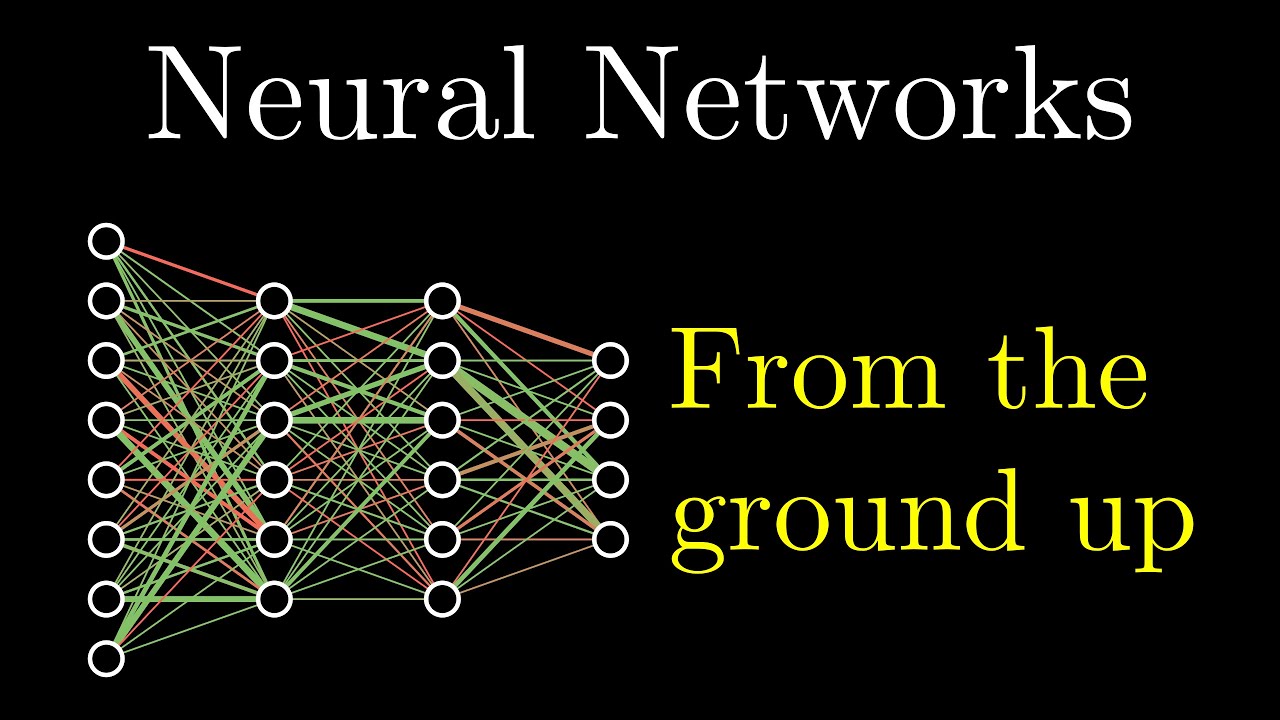
The video introduced the concept of neural networks by explaining how they mimic the human brain’s ability to recognize patterns, using handwritten digit recognition as an example. It described neural networks as mathematical structures with layers of neurons processing information through weighted connections and activation functions, highlighting the complexity of learning through adjusting weights and biases based on training data.
In the video, the concept of neural networks was introduced by discussing the ability of the human brain to effortlessly recognize handwritten digits despite variations in pixel values. The video aimed to explain what a neural network is and to help visualize it as a piece of mathematics rather than just a buzzword. The video focused on the structure of a neural network, using a simple example of a network designed to recognize handwritten digits. The network consisted of input neurons representing pixel values, hidden layers of neurons, and output neurons corresponding to digit classifications. The aim was to introduce the basic structure of neural networks before delving into the learning process.
The video described neurons in a neural network as entities that hold numbers between 0 and 1, known as activations. The network structure included hidden layers with neurons that processed information from the input layer to make decisions about digit classifications in the output layer. Each neuron in the hidden layers had weights associated with connections to the input layer neurons, as well as biases that influenced their activations. The video emphasized the importance of these weights and biases in determining how the network processes information and makes decisions.
The video explained the process of computing activations in a neural network by taking weighted sums of input activations and applying a sigmoid function to produce outputs between 0 and 1. The choice of weights and biases determined how neurons responded to input stimuli, allowing the network to learn patterns and make classifications. The video highlighted the complexity of neural networks, with thousands of parameters to adjust for effective learning. The network’s ability to learn involved finding optimal settings for these parameters through exposure to training data.
The video also discussed the significance of linear algebra in understanding neural networks, as computations in the network relied heavily on matrix operations. By organizing activations, weights, and biases into matrices and vectors, the transition of information between layers could be represented concisely. The video emphasized that neural networks were essentially complex functions that transformed input data into meaningful outputs through a series of computations involving weights, biases, and activation functions. The intricate structure of neural networks was necessary to tackle challenging tasks like recognizing handwritten digits.
In closing, the video teased the next installment, which would delve into how neural networks learn by adjusting weights and biases based on training data. The video also mentioned the evolution of activation functions in neural networks, moving from sigmoid to rectified linear units (ReLU) due to improved training efficiency. The video aimed to provide a foundational understanding of neural network structure and operations, preparing viewers for a deeper dive into the learning process in the subsequent video.