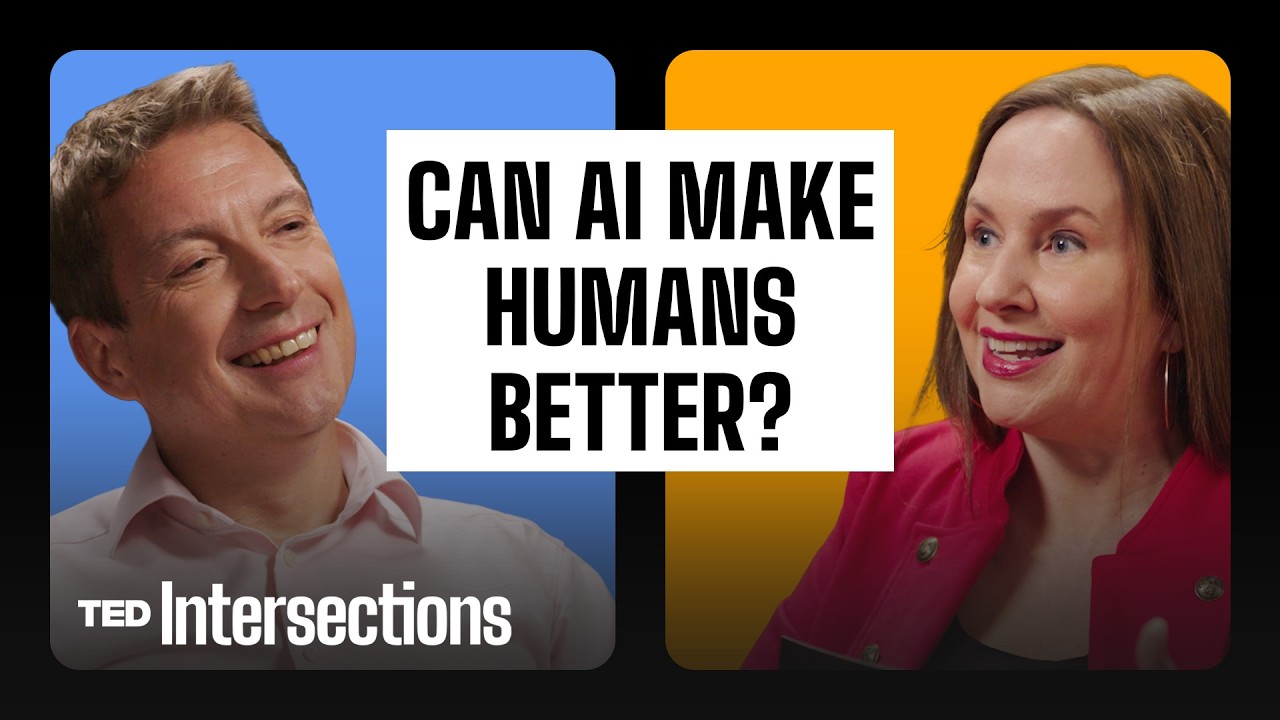
The video discusses how AI can enhance human potential by providing objective feedback, personalized coaching, and accelerating learning while emphasizing the importance of maintaining a growth mindset and critical thinking. It highlights that AI should be used as a supportive tool to augment human judgment, foster social connections, and enrich emotional intelligence, ultimately helping us become more human rather than replacing essential human qualities.
The video explores how AI can enhance human potential by helping individuals become the best versions of themselves, particularly in professional and personal development. AI can identify blind spots and provide real-time, objective feedback that is less influenced by human subjectivity or mood. This capability is especially valuable in learning and development, where AI-driven coaching and simulations allow people to practice challenging behaviors in a safe, low-pressure environment. Such tools can help individuals build skills like delivering difficult news or managing complex conversations, fostering continuous growth and curiosity in the workplace.
A key theme discussed is the importance of maintaining a growth mindset in the era of AI. Unlike previous generations who often had a single lifelong profession, today’s workers must continuously learn and adapt as technology rapidly evolves. AI can accelerate this learning process but also presents the risk of shortcuts that might hinder deep expertise. The speakers emphasize using AI as a coach or assistant to refine and enhance one’s own work rather than relying on it to do the work entirely. Developing skills like prompt engineering—crafting effective questions to get the best AI responses—is becoming essential for future careers.
Concerns about AI, such as accuracy and the potential for hallucinations or misinformation, are addressed by highlighting the importance of critical thinking and careful evaluation of AI outputs. The speakers suggest that AI can actually improve decision-making by helping users surface hidden assumptions and biases, making complex cognitive tasks more manageable. This partnership between human judgment and AI’s analytical power can lead to better, more informed decisions, provided users remain engaged and discerning rather than passive consumers of AI-generated content.
The discussion also touches on the social and emotional dimensions of AI’s impact. While AI can personalize experiences—such as creating music or movies tailored to an individual’s preferences—there is a risk of isolation if personalization leads to solitary consumption. However, the speakers believe AI can also foster community by connecting like-minded people and creating shared experiences. Human identity is multifaceted, involving both individual uniqueness and group belonging, and AI’s role will likely fluctuate between supporting personal needs and enhancing social connections.
Finally, the conversation underscores the enduring importance of human presence in moments that require empathy, emotional intelligence, and trust. AI can augment human capabilities but cannot replace the nuanced understanding and connection that people provide in critical interactions. The future envisioned is one where AI acts as a powerful tool to help humans navigate complexity, improve learning, and enrich relationships, ultimately making us more human by supporting our growth, decision-making, and social bonds.