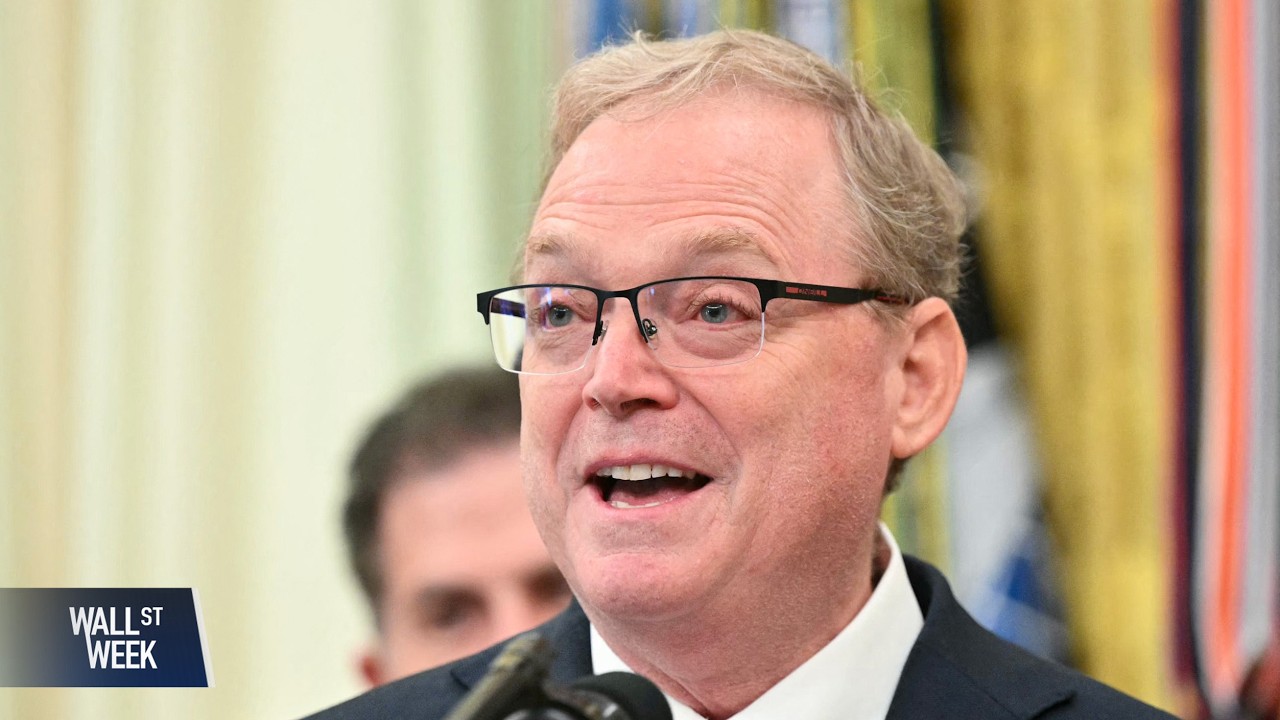
The discussion begins with Kevin Hassett, former Director of the National Economic Council under President Trump, expressing optimism about the U.S. economy’s momentum and the administration’s economic policies. He highlights significant budget savings achieved by reducing federal employment by over 300,000 workers, which not only cuts government spending by about $500 billion over ten years but also benefits the economy as many of these workers transition to higher-paying private sector jobs. Hassett emphasizes that the administration plans to continue and expand such initiatives, including a voluntary AI policy that allows firms to build data centers only if they can supply their own power, balancing innovation with local community preferences.
Hassett draws a parallel between the current AI-driven productivity boom and the internet revolution of the 1990s. He recounts his experience at the Federal Reserve during the early internet era, explaining how hedonic adjustments to price indices revealed that technological improvements effectively lowered costs and boosted GDP growth. He suggests that similar adjustments are needed to fully capture AI’s impact today, as AI services have dramatically improved in quality without corresponding price increases. This implies that the economic benefits of AI might be significantly underestimated, with AI contributing more to growth than currently measured.
Addressing concerns about AI’s impact on jobs, Hassett notes that academic studies show firms adopting AI tend to increase sales, employment, and wages due to higher productivity, while firms that do not adopt AI risk failure. He points out that the labor market remains strong, with unemployment claims at historic lows, indicating minimal current stress from AI-related job displacement. Furthermore, he highlights that government workers who left their positions often find more productive roles in the private sector, reinforcing the positive economic effects of workforce shifts.
When questioned about the federal deficit, Hassett acknowledges the challenge but remains cautiously optimistic. He stresses that deficit reduction remains a priority for the administration and Congress, with measures like reducing federal employment contributing significantly. However, he admits that achieving a deficit target of 3% of GDP by the end of the presidential term depends on avoiding unforeseen major disruptions. He also notes that rising interest rates complicate deficit management by increasing government borrowing costs.
Finally, Hassett offers a broader perspective on America’s fiscal health by discussing household net worth, which has increased dramatically over the past decade despite rising government debt. He explains that much of the debt is internal, owed within the country, and that external debt is relatively smaller. This growing household wealth, he argues, offsets some concerns about the deficit and suggests that while fiscal challenges remain, the overall economic foundation is strong. This nuanced view underscores the complexity of balancing growth, innovation, and fiscal responsibility in the evolving economic landscape.
Useful Links