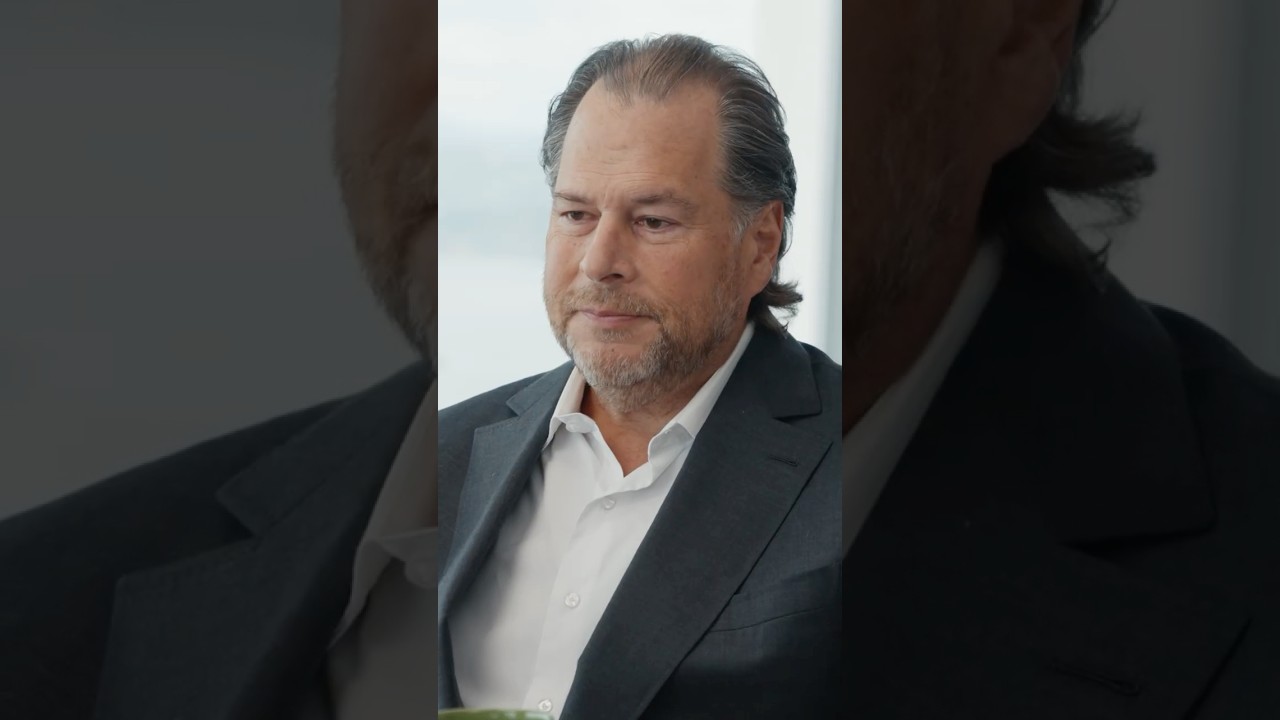
Salesforce CEO Marc Benioff highlights how AI is increasingly handling a significant portion of tasks in engineering, coding, support, and service, leading the company to stop hiring coders and prompting a shift toward AI-augmented workforces. While he envisions AI playing a larger role in business and leadership, Benioff emphasizes the continued importance of human values and ethical leadership in the evolving AI-driven landscape.
In the video, Salesforce CEO Marc Benioff discusses the transformative impact of AI on the workforce and business operations. He reveals that Salesforce has decided not to hire any more coders, highlighting a significant shift in how work is being done within the company. This decision stems from the observation that AI is now handling a substantial portion of tasks traditionally performed by humans, particularly in key functions such as engineering, coding, support, and service.
Benioff shares insights from a recent meeting with his head of engineering, where they reviewed productivity metrics showing that AI is responsible for completing 30 to 50% of the work in these critical areas. This level of AI involvement is not only current but expected to grow, signaling a future where AI plays an even more integral role in business processes. The implication is that companies must adapt to this new reality by rethinking workforce management and operational strategies.
He emphasizes the need for leaders and organizations to embrace the idea that AI can take over routine and repetitive tasks, allowing human employees to focus on higher-value work. This shift requires a change in mindset, where AI is seen as a tool for augmentation rather than replacement. By leveraging AI, businesses can enhance productivity and innovation, ultimately driving greater value.
Benioff also touches on the evolving role of CEOs in this AI-driven landscape. He suggests that today’s CEOs might be the last generation to manage entirely human workforces, as AI agents increasingly take on managerial and operational responsibilities. However, he stresses the importance of maintaining strong values and ethical considerations, ensuring that leadership continues to bring meaningful value beyond mere task management.
When asked if an AI agent could replace him one day, Benioff responds with a mix of humor and seriousness. While he hopes AI can eventually take on such roles, he acknowledges the complexity and nuance involved in leadership. His comments reflect a forward-looking perspective on AI’s potential while recognizing the unique human elements that remain essential in executive leadership.