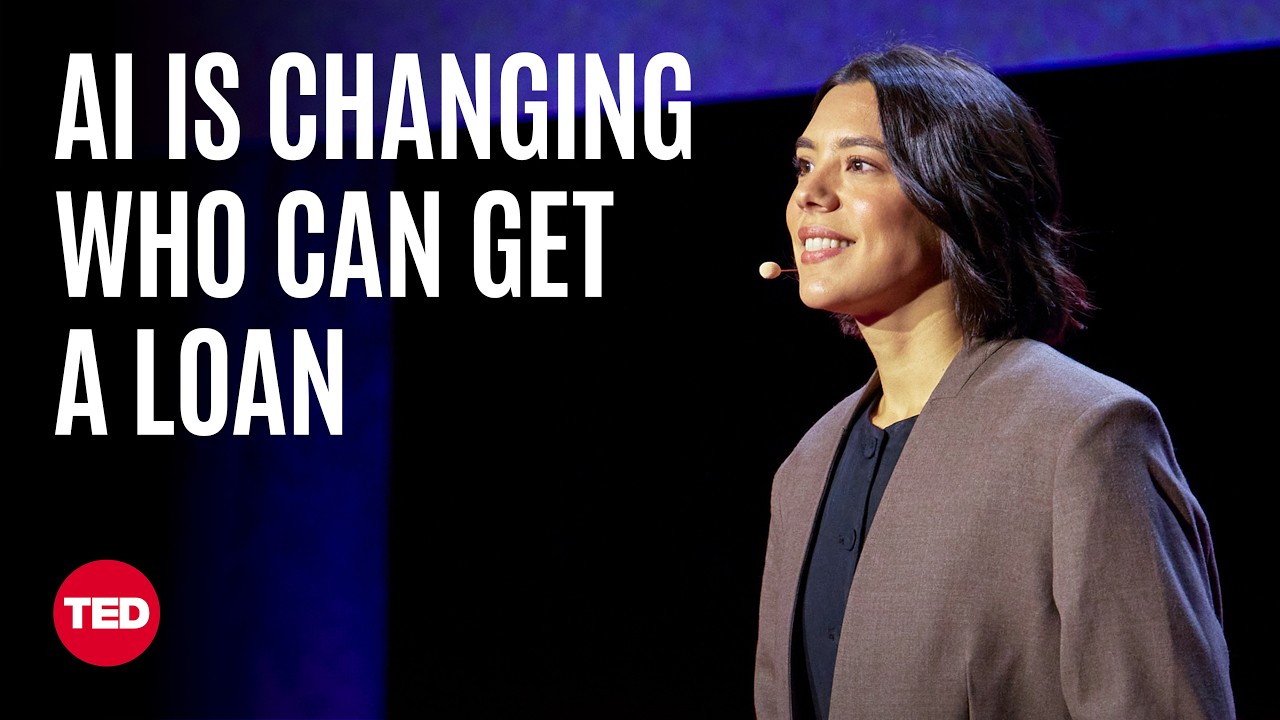
Mercedes Bidart explains how traditional banks exclude many entrepreneurs in Latin America due to lack of formal credit histories, forcing them to rely on predatory lenders. She describes how her team uses AI and alternative data—like phone usage and business videos—to assess creditworthiness, enabling thousands of informal entrepreneurs to access fair loans and financial inclusion.
Mercedes Bidart shares her personal journey growing up in Argentina in a family of small business owners, witnessing firsthand the importance of community trust in sustaining a business. She explains how, despite the centrality of trust in local economies, traditional banks in Latin America often reject entrepreneurs who lack formal collateral or credit histories. This exclusion leaves half the population without access to formal credit, forcing many to rely on predatory lenders with exorbitant interest rates and abusive practices.
Bidart describes her academic path, which led her to MIT, where she focused on how technology—specifically artificial intelligence—could support small businesses like her parents’. Her research took her to informal settlements in Colombia, where she observed that local economies run on trust rather than cash or paperwork. She realized that the main barrier for entrepreneurs was not visibility, but financial exclusion, as they could not access the capital needed to grow their businesses.
To address this, Bidart and her team began building digital marketplaces for local entrepreneurs, but soon discovered that lack of access to working capital was the real obstacle. Recognizing that traditional AI models could not assess creditworthiness without historical data, they set out to create their own dataset by offering small loans and collecting alternative data points from entrepreneurs’ daily activities, such as phone usage, social media presence, and business videos.
They developed proprietary AI-powered models that analyze various data sources: text messages for financial transactions, short videos of businesses to assess inventory and operations, and social media engagement to gauge business activity and reputation. These models can quickly and accurately determine an entrepreneur’s ability to repay a loan, even without a formal credit history, and tailor loan terms to individual needs.
Bidart concludes by emphasizing that AI, when designed intentionally, can make financial systems more inclusive and fair. By leveraging alternative data and local knowledge, her approach has enabled thousands of informal entrepreneurs—especially women—to access formal credit for the first time. This not only supports individual businesses and families but also transforms the financial landscape, allowing trust and potential to become measurable and actionable assets.