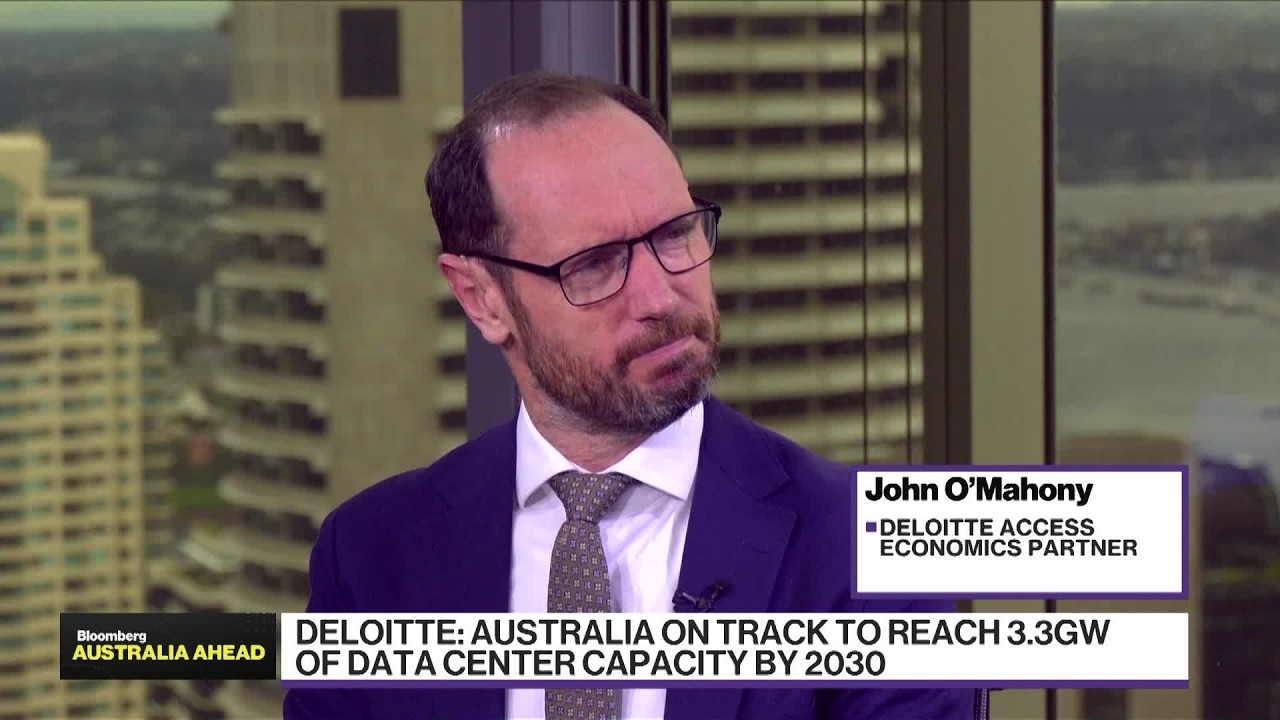
Australia is rapidly emerging as a preferred location for AI data centers, with significant investments underway. The Financial Review reported that the US startup Anthropic is preparing to establish Australia as its second base for training AI models, seeking a capacity of 1.4GW—equivalent to the entire Australian data center industry’s capacity at the end of last year. This surge in demand reflects a broader trend, with capital investment in technology doubling from 5% to 10% of total investment recently, including over $10 billion USD flowing into data centers in a single quarter.
John O’Mahony, partner at Deloitte Access Economics, describes this moment as a “sliding doors” opportunity for Australia’s economy. The country has several strengths attractive to investors, including access to land, renewable energy potential, and a skilled AI talent pool. However, Australia faces stiff competition from other Asia-Pacific hubs like Singapore, Malaysia, Japan, and India. The key to seizing this opportunity lies in timely government approvals and supportive policies that encourage investment while addressing community concerns.
One of the biggest risks identified is local opposition to data centers, often referred to as NIMBYism, which could delay projects and cause Australia to miss out on this economic opportunity. To mitigate this, the Australian government has introduced Data Center Principles aimed at ensuring investments meet renewable energy requirements, minimize community impact, and contribute to building a robust AI ecosystem. These principles signal a clear invitation to investors and demonstrate the government’s commitment to fostering growth in this sector.
Environmental concerns, particularly around energy consumption, are significant globally, and Australia currently lacks sufficient energy infrastructure to fully support the data center boom. However, the government is working on expanding renewable energy capacity, and long-term contracts with data centers could provide the certainty needed for renewable energy providers to invest. Coordination between private investors, state-owned corporations, and regulators will be crucial to developing the necessary infrastructure and ensuring sustainable growth.
Finally, while the government’s role is primarily to create the right policy environment and encourage investment, there is also discussion about the broader economic benefits beyond just data centers. This includes developing telecommunications infrastructure, supporting startups, research institutions, and attracting talent to create high-skilled, high-wage jobs. Taxation and public benefit considerations are part of the conversation, with the potential for this AI and data center boom to transform the Australian economy similarly to the mining boom of previous decades.