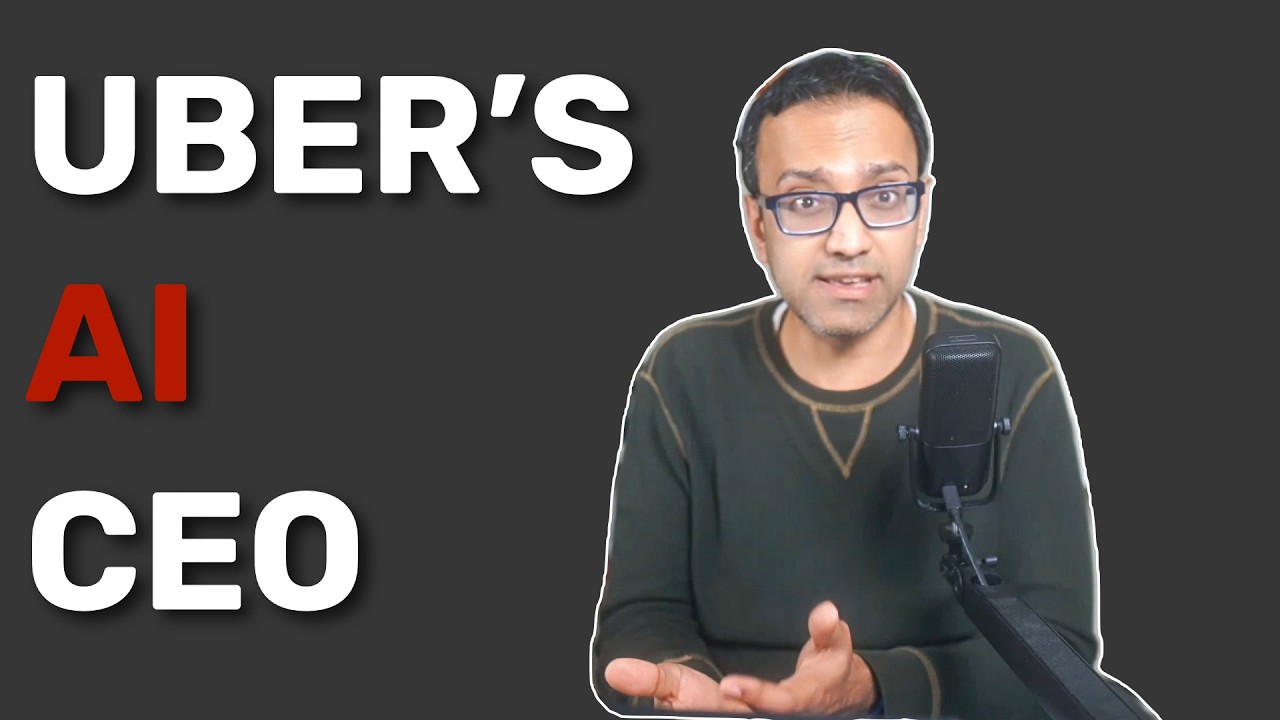
Uber engineers have developed an AI chatbot modeled after their CEO, Dara Khosrowshahi, by training it on his public statements, interviews, emails, and other communications. This AI, called “Dara AI,” is used internally by teams to simulate meetings with the real CEO, helping them anticipate his reactions and refine their presentations before actual high-stakes meetings. While the technical achievement is relatively simple—essentially a retrieval-augmented generation (RAG) pipeline using large language models—the implications of this project are thought-provoking.
The video raises a critical question: if a leader’s decision-making is predictable enough to be modeled by AI, how much of management and leadership is just pattern recognition? Most discussions about AI and jobs focus on creative or technical roles like developers, but this project suggests that even high-level executive judgment can be simulated to a useful degree. The speaker notes that much of what leaders do—prioritizing, allocating resources, evaluating proposals, and communicating strategy—often follows recognizable patterns, which AI can learn and replicate.
However, the video also acknowledges that not all leadership decisions are pattern-based. Truly novel situations, such as unprecedented crises or complex ethical dilemmas, require genuine human judgment that cannot be easily captured by historical data or AI models. These rare but critical moments are what often define great leadership, as they demand creativity, adaptability, and moral reasoning beyond established patterns.
The speaker references academic research on “manager clone agents,” which identifies roles such as proxy presence, information conveyor, productivity engine, and leadership amplifier. However, the research also warns of risks like “fossilizing” a leader’s thinking—locking an organization into a static version of decision-making—and convergence, where teams optimize their proposals to fit the AI’s predicted preferences, potentially stifling dissent and innovation.
Ultimately, the strongest argument for keeping humans in leadership roles is accountability. When a CEO makes a decision, there is a person who can be held responsible by the board, regulators, or the public. An AI cannot be fired, questioned, or held to account in the same way. The video concludes that while much of leadership may be automatable, the need for someone to take responsibility for decisions—especially when things go wrong—remains a uniquely human requirement. This accountability may be the most important reason to retain human leaders, even as AI becomes increasingly capable.