Certainly! Here’s a five-paragraph summary of the video, with spelling and grammar corrected:
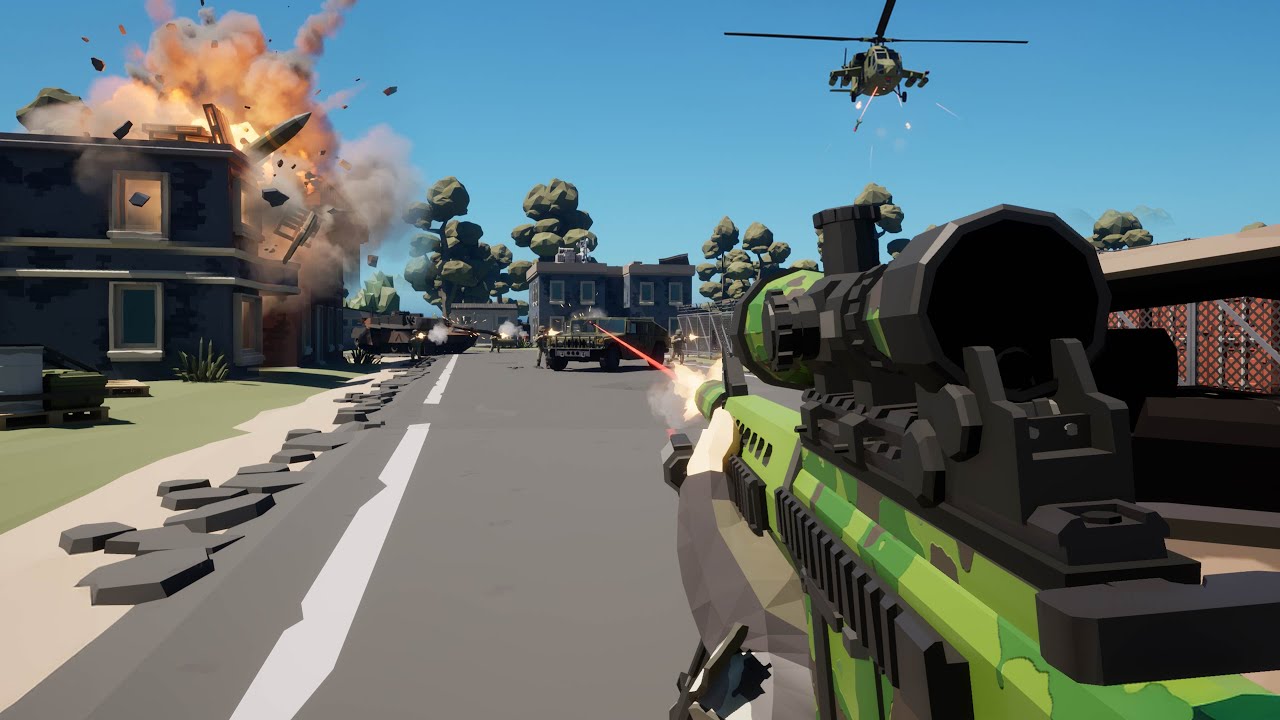
The video showcases the process of creating an extraction shooter game in Unreal Engine 5 using AI tools and marketplace assets. The creator, BlueDrake, demonstrates how he built a functional game in just one day, leveraging AI-generated voices, music, and code. The core gameplay involves completing objectives and reaching an extraction point within a time limit, with dynamic AI enemies inspired by games like Helldivers 2. The entire extraction and objective systems, as well as the main menu, were developed using BlueDrake’s custom AI gamedev plugin, which he is actively developing and offering to subscribers and customers.
A significant focus of the video is on the power of AI in procedural content generation. BlueDrake explains that while AI may not excel at hand-placing individual assets with human-like spatial awareness, it is highly effective at creating procedural generation systems. By using AI to write code for procedural map generation, he can quickly produce large, detailed landscapes filled with trees, buildings, and objectives. These maps, once generated, are fully editable by humans, allowing for customization and refinement after the initial AI-driven creation.
The video also highlights the flexibility and scalability of this approach. BlueDrake demonstrates how, with a single button press, he can regenerate entirely new maps or modify existing ones by adjusting parameters such as terrain size, density of objects, or specific asset placements. This rapid iteration process drastically reduces the time and effort required to create expansive, playable environments, making it accessible for solo developers or small teams to build complex games.
A key innovation discussed is the Revolt GPT plugin, which acts as a bridge between AI models and Unreal Engine. Because Unreal Engine’s architecture is not inherently AI-friendly, Revolt GPT provides a “virtual mouse and keyboard” interface, allowing AI to interact with and modify Unreal projects much like a human developer would. This enables AI to not only generate code and blueprints but also to understand and manipulate project structures, create custom scripts, and even teach users about Unreal Engine’s systems.
In conclusion, BlueDrake reflects on the broader implications of AI-powered game development. He acknowledges that while the democratization of game creation may lower the perceived value of individual games, it also empowers a new generation of creators who previously lacked the resources or skills to develop their own projects. He encourages viewers to subscribe, try out the plugin, and join the community, emphasizing that the future of AI-assisted game development is just beginning and holds immense potential for innovation and creativity.