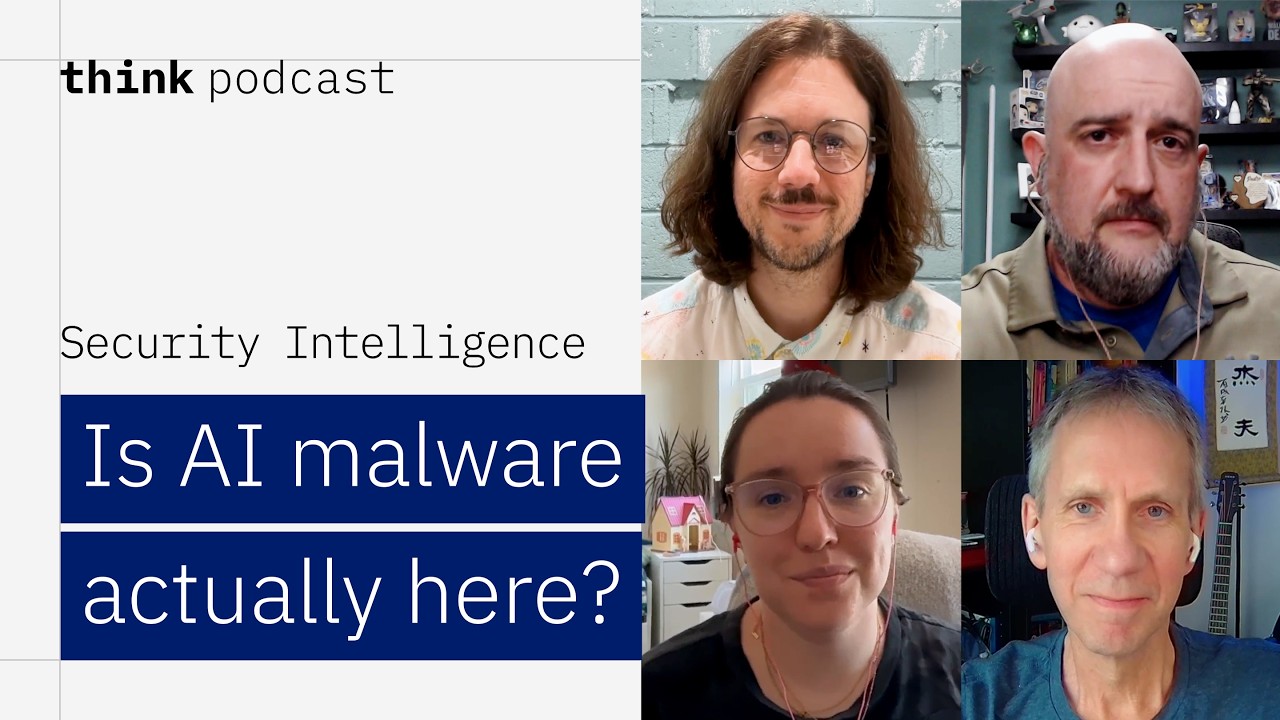
The discussion opens with an exploration of whether AI agents or humans are more susceptible to social engineering attacks. The panel agrees that AI, despite its intelligence, is surprisingly vulnerable due to its lack of common sense and lived experience. A recent incident involving Instagram’s AI customer support agent, which was tricked into handing over account access by hackers posing as legitimate users, highlights this vulnerability. The experts emphasize that AI systems are eager to be helpful but lack the nuanced judgment humans develop over time, making them prone to simple manipulations unless explicitly programmed with strict guardrails.
The conversation then shifts to the challenge of teaching AI “wisdom,” a concept distinct from intelligence. Unlike humans, AI lacks gut instincts and experiential learning, which are crucial for recognizing suspicious behavior. Panelists suggest that AI requires detailed, explicit instructions and context to avoid falling for scams, much like how children are taught safety rules. They acknowledge that while AI can be trained to understand facts and logic, imparting the kind of wisdom that helps humans detect deceit remains a significant hurdle, underscoring the need for ongoing development in AI training methodologies.
Next, the panel discusses a new development in AI-driven cyber threats: an AI-powered worm created by University of Toronto researchers. This self-replicating agent can spread across devices, exploiting vulnerabilities autonomously. While some may view this as a novel threat, the experts see it as an inevitable evolution in malware, enabled by increasingly compact and portable AI models. They stress that this arms race between attackers and defenders will continue, with both sides leveraging AI technologies. Importantly, they highlight the potential for using similar AI tools defensively to identify and patch vulnerabilities before malicious actors can exploit them.
The conversation then addresses the issue of open-source AI models being used for malicious purposes, such as the AI worm. The panel agrees that the widespread availability of open-source AI makes it impossible to fully prevent misuse. Instead, they advocate for acceptance of this reality and emphasize the importance of developing robust defensive strategies. They caution against attempts to restrict AI use too heavily, noting that attackers will continue to exploit these technologies regardless, and organizations must adapt to stay competitive and secure in this evolving landscape.
Finally, the discussion turns to the growing problem of nonhuman identities—such as AI agents and service accounts—in cybersecurity breaches. The panel highlights that these identities are often overlooked and poorly managed, making them attractive targets for attackers. Unlike human accounts, nonhuman credentials are rarely monitored or rotated, allowing breaches to go undetected for long periods. Experts call for improved identity management practices, including automated provisioning, just-in-time access, and dynamic behavior analysis, to better secure these accounts. They conclude that while AI introduces new complexities, it may also be key to solving the security challenges it creates, emphasizing the ongoing interplay between AI’s risks and benefits in cybersecurity.