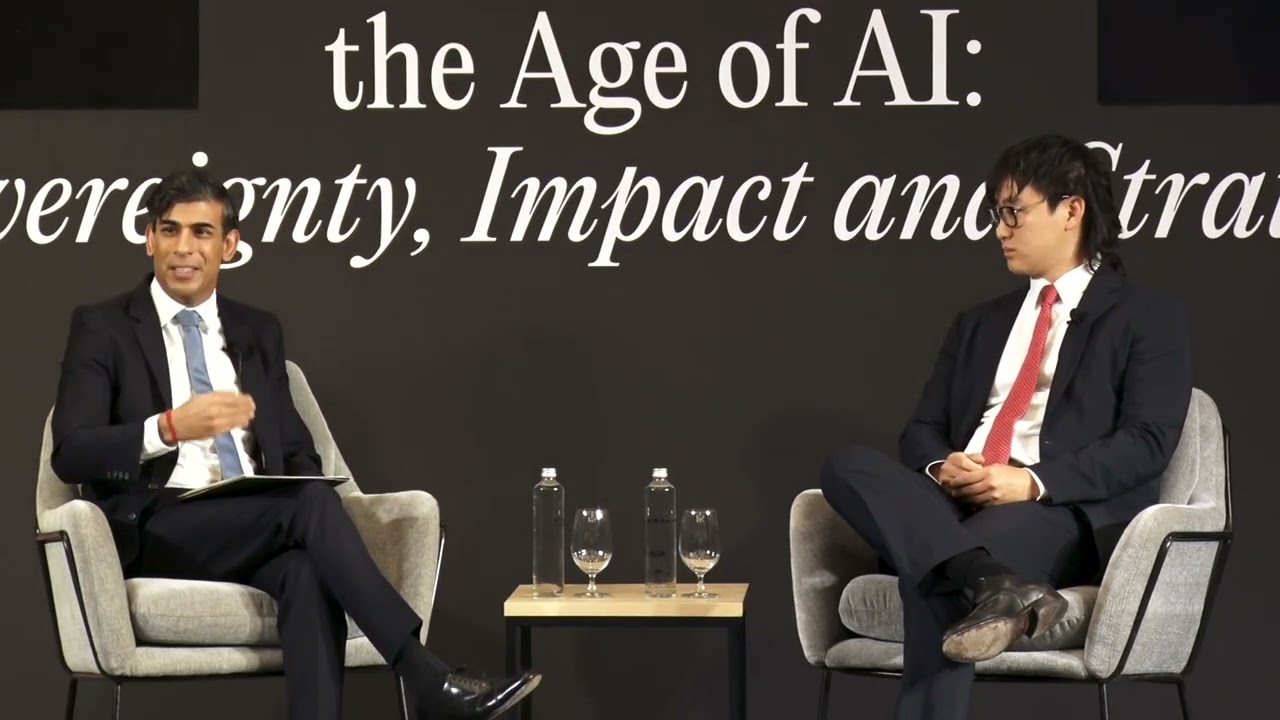
The discussion opens with reflections from a former UK Prime Minister on the global significance of artificial intelligence (AI) and the lack of dedicated international forums to address its transformative potential. He recounts his early days in office, noting the proliferation of international summits on various topics but the absence of one focused on AI, which he views as the most transformative technology of our time. This led to the creation of the AI summit series, starting at Bletchley Park and continuing in Paris, South Korea, and India, with the aim of bringing together government leaders, industry innovators, and businesses to shape the future of AI collaboratively.
The conversation then shifts to the rapid evolution of AI technology, as described by a leading industry figure. He outlines three major eras: the pre-training era (2018–2024), characterized by predictable exponential improvements; the reinforcement learning era, where models began to demonstrate reasoning abilities; and the current era of recursive self-improvement, where AI models are now instrumental in accelerating their own development. This has led to a dramatic increase in the productivity of researchers and the emergence of AI agents capable of automating complex workflows, with expectations that large-scale agent deployments will soon impact many sectors of the economy.
A key theme is the issue of trust in AI, particularly the contrast between optimism in countries like India and anxiety in many Western nations. The speakers emphasize that building trust is as much a policy challenge as a technical one. They discuss the importance of designing AI products that prioritize privacy and user confidence, drawing parallels to the success of WhatsApp’s privacy commitments. The conversation highlights the need for collaboration between companies and governments, including technical evaluation and pre-deployment testing of AI models, to ensure safety and foster public trust.
The discussion also addresses what governments need to do to capture the AI opportunity. Data is identified as a foundational asset, with particular emphasis on healthcare and national security data. Governments are encouraged to develop strategies for data sovereignty, ensure access to computational infrastructure, foster innovation ecosystems, and modernize public sector services. The speakers note that while private sector CEOs are already driving AI adoption from the top down, governments must also treat AI as a central, urgent responsibility, requiring leadership and accountability at the highest levels.
Looking ahead, the speakers express excitement about the accelerating pace of AI development and its increasing integration into daily life. They foresee the rise of personal superintelligence—AI agents that deeply understand and assist individuals—and even interpersonal superintelligence, where AI helps organize people and resources to solve complex societal challenges. The conversation concludes with a call for political leaders to recognize AI as an immediate priority, not a distant issue, and to act with urgency to ensure their countries benefit from the profound opportunities AI presents.